Two Decades of Thanksgiving Mastery: Smitten Kitchen Marks 20 Years of Holiday Evolution With Streamlined Recipes and Ultimate Pecan Pie Bars

As the culinary world prepares for the annual autumn holiday season, veteran food writer and recipe developer Deb Perelman is celebrating a significant milestone: twenty years of publishing Thanksgiving content on her influential food blog, Smitten Kitchen. Over the past two decades, Perelman has transformed from a home cook experimenting with holiday menus into an authoritative digital voice on American home cooking, guiding millions of readers through the logistical challenges of roasting turkeys, orchestrating side dishes, and executing show-stopping desserts. This twentieth anniversary serves not only as a personal marker for the platform, but also as a lens through which to examine how home cooking for major holidays has evolved toward efficiency, minimalism, and stress-reduction over the last twenty years.
The Evolution of Thanksgiving Cooking: From Complexity to Clarity
When Perelman launched Smitten Kitchen in the mid-2000s, the digital recipe landscape was vastly different. Food blogs were in their infancy, and holiday cooking guides frequently emphasized elaborate, multi-step procedures, obscure ingredients, and exhausting culinary techniques meant to mimic restaurant-grade dining rooms. Over twenty years of hosting and continuous testing, Perelman’s approach—and by extension, the preferences of many contemporary home cooks—has undergone a steady evolution toward simplicity.

Through years of trial, error, and post-holiday reflections, Perelman has identified a universal truth of holiday hosting: the more one hosts, the more one reassesses what is genuinely worth the expenditure of time, physical energy, and precious kitchen real estate. This realization has driven a systematic streamlining of classic Thanksgiving staples. For instance, the centerpiece turkey has shifted from complex stuffing routines and wet brining to an efficient dry-brining method that yields deeply seasoned meat and burnished, crispy skin using just six basic ingredients. Similarly, holiday stuffing has been reduced to its most comforting elements using readily available store-bought challah, aromatic leeks, celery, fresh herbs, and a generous yet sensible measure of butter.
This philosophy of doing more with less extends directly to vegetable side dishes. Rather than demanding hours of intricate peeling and chopping, modern Smitten Kitchen holiday side dishes—such as recent carrot preparations—often begin with a single, highly accessible bag of pre-prepared vegetables, proving that convenience does not have to come at the expense of flavor or presentation.
The Chronology of a Holiday Classic: The Pecan Pie Bar Evolution
Perhaps no single recipe on the site illustrates this trajectory toward streamlined efficiency better than Perelman’s famous pecan pie recipe. The dish has undergone a fascinating chronological transformation over the past ten years, reflecting changing demands for party-friendly, scalable desserts.

In 2015, Perelman published a traditional, round pecan pie. While universally praised for its flavor, the standard pie presented a logistical flaw common to traditional baking: it yielded only eight servings, a frustrating limitation for larger Thanksgiving gatherings where guests inevitably return for seconds. Addressing this constraint, Perelman subsequently developed a chocolate pecan slab pie for her second cookbook, Smitten Kitchen Every Day. While the slab pie successfully solved the portion-size issue by catering to a crowd, it introduced a new hurdle: significant labor time, requiring two separate homemade pastry crusts, an intricate decorative lattice top, and a dedicated chocolate layer.
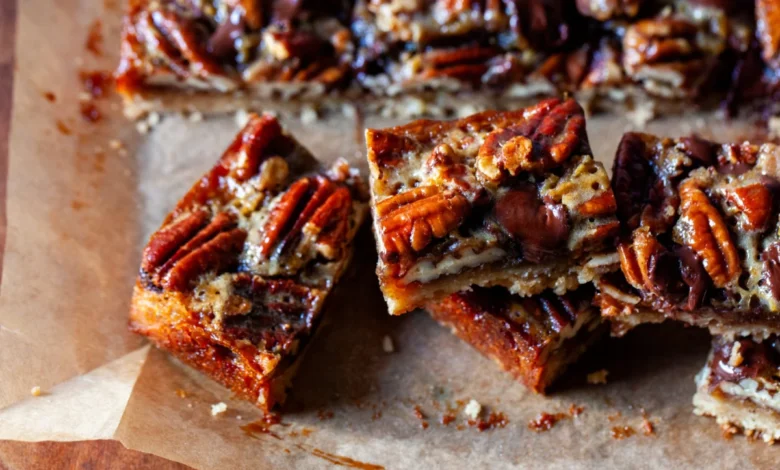
Recognizing that modern holiday cooks need maximum reward with minimal friction, Perelman further refined the concept several years ago into the streamlined format of pecan pie bars. This evolution eliminated the need for rolling out complex doughs, replacing it with a simple, press-in shortbread crust. The filling was consolidated into a single-bowl process while retaining every element of complex, rich flavor that characterized its predecessor.
Anatomy of a Modern Holiday Dessert: The Recipe Breakdown
The resulting pecan pie bars represent an optimization of flavor profiles, balancing sweetness, nuttiness, and rich texture. By scaling down the physical footprint of the dessert while preserving a high ratio of nuts, the recipe produces a bar cookie that is wonderfully gooey without becoming structurally unstable or overly runny.

The flavor profile relies on a carefully calibrated combination of ingredients. Toasted pecan halves form the structural and textural core of the topping. Sweetness is balanced and deepened through the use of dark brown sugar, honey, and a hint of apple cider vinegar, an acidic component specifically included to cut through the heavy sugar profile. Real vanilla bean and flaky sea salt add aromatic complexity and savory contrast, while dark chocolate chips provide an optional yet popular textural and flavor variation.
A defining characteristic of the recipe is the extensive use of browned butter, which is incorporated into both the shortbread crust and the pecan filling. Browning butter transforms milk solids through gentle heat, creating a deep, nutty aroma and complex flavor notes that elevate standard baking fats.
Detailed Preparation Guidelines for Home Cooks
For home cooks preparing holiday schedules, executing the pecan pie bars requires precise sequencing to ensure optimal results.

Preparation begins with thermal regulation: the oven must be preheated to 350°F (175°C). Line a standard 9-by-13-inch baking pan with a large sheet of parchment paper, pressing it firmly into the corners and allowing the excess to extend up the sides. This technique creates a sling, enabling easy removal of the baked bars once cooled. If raw pecans are used, spread them on a baking sheet and toast them for 8 to 10 minutes until fragrant, then set aside.
The butter-browning process requires attentiveness. In a medium-large saucepan—which will later double as the mixing vessel for the pecan layer—melt butter over medium-high heat. As the water content evaporates, the butter will foam and develop toasted brown specks along the bottom and edges of the pan. Upon reaching this stage, remove the pan immediately from the heat source; residual thermal energy will complete the browning process to a medium hue. To halt the cooking and add moisture, carefully whisk in two tablespoons of water, watching for potential splatters.
For the shortbread crust, combine all-purpose flour, granulated sugar, and salt in a large mixing bowl. Measure out one cup of the prepared browned butter, leaving the remainder in the saucepan, and pour it into the dry mixture. Stir until a soft, crumbly dough forms. Scatter the dough evenly across the prepared baking pan, pressing it firmly into the bottom and extending it approximately one-quarter of an inch up the edges. Bake for 15 to 17 minutes until the crust is fragrant and the edges turn a golden brown.
While the crust bakes, prepare the pecan layer directly in the saucepan containing the remaining browned butter. Whisk in dark brown sugar, honey, heavy cream, flaky sea salt, cider vinegar, and vanilla extract until uniform. Incorporate eggs one at a time, whisking continuously to prevent curdling and ensure complete emulsification. Fold in the toasted pecan halves, allowing them to coat evenly in the honey-butter mixture, and gently stir in the chocolate chips last.

Once the crust emerges from the oven, pour the warm pecan mixture directly over it. Sprinkle additional flaky sea salt across the surface. Return the pan to the oven and bake for 25 to 30 minutes, until the outer edges are completely set while the center remains slightly firm to the touch with a subtle jiggle.
Transfer the pan to a wire cooling rack and allow the bars to cool completely. The cooling process can be expedited in a refrigerator if time is constrained. Utilize the parchment paper overhang to lift the solid sheet of bars onto a cutting board, then slice into desired portion sizes.
Broader Implications and Cultural Impact
The twenty-year milestone of Smitten Kitchen reflects broader cultural shifts in American domestic life and digital food media. Over the past two decades, food publishing has transitioned from glossy, print-exclusive perfectionism to transparent, accessible digital problem-solving. Platforms like Smitten Kitchen have democratized holiday cooking, reassuring home cooks that culinary success does not require professional training or exhausting domestic labor.

Industry analysts note that content creators who survive long-term in the digital ecosystem are those who adapt their recipes to the changing lifestyles of their audiences. As modern households face increasing time constraints and smaller kitchen spaces, recipes that prioritize make-ahead convenience—such as the pecan pie bars, which store safely in a refrigerator for up to a week—are increasingly valued. By continuously refining classic holiday dishes into more efficient formats, Perelman has not only maintained a dedicated readership for twenty years but has also helped shape the modern standard for accessible, high-flavor holiday entertaining.