Paramount Global Clears Final Hurdle to $81 Billion Warner Bros Discovery Merger with Landmark Antitrust Settlement


In a pivotal development that signals a seismic shift in the global media landscape, Paramount Global announced on Monday that it has reached a comprehensive settlement with 12 state attorneys general to resolve a long-standing antitrust lawsuit. This agreement effectively removes the final legal barrier preventing the studio’s massive $81 billion acquisition of Warner Bros. Discovery. The deal, which aims to consolidate two of Hollywood’s most storied powerhouses, will result in the formation of a media conglomerate with unprecedented reach across theatrical, streaming, and linear television platforms. While the merger now proceeds toward final judicial approval, the settlement terms underscore the delicate balance between corporate expansion and the preservation of labor rights and domestic production capacity.
The Path to Consolidation: A Chronological Overview
The road to this merger has been defined by months of intense regulatory scrutiny and strategic maneuvering. The proposed acquisition, first brought to light amidst a climate of industry-wide consolidation, faced immediate pushback from state regulators who feared that the combined entity would possess undue market power.
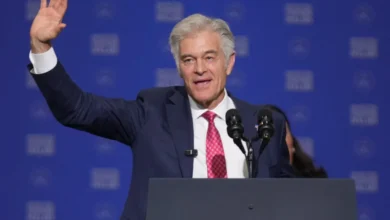
The antitrust lawsuit, filed by a coalition of 12 states, contended that the merger would stifle competition, drive up consumer costs, and lead to significant job losses within the creative sector. Over the past six months, Paramount executives, led by Chairman and CEO David Ellison, have engaged in exhaustive negotiations with state regulators. The goal was to reach a "consent decree" that would allow the merger to proceed while providing legal assurances regarding domestic investment and workforce stability.
By settling the suit, Paramount has bypassed a potentially protracted and costly federal trial. The settlement is not merely a legal victory for the studio; it is a blueprint for how future media mergers may be handled in an era of tightening antitrust oversight. The court must now review the specifics of the settlement, though analysts widely expect it to be approved given the proactive concessions made by the studio.
Quantifying the Commitment: Investment and Production Mandates
A cornerstone of the settlement is the mandate that Paramount significantly increase its domestic footprint. According to the state attorneys general, only approximately 5% of Paramount’s current production activity occurs within the United States. To address concerns regarding the outsourcing of jobs and production, the agreement stipulates that Paramount must invest $1.5 billion in domestic film production over the next five years. This translates to an additional $300 million annually on top of the studio’s 2025 baseline expenditures.
Furthermore, the settlement establishes a rigorous production schedule. The studio is now contractually obligated to produce 30 films per year for the first two years of the post-merger era, increasing that output to 32 films annually for the subsequent three years. This commitment serves a dual purpose: it ensures a steady pipeline of content for consumers and preserves jobs for American craftspeople, including cinematographers, set designers, and production assistants.
Perhaps most notably for the independent film sector, the agreement includes a $25 million fund dedicated to the acquisition of independent films, with a requirement to release at least four such titles annually. This provision is designed to mitigate fears that the massive scale of the new company would lead to the total abandonment of niche or lower-budget storytelling in favor of tentpole blockbusters.
The Cost of Non-Compliance: Punitive Measures
The agreement is notably robust in its enforcement mechanisms. Should Paramount fail to meet these production quotas, the consequences are severe. The settlement mandates that the company would be forced to divest from its prestigious Miramax Studios—a move that would be a significant blow to its intellectual property portfolio. Additionally, a failure to meet production targets would trigger a $30 million penalty, which would be directed toward union-managed health care and retirement trust funds. These "poison pill" clauses provide the state attorneys general with a high degree of confidence that the studio will adhere to its promises even as the internal pressures of a post-merger restructuring begin to mount.
Workforce Protections in an Era of "Duplicative Operations"
The merger is expected to yield approximately $6 billion in synergies, a term that in corporate parlance often refers to massive staff reductions. As the companies look to eliminate "duplicative operations" across their combined back-office, administrative, and distribution teams, unions have expressed profound concern for their members.
In response, the settlement carves out a $47.5 million fund dedicated to workforce training and career development for employees displaced by the merger. While this figure represents only a fraction of the total deal value, it sets a precedent for how corporations may be held accountable for the human cost of consolidation. Furthermore, Paramount has reaffirmed its commitment to existing collective bargaining agreements, promising to negotiate in good faith with labor unions as the transition progresses.
Industry Analysis: The Consumer Perspective
Despite the protections baked into the settlement, industry experts remain cautious regarding the broader economic implications of the merger. Forrester research director Mike Proulx has been vocal about the potential for consumer harm. "Where I’m looking at this is through the consumer’s point of view and resoundingly consumers are concerned about price hikes and they are preparing for price hikes," Proulx noted. "They care less about the theatrical releases and some of the other industry terms. What they care about is how this is going to hit their wallets."
The fundamental concern is that reduced competition in the cable and streaming markets will grant the new entity significant pricing power. By controlling a vast library of both Paramount and Warner Bros. assets, the company could theoretically hike subscription fees for bundled services without fear of losing customers to comparable alternatives.
Regarding the linear television segment, the settlement mandates that for the next five years, Paramount must negotiate the carriage of its basic cable channels separately for the Paramount and Warner Bros. brands. This is a critical provision designed to prevent the company from using its massive portfolio of channels to force cable providers into "take-it-or-leave-it" bundles that would inevitably result in higher monthly bills for the average household. Additionally, the settlement addresses the potential conflict of interest regarding editorial independence by establishing a board to oversee the operations of CNN and CBS, ensuring that the newsrooms remain insulated from the corporate parent’s commercial interests.
Broader Implications for the Media Landscape
The successful navigation of this antitrust suit by Paramount signals that while the current regulatory environment is wary of "Big Media," a pathway to consolidation exists for those willing to make significant concessions. This deal will fundamentally change the competitive hierarchy of Hollywood. With the combined resources of Warner Bros. Discovery and Paramount, the new company will be a formidable competitor to industry giants like Netflix, Disney, and Amazon.
However, the history of media mergers is often littered with cautionary tales. The integration of corporate cultures, technical infrastructures, and vast creative libraries is notoriously difficult. As Paramount moves into the implementation phase, the true test will be whether the promised $6 billion in savings can be achieved without cannibalizing the creative output that defines the value of these studios.
Ultimately, the settlement is a compromise. It grants the corporate entity the scale it desires to compete in a globalized, digital-first economy, while simultaneously providing regulatory guardrails to protect the domestic production ecosystem and labor force. Whether these protections prove sufficient to shield the consumer from the negative externalities of a market with fewer players remains an open question—one that will be answered not in the boardroom, but in the monthly subscription bills and cinema ticket prices of the coming years.