Alex Bores and the New Frontier of AI Regulation: A Political Battle for the Future of Technology

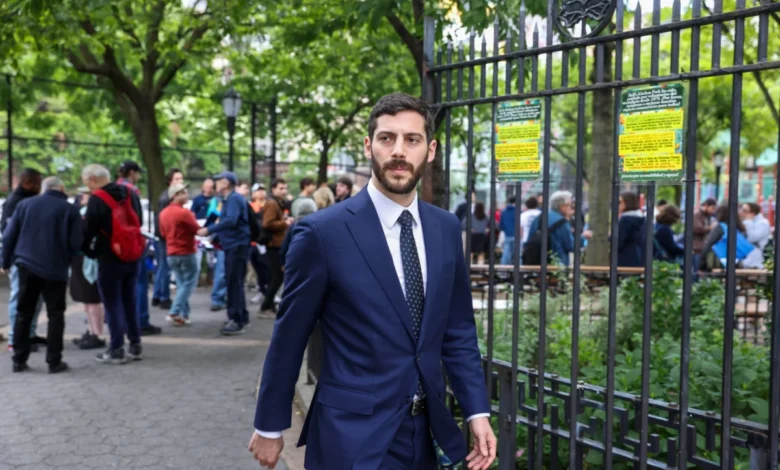
The intersection of artificial intelligence, political campaigning, and legislative policy has reached a boiling point in the United States, underscored by the recent activities of former Palantir engineer and New York State Assemblymember Alex Bores. After an unsuccessful, record-breaking congressional bid, Bores is pivoting from electoral politics to advocacy, launching a new nonprofit, Who Decides. This initiative seeks to bridge the gap between public demand for AI safety and the legislative gridlock currently paralyzing Washington and various state capitals. The shift highlights a broader, systemic tension: while a vast majority of the American electorate favors robust oversight of emerging technologies, a concentrated group of high-profile industry financiers continues to exert disproportionate influence over the legislative process.
The Genesis of a Political Standoff
The catalyst for this shift in strategy can be traced back to the 2026 primary cycle, which saw an unprecedented influx of outside capital into a single House race. Bores, who helped champion New York’s RAISE Act—a frontier AI safety law—found himself at the center of a $40 million spending war. The primary, widely considered the most expensive of the cycle, pitted industry-backed super PACs against one another. Leading the Future, a political action committee bolstered by contributions from OpenAI president Greg Brockman and venture capital firm Andreessen Horowitz, funneled more than $7.6 million into opposition efforts against Bores. Conversely, Public First Action, backed by $20 million from Anthropic, campaigned in his favor. Despite this massive investment, Bores ultimately lost his bid for the congressional seat, an outcome that served as a sobering lesson in the limitations of individual political candidacies against institutional lobbying power.
The Launch of Who Decides
Following his electoral defeat, Bores partnered with his former chief of staff, Anna Myers, to launch Who Decides. The nonprofit has already secured $10 million in seed funding and is targeting an ambitious $30 million total by 2028. The organization’s primary mission is not to engage in direct campaign spending—which Bores acknowledges is a losing game against the deep pockets of Silicon Valley—but rather to consolidate the fragmented efforts of existing Democratic-aligned advocacy groups. By providing a "shared floor" for policy agendas, the organization aims to empower grassroots advocates to build their own initiatives rather than waiting for top-down mandates.
Bores frames this effort as a struggle for the "answer key" to the future of technology. In his view, voters have clear, pre-formed opinions on established issues like Medicare or climate change, but AI exists in a persistent, confusing "gray area." By simplifying the discourse and clarifying the stakes, Who Decides hopes to bring the public voice back into the development cycle of generative AI.
The Legislative Landscape and the RAISE Act
The legislative battle over the RAISE Act in New York provides a blueprint for the difficulties ahead. When the bill was signed into law by Governor Kathy Hochul late last year, it was the result of a massive, fragile coalition involving 55 distinct stakeholder groups, ranging from education advocates to cybersecurity experts. The opposition, however, remained remarkably consistent. According to Bores, the pushback came from a narrow, vocal segment of Silicon Valley that advocates for a policy of total deregulation.
Even when successful, these bills are rarely immune to the pressures of industry lobbying. The final version of the RAISE Act was significantly watered down before it reached the Governor’s desk; key provisions, including mandatory third-party audits and robust whistleblower protections, were stripped from the text. Despite these losses, Bores maintains that the act remains the most comprehensive safety bill in the country, though he anticipates that states like Massachusetts and Illinois may soon attempt to surpass its standards, setting the stage for a potential patchwork of state-level regulations.
Data-Driven Public Sentiment vs. Congressional Inertia
The disconnect between public sentiment and legislative action is stark. Recent data from the Annenberg Public Policy Center (February–March 2026) indicates that 65% of Americans believe the government has done "too little" to regulate AI. This perspective is bipartisan, with 77% of Democrats, 72% of independents, and 53% of Republicans in agreement. These figures mirror long-standing trends in other policy areas, such as gun control, where overwhelming public support for background checks—often exceeding 90% in some polls—fails to translate into federal action due to the influence of well-funded interest groups.
The situation is further complicated by the shifting stances of industry leaders. In May 2023, OpenAI’s Sam Altman testified before the Senate Judiciary Committee, actively soliciting government regulation. By May 2025, however, his rhetoric had shifted drastically; he warned the Senate Commerce Committee that mandatory government approval processes for AI models would be "disastrous." This reversal has created a climate of uncertainty for legislators, who often look to industry insiders for guidance on technical feasibility.
The Threat of Federal Preemption
The most pressing challenge currently facing state-level advocates is the threat of federal preemption. In 2025, Senator Ted Cruz proposed language that would have barred states from enforcing any AI-related laws for a decade. While the measure was ultimately defeated in a 99-1 Senate vote, similar language has reappeared in new federal proposals.
A current bill co-sponsored by Senators Amy Klobuchar, John Thune, and Ted Cruz is being viewed with extreme caution by experts. While it is widely considered the most likely federal AI legislation to pass, critics—including Bores—argue that it contains "Trojan horse" elements. By framing the bill around safety testing and incident reporting, the proposal potentially creates a federal standard that could supersede all existing state-level laws. Bores views this as a strategic effort to use the current climate of "AI crisis" to systematically dismantle the regulatory power that individual states have worked to establish.
Internal Challenges: The "Circular Firing Squad"
Bores also acknowledges that the Democratic party’s efforts to regulate AI are frequently hindered by internal division. He characterizes the behavior of some advocacy groups as a "circular firing squad," where activists prioritize their specific sub-issues over a unified front. This fragmentation allows industry opponents to easily bypass consensus-building. "The people who are opposing almost every issue in AI are the same people," Bores noted. "We should be sitting at the same table."
The resignation of Jacob Coxon from Anthropic last week served as a significant inflection point, drawing immediate attention from 16 members of Congress and seven presidential candidates. This sudden spike in political interest, while welcome, highlights the reactionary nature of the current legislative process. As Who Decides ramps up its operations across 11 battleground states, the organization aims to transform this reactionary impulse into a proactive, sustained strategy.
Broader Implications for the Tech Industry
The implications of this struggle extend far beyond the legislative halls of Albany or Washington. As the AI industry continues to scale, the tension between rapid innovation and public safety remains unresolved. If the current trajectory continues, the United States risks creating a regulatory environment characterized by "weak laws and weaker willpower," where the pace of technological development consistently outstrips the ability of the state to provide oversight.
The success or failure of organizations like Who Decides will likely determine whether future AI policy is driven by a small, elite group of corporate financiers or by a broader democratic consensus. By focusing on 11 key battleground states, Bores and his team are banking on the idea that local, targeted advocacy can build the momentum necessary to force federal legislators to act in the public interest.
As of late 2026, the legislative climate remains volatile. With multiple presidential candidates now platforming on AI safety and the potential for federal legislation looming, the coming year will be a definitive period for the industry. Whether the "shared floor" proposed by Bores can withstand the intense, well-funded pressure from Silicon Valley remains the central question for the future of AI governance in the United States. For now, the battle for the "answer key" to artificial intelligence continues, with the stakes—and the outside capital—only likely to increase as the 2028 election cycle approaches.
Related posts: