NASA’s Nancy Grace Roman Space Telescope represents a new frontier in cosmic exploration

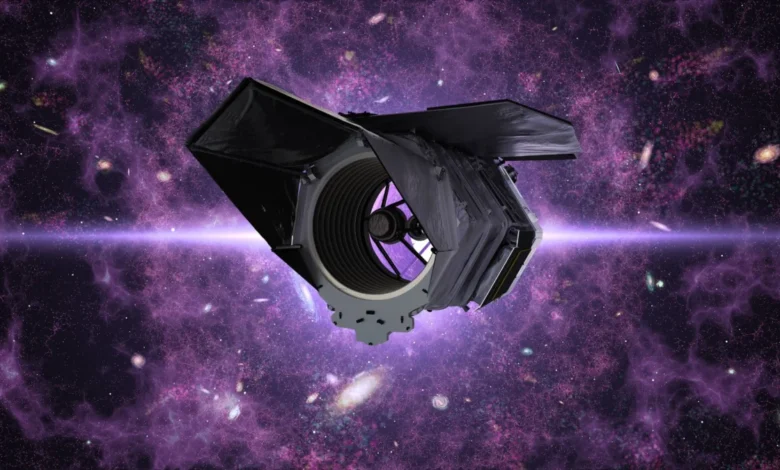
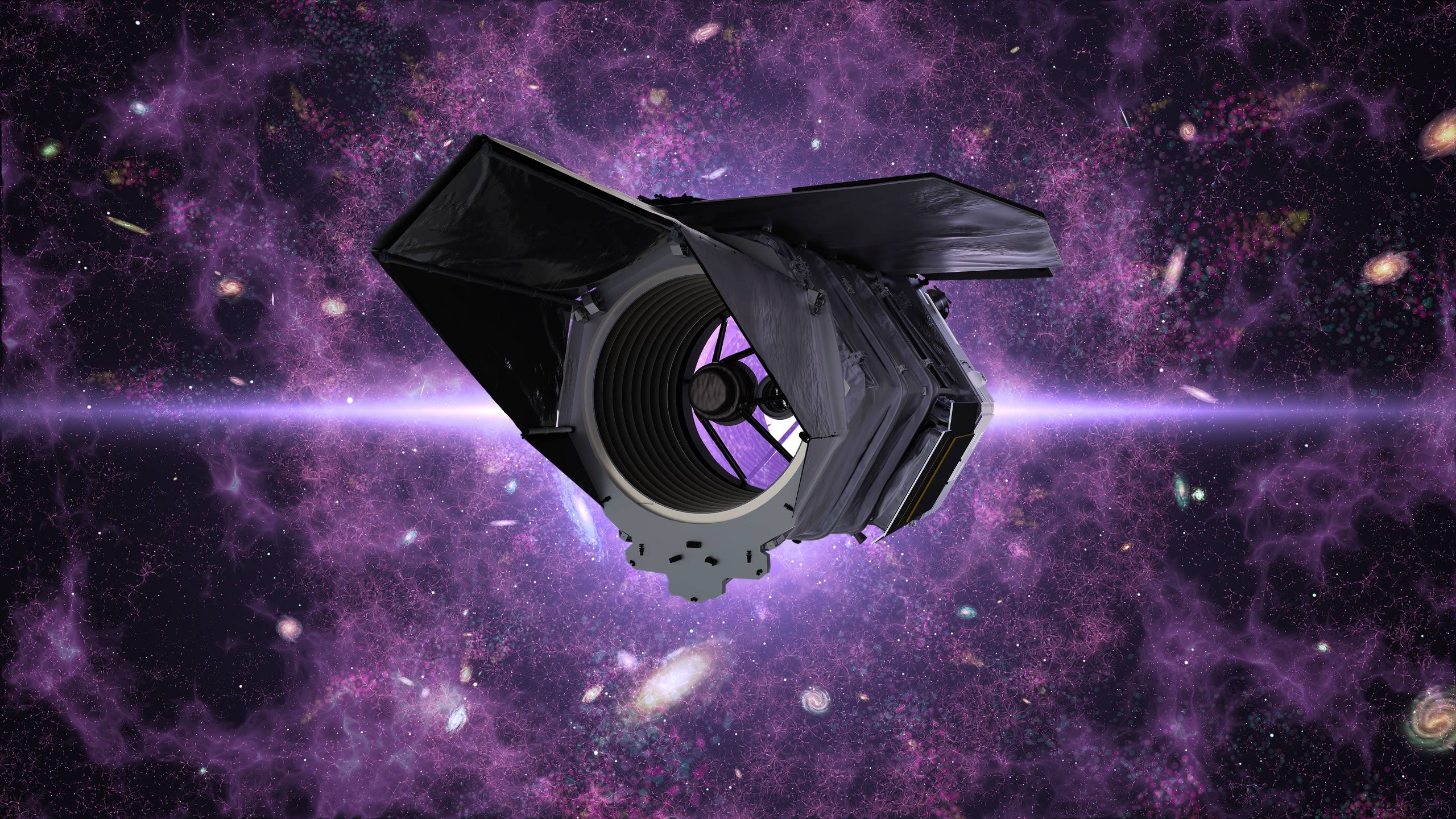
The Nancy Grace Roman Space Telescope, an ambitious flagship observatory currently under development by NASA, is poised to redefine our understanding of the universe. Named in honor of the "Mother of Hubble," Dr. Nancy Grace Roman—the agency’s first Chief Astronomer—this mission is designed to address some of the most profound questions in modern astrophysics. By combining a wide-field view with the unprecedented clarity of the Hubble Space Telescope, Roman will act as a cosmic surveyor, mapping the distribution of dark matter, searching for elusive exoplanets, and probing the mysterious nature of dark energy.
A Legacy of Visionary Leadership
Dr. Nancy Grace Roman was a pioneering astronomer who played a pivotal role in the creation of the Hubble Space Telescope. During her tenure at NASA, she championed the idea that space-based observatories could provide views of the cosmos unobstructed by the Earth’s atmosphere. Her advocacy transformed space astronomy from a niche endeavor into a cornerstone of scientific research. The telescope that now bears her name serves as a testament to her legacy, extending her vision by venturing into the "infrared" domain, allowing scientists to peer through the thick clouds of dust that obscure the centers of galaxies and the birthplaces of stars.
The Technical Marvel of the Roman Space Telescope
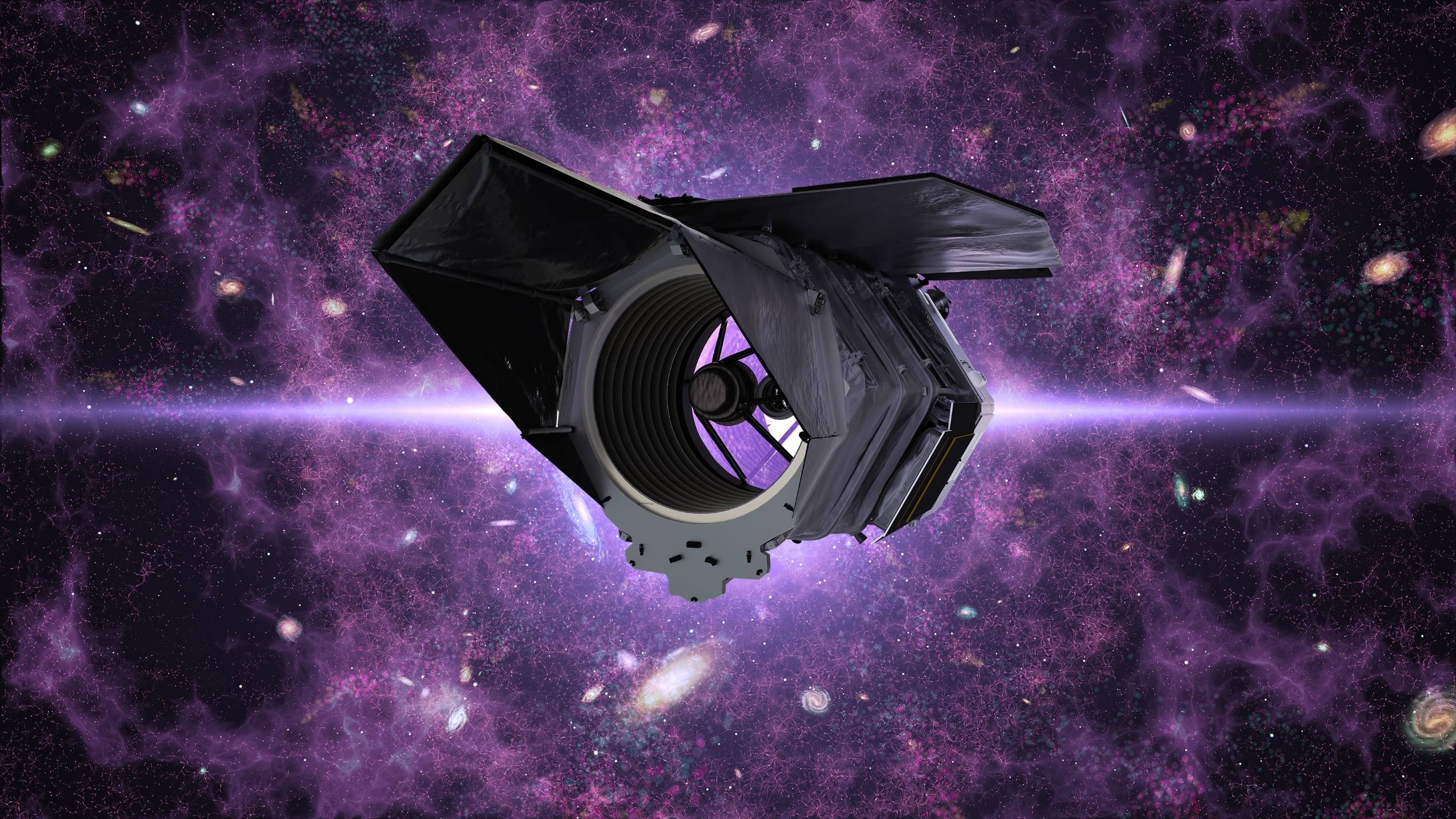
At the heart of the Roman Space Telescope is a 2.4-meter primary mirror, identical in diameter to the one used by Hubble. However, the optical design of Roman is fundamentally different. While Hubble is designed to focus on small, specific targets with high magnification, Roman is engineered for survey-level science. Its Wide Field Instrument (WFI) provides a field of view that is 100 times greater than that of Hubble’s infrared camera.
This capability allows the telescope to capture vast swaths of the sky in a single exposure. Instead of spending months imaging a small patch of space, Roman will be able to map the entire sky in days, effectively acting as a high-speed camera for the cosmos. This "panoramic" approach is essential for identifying rare events and mapping the large-scale structure of the universe, which is vital for understanding how galaxies evolve over billions of years.
Chronology of Development
The path to the Roman Space Telescope began long before it was officially named. The project was initially proposed under the name "Wide Field Infrared Survey Telescope" (WFIRST) in the 2010 Decadal Survey on Astronomy and Astrophysics. The survey identified the mission as the top-priority large space mission for the decade.
- 2010: WFIRST is recommended as the top priority by the National Research Council’s Decadal Survey.
- 2016: NASA officially selects the mission for formulation, integrating the use of existing 2.4-meter telescope hardware.
- 2020: The mission is formally renamed the Nancy Grace Roman Space Telescope to honor the trailblazing astronomer.
- 2023: Significant hardware integration phases begin, including the testing of the spacecraft’s primary mirror and instrument suite.
- 2027 (Projected): The mission is currently slated for a mid-2027 launch aboard a SpaceX Falcon Heavy rocket from Kennedy Space Center.
Mapping the Dark Universe
One of the primary objectives of the Roman mission is to investigate the acceleration of the universe’s expansion, which is attributed to dark energy. By observing millions of galaxies, Roman will measure the subtle distortions in their shapes caused by the gravitational influence of dark matter—a phenomenon known as weak gravitational lensing.
Data gathered by Roman will allow scientists to create a 3D map of the universe’s structure. This map will provide clues as to whether dark energy is a constant property of space, as Albert Einstein proposed, or if it changes over time, which would require a fundamental revision of our current laws of physics. The sheer volume of data expected from this mission is staggering; astronomers estimate that the telescope will generate nearly 20,000 terabytes of data over its five-year primary mission, requiring advanced AI and machine learning algorithms to process and categorize the findings.
Exoplanet Exploration and the Search for Earth 2.0
Beyond cosmology, Roman is set to revolutionize the field of exoplanetary science. While previous telescopes like Kepler and TESS focused on discovering planets by observing the dip in light as a planet passes in front of its star, Roman will utilize a technique called gravitational microlensing.
Microlensing occurs when the gravity of a star acts as a lens, magnifying the light of a more distant background star. If a planet is orbiting the foreground star, it creates a distinct signature in the light curve. This method allows for the detection of planets at much greater distances from their host stars—including those in the "cold" regions of solar systems—and even rogue planets that do not orbit any star at all.
Furthermore, the mission includes a technology demonstration: the Roman Coronagraph Instrument. This device is designed to block the intense light of distant stars, allowing the telescope to image faint, Earth-like planets directly. This is a critical step toward the future goal of identifying biosignatures in the atmospheres of distant worlds.
Official Statements and International Collaboration
NASA’s leadership has consistently highlighted the Roman Space Telescope as a bridge between the Hubble and James Webb Space Telescopes and future, even more ambitious observatories. Dr. Mark Clampin, Director of the Astrophysics Division at NASA Headquarters, noted in recent briefings that Roman will provide the context necessary to understand the deep-field images captured by Webb. "Roman provides the survey data that lets us know where to look," Clampin stated. "It is the essential scout that identifies the most interesting corners of our universe."
International partnerships are also central to the mission. Contributions from the European Space Agency (ESA), the Japanese Aerospace Exploration Agency (JAXA), and other international partners ensure that the mission leverages the best global expertise in optical engineering and data processing.
Broader Implications and Future Scientific Impact
The implications of the Nancy Grace Roman Space Telescope extend far beyond the immediate findings. By creating an unprecedentedly detailed map of the cosmos, it will provide a legacy dataset that astronomers will study for decades. Much like the Sloan Digital Sky Survey or the Hubble Ultra Deep Field, the data from Roman will become a fundamental resource for researchers globally.
The telescope’s emphasis on "Big Data" astronomy marks a shift in how NASA approaches space missions. Because the instrument will be constantly sweeping the sky, the challenge will not be acquiring data, but interpreting it. This has spurred a new generation of software development in the astronomical community, focusing on automated anomaly detection and the use of neural networks to identify patterns in the movement of galaxies and the light curves of stars.
As the launch date approaches, the excitement within the scientific community is palpable. The combination of high-resolution imaging and wide-field surveying will likely lead to discoveries that are currently beyond our imagination. Whether it is confirming the presence of dark energy, finding thousands of new planets, or uncovering the hidden history of the Milky Way, the Nancy Grace Roman Space Telescope stands as a beacon of human ingenuity. It serves as a reminder that even as we look further into the depths of space, we are simultaneously looking back at our own origins, seeking to understand the mechanisms that allow stars, galaxies, and perhaps life itself, to flourish in the vast, silent expanse of the universe.