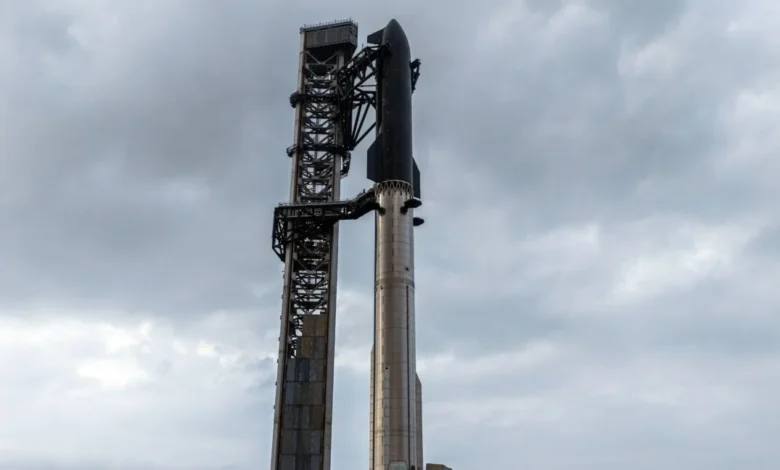
SpaceX has officially scheduled its 14th Starship mission for as early as September 22, pending the final receipt of regulatory clearance from the Federal Aviation Administration (FAA). This mission represents a pivotal moment in the company’s history, as it marks the first time SpaceX will attempt to place the experimental Starship vehicle into an orbital trajectory. With a target liftoff time of 7:15 am local time in Brownsville, Texas (12:15 UTC), the mission will utilize a 75-minute launch window. Given that sunrise in the region is slated for 7:17 am CT, the early morning ascent promises to provide significant visual documentation of the vehicle clearing the tower and transitioning through the atmosphere.
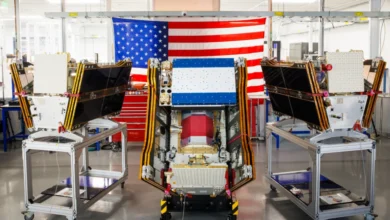
The mission objective is ambitious: the super heavy lift rocket will carry 26 of the next-generation V3 Starlink satellites into a circular orbit approximately 275 kilometers above the Earth. According to technical documentation provided by SpaceX, the Starship upper stage is designed to complete six full orbits of the planet before concluding its primary mission profile after roughly 10 hours of flight. This shift from suborbital testing to active payload delivery signals an aggressive acceleration in the development timeline for the Starship program.
A Chronology of the Starship Development Campaign
The journey to this 14th flight has been characterized by rapid iteration and significant technical evolution. The campaign officially began on April 20, 2023, with the first integrated flight test (IFT-1) from the Starbase facility in Boca Chica, Texas. During that inaugural flight, the vehicle experienced multiple engine failures and a loss of control, leading to a flight termination system activation.
Subsequent missions have seen steady, incremental progress:
- IFT-2 (November 2023): Demonstrated successful stage separation using the "hot-staging" technique, a major engineering milestone.
- IFT-3 (March 2024): The upper stage reached orbital velocity for the first time, though contact was lost during atmospheric reentry.
- IFT-4 (June 2024): Both the Super Heavy booster and the Starship upper stage demonstrated controlled soft splashdowns, validating critical landing systems.
- IFT-5 (July 24, 2024): The most recent mission saw the first stage perform nominally during the boost phase, though it encountered technical hurdles during the return maneuver.
Technical Challenges and Hardware Refinements
The transition to orbital flight has not been without its setbacks. During the July 24 test, SpaceX engineers identified a critical failure point during the Super Heavy booster’s return to the launch site. As the vehicle attempted its boostback burn, the three center engines exhibited signs of ice clogging, which forced an early termination of the maneuver. This led to a subsequent landing burn attempt that saw only 8 of the 13 planned engines reignite, resulting in a hard splashdown in the Gulf of Mexico.
In a formal post-flight update, SpaceX acknowledged these shortcomings and detailed the corrective actions integrated into the vehicle designated for the upcoming September 22 launch. "The Super Heavy on this upcoming flight has hardware modifications to improve filtering to the engines and software changes to enhance relight reliability," the company stated. These refinements are essential, as the landing of the Super Heavy booster—the "Mechazilla" catch process—is considered the most difficult aspect of the Starship architecture. The ability to return, catch, and rapidly refurbish the booster is the fundamental requirement for achieving the cost-reduction goals that define the Starship program.
Strategic Implications of V3 Starlink Integration
The decision to carry 26 V3 Starlink satellites serves as a litmus test for the vehicle’s operational capacity. The V3 satellites are significantly larger and more capable than their predecessors, requiring the heavy-lift capacity that only a fully operational Starship can provide. By transitioning from the Falcon 9 launch vehicle—which has been the workhorse of the Starlink constellation—to Starship, SpaceX aims to exponentially increase the mass and frequency of satellite deployments.
Industry analysts suggest that this shift is not merely about logistics; it is a demonstration of utility. "By placing actual revenue-generating hardware on an experimental test flight, SpaceX is signaling an extreme level of confidence in the vehicle’s architecture," says aerospace consultant Marcus Thorne. "It moves the program from a research-and-development phase into a transition toward commercial service, even while the vehicle remains in its iterative cycle."
Regulatory and Environmental Oversight
The path to September 22 remains tethered to the regulatory oversight of the Federal Aviation Administration (FAA). SpaceX has faced increasing scrutiny regarding the environmental impact of its launch operations at Starbase, specifically regarding the deluge system used to protect the launch pad and the debris generated during test flights.
The FAA’s licensing process for Starship has become increasingly complex as the flight hardware matures. SpaceX’s ability to adhere to the September 22 date depends on the FAA’s satisfaction with the company’s mitigation efforts regarding noise pollution, potential water contamination, and the safety of the surrounding Boca Chica wildlife refuge. Industry observers anticipate that, while the FAA is under pressure to move quickly to maintain American leadership in space, the regulator will prioritize flight safety protocols over the aggressive launch cadence requested by the company.
The Broader Impact on Global Space Exploration
The success of the 14th Starship mission would have profound implications for the global space industry. A fully reusable, super heavy lift rocket would effectively collapse the cost-per-kilogram of payload to orbit, fundamentally altering the economics of space access. This capability is not only vital for the continued expansion of the Starlink network but is also a cornerstone of NASA’s Artemis program.
Starship has been selected as the Human Landing System (HLS) for the Artemis III mission, which aims to return human beings to the lunar surface. NASA officials have repeatedly emphasized that the success of the Artemis program is contingent upon the operational maturity of Starship. Consequently, every test flight, including this upcoming mission, is monitored closely by international space agencies and commercial competitors alike.
Furthermore, the capability to conduct six orbits—a total mission duration of roughly 10 hours—provides the telemetry data required to master long-duration spaceflight. This is essential for the eventual goal of interplanetary transit, specifically the transit to Mars. By proving that the vehicle can maintain systems integrity in the vacuum of space for an extended period, SpaceX will be checking off one of the final boxes required for deep-space certification.
Conclusion: A High-Stakes Milestone
As September 22 approaches, the focus at SpaceX remains on the integration of hardware and software modifications intended to mitigate the icing issues that plagued the previous flight. The team at Starbase has been working in shifts to ensure the Super Heavy booster and the upper stage are prepped for what is effectively a "high-stakes" test.
While the mission is experimental, the inclusion of a commercial payload elevates the stakes significantly. If the vehicle reaches orbit, the narrative of the Starship program will shift from "if it can fly" to "how often can it fly." Conversely, any technical failure during the ascent or the orbital phase will likely result in a temporary grounding of the fleet as investigators work to diagnose the root cause, illustrating the inherent risks associated with pioneering a new class of space transport.
For the global aerospace community, the 14th Starship mission is more than a launch; it is a manifestation of a new era in rocketry. Whether the mission concludes with a successful orbital insertion and a subsequent soft landing or encounters the challenges common to experimental flight, the data collected will provide the roadmap for the next decade of space exploration. SpaceX’s commitment to "failing forward"—a philosophy of rapid prototyping and iterative design—will once again be put to the test in the skies over South Texas.