The Rise and Sudden Fall of the 1971 Ford Mustang Boss 351 The High Performance Anomaly of the Muscle Car Era

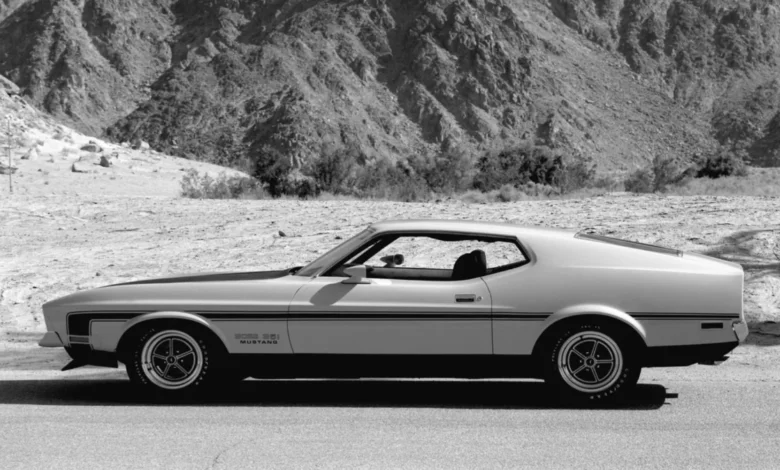
The year 1971 stands as a pivotal and often scrutinized juncture in American automotive history, marking the beginning of the end for the traditional muscle car era. While the late 1960s had been defined by an arms race of cubic inches and unrestricted horsepower, the dawn of the 1970s brought a sobering array of challenges that forced Detroit’s "Big Three" to reconsider their high-performance strategies. Among the most significant casualties of this transitional period was the 1971 Ford Mustang Boss 351. Produced for only a single model year, the Boss 351 was a car caught between two worlds: it possessed the raw, high-revving DNA of Ford’s legendary racing programs, yet it was housed in a redesigned body that many consumers found too large, and it arrived just as the regulatory hammer of the federal government began to fall.
The demise of the Boss 351 was not the result of a single failure but rather a "perfect storm" of economic, regulatory, and internal corporate shifts. By 1971, the automotive landscape was being fundamentally reshaped by the Clean Air Act of 1970, which mandated significant reductions in tailpipe emissions. Simultaneously, the insurance industry had begun to levy punitively high premiums on high-performance vehicles, often referred to as "surcharge cars." For Ford, these external pressures were compounded by a strategic retreat from professional motorsports. The Blue Oval, which had dominated the 1960s with its "Total Performance" mantra, began to drastically scale back its factory-backed efforts in both NASCAR and the SCCA Trans Am series. Without the need to homologate engines for the track, the justification for expensive, specialized powerplants like the Boss series began to evaporate.
The Engineering Pedigree of the 351 Cleveland V8
To understand the Boss 351, one must first understand the "Cleveland" engine family from which it was born. Unlike the more common 351 Windsor engine, which was essentially an enlarged version of the small-block V8, the 351 Cleveland was a clean-sheet design focused on high-RPM breathing and volumetric efficiency. Named for the Cleveland, Ohio, engine plant where it was manufactured, the engine debuted in 1970 and immediately gained a reputation for its massive ports and canted-valve cylinder heads.
The Boss 351 version of the Cleveland was the pinnacle of this architecture. To elevate the standard 351-4V (four-barrel) engine to "Boss" status, Ford engineers implemented a series of rigorous upgrades designed for durability and high-end power. The block featured four-bolt main bearing caps to secure the crankshaft under high stress, and the rotating assembly was bolstered by a forged-steel crankshaft and forged-aluminum pistons. The cylinder heads were the true stars of the package, utilizing large valves and a "quench" combustion chamber design that allowed for a high 11.7:1 compression ratio—a figure that would become impossible to maintain just a year later as leaded gasoline began to disappear from pumps.
On paper, the Boss 351 was rated at 330 horsepower and 370 pound-feet of torque. However, these figures were widely considered conservative, a common practice during the era to appease insurance adjusters. In practice, the Boss 351 proved to be a "giant killer." Despite having significantly less displacement than the 429-cubic-inch Cobra Jet engines available in the Mustang Mach 1, the Boss 351 was often faster in real-world testing. The lighter weight of the small-block engine improved the car’s weight distribution, and the high-winding nature of the Cleveland heads allowed it to pull hard through the quarter-mile. Historical testing by Motor Trend recorded the Boss 351 clocking a 13.8-second quarter-mile at 104 mph, eclipsing the times set by the much more expensive and heavy 1969 Boss 429.
The Larry Shinoda Legacy and the "Boss" Identity
The nomenclature of the Boss Mustangs is inextricably linked to the arrival of Semon "Bunkie" Knudsen and designer Larry Shinoda at Ford in the late 1960s. Knudsen, who had been passed over for the presidency at General Motors, moved to Ford and brought the talented Shinoda with him. Shinoda, the visionary behind the 1963 Chevrolet Corvette Sting Ray, was tasked with revitalizing the Mustang’s performance image.
According to Ford historical accounts, the "Boss" name originated from Shinoda’s cheeky response to inquiries about his top-secret project. When asked what he was working on, he would simply reply, "the boss’s car," referring to Knudsen. The name stuck, and it became a branding masterstroke, signifying a vehicle that was purpose-built for performance under the direct supervision of the company’s highest leadership. While the Boss 302 was designed for Trans Am road racing and the Boss 429 was a NASCAR homologation special, the Boss 351 was intended to be the ultimate street-performance Mustang. However, by the time the 351 reached production, the corporate environment had shifted. Knudsen was fired by Henry Ford II in late 1969, and Shinoda followed shortly after. The Boss 351 was effectively an orphan, a high-performance machine whose primary champions were no longer at the company.
The 1971 Redesign: A Growth Spurt Gone Wrong
While the engine was a masterpiece, the vehicle it powered was met with a lukewarm reception. The 1971 Mustang represented the most radical redesign of the pony car since its 1964 debut. Under Knudsen’s earlier direction, the Mustang had grown significantly. It was more than two inches longer and wider than the 1970 model, with a wheelbase stretched by an inch and a rear track widened by 2.5 inches.
The rationale for this upscaling was pragmatic: Knudsen wanted a Mustang large enough to house the massive 429-cubic-inch V8 without the expensive and complex modifications required for the 1969 and 1970 Boss 429 models. However, by the time the 1971 "Big Mustang" arrived, the market’s appetite for oversized pony cars was waning. The new "SportsRoof" (fastback) profile featured a nearly horizontal rear window that created a sleek look but resulted in abysmal rearward visibility for the driver.
Contemporary reviews from publications like Car and Driver were harsh. Critics pointed out that the interior ergonomics had suffered in the redesign, with controls that were difficult to reach and auxiliary gauges that were obscured by the steering wheel. The car felt massive from the driver’s seat, losing the "flickable," compact feel that had made the original 1964-1966 Mustangs a cultural phenomenon.
Market Performance and the End of an Era
The sales figures for the 1971 Boss 351 tell a story of niche appeal in a declining market. Ford produced only 1,806 units of the Boss 351, making it one of the rarest performance Mustangs of the era. To put this in perspective, total Mustang sales for the three-year run of the "Big Mustang" (1971–1973) totaled roughly 410,000 units. This was a precipitous drop from the 1.75 million units sold during the Mustang’s first three and a half years on the market.
The broader context of 1971 further explains the car’s short life. The 1971 model year was the final year for high-compression engines at Ford. For 1972, the company was forced to lower compression ratios across the board to accommodate lower-octane unleaded fuel, which was necessary for the upcoming introduction of catalytic converters. The Boss 351, with its 11.7:1 compression, could not be easily adapted to these new realities without losing the very performance that defined it. Consequently, Ford chose to discontinue the Boss nameplate entirely rather than dilute the brand with a low-performance version.
Chronology of the Boss Mustang Era
- 1968: Bunkie Knudsen and Larry Shinoda join Ford; development of the Boss program begins.
- 1969: Introduction of the Boss 302 (for Trans Am) and Boss 429 (for NASCAR). Knudsen is fired in September.
- 1970: The 351 Cleveland engine debuts; Ford officially withdraws from factory-backed racing at the end of the year.
- 1971: The redesigned "Big Mustang" debuts. The Boss 351 is released as the sole "Boss" model for the year.
- 1972: Federal emissions standards tighten; compression ratios drop; the Boss 351 is replaced by the 351 "HO" (High Output), which lacked the "Boss" branding and high-compression punch.
- 1974: The Mustang II debuts, marking a total departure from the muscle car philosophy in favor of fuel economy and smaller dimensions.
Legacy and Historical Analysis
Decades later, the 1971 Ford Mustang Boss 351 has undergone a significant reputation shift. While it was once seen as the awkward final act of a dying era, it is now celebrated by collectors as one of the best-engineered Mustangs of the 20th century. Its rarity, combined with the fact that it could outperform the legendary big-blocks of its day, has made it a highly sought-after prize at automotive auctions.
The Boss 351 serves as a mechanical time capsule, representing the absolute limit of what Detroit could achieve before the "Malaise Era" of the mid-1970s took hold. It was a car designed for a world of cheap high-octane gasoline and factory racing—a world that ceased to exist almost exactly as the car hit the showroom floors. Its failure in the marketplace was not a reflection of its mechanical capabilities, but rather a sign that the American public’s relationship with the automobile was changing. The Boss 351 didn’t just mark the end of a model; it marked the end of an unapologetic era of American performance.
Related posts: