Escalation of Anti-AI Sentiment: Sam Altman’s Home Attacked Twice Amid Rising Tensions

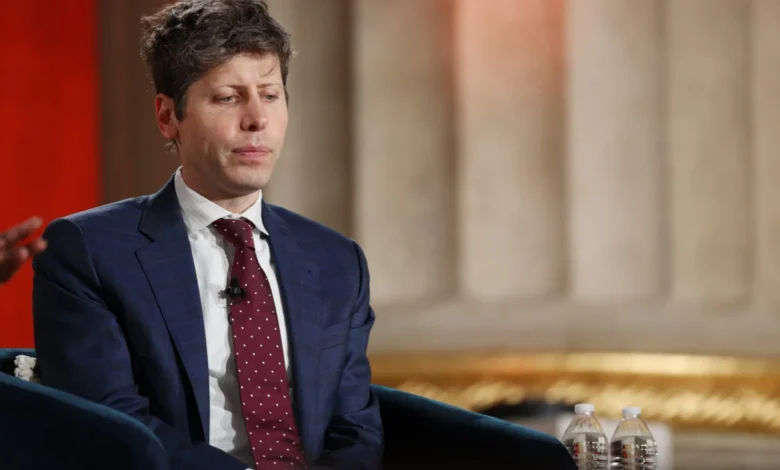
San Francisco, CA – The home of OpenAI CEO Sam Altman was targeted in two separate attacks within three days – first with a Molotov cocktail, then with gunfire – marking a stark and concerning escalation in anti-artificial intelligence sentiment. Authorities have indicated that the initial assault was explicitly motivated by a virulent hatred of AI, signaling a new, potentially violent front in the ongoing societal debate surrounding the technology’s rapid advancement and pervasive impact. These incidents, while specifically targeting one of the most prominent figures in the AI world, reflect a broader, increasingly volatile backlash against the industry’s infrastructure, its leaders, and the perceived threats it poses to employment, resources, and even human existence.
A Chronology of Attacks and Alleged Motives
The unsettling sequence of events began on a Friday night when a Molotov cocktail was allegedly thrown at Sam Altman’s San Francisco residence. The individual apprehended in connection with this attack was identified as Daniel Moreno-Gama, a 20-year-old man whose online presence reportedly showcased a deep-seated antagonism towards artificial intelligence. A federal complaint details Moreno-Gama’s alleged intent to kill Altman, further asserting that he subsequently planned to set fire to OpenAI’s nearby headquarters. Investigations revealed that Moreno-Gama had publicly disseminated anti-AI ideologies on a personal Substack blog, where he articulated a fervent belief that artificial intelligence was an imminent cause of human extinction. Upon his arrest, authorities reportedly found him in possession of a "manifesto" that meticulously outlined his anti-AI convictions and, chillingly, included a list of other prominent AI executives. This discovery underscored the premeditated nature of the attack and the depth of the suspect’s alleged radicalization.
Just two days later, Altman’s home was once again subjected to violence. A car, allegedly occupied by a 25-year-old and a 23-year-old, reportedly approached the residence, from which shots were fired before the vehicle fled the scene. Law enforcement officials later apprehended the pair. While the motive behind this second attack remains less clear, with authorities yet to definitively confirm if Altman was specifically targeted or if the incident was linked to the prior anti-AI motivated assault, its proximity in time and location to the first incident has amplified concerns about the safety of high-profile figures in the tech industry. These two incidents collectively represent the most visible and direct physical attacks to date on the CEO of a major AI company, forcing a reevaluation of security protocols and the potential for extremism stemming from technological anxieties.
The Broader Wave of Anti-AI Sentiment
The attacks on Sam Altman’s residence do not occur in a vacuum but rather within a growing tide of public discontent and, in some instances, violent opposition to artificial intelligence. This backlash manifests in various forms, targeting not just the architects of AI but also its physical infrastructure and the perceived societal disruptions it portends.
One significant source of grievance emanates from workers in creative industries. Writers, illustrators, voice actors, and musicians across the globe have voiced strong objections, claiming that AI technology is already being deployed to replace human labor. Their concerns are often compounded by allegations that AI systems are trained on their original work without explicit consent or fair compensation, effectively undermining their livelihoods and intellectual property rights. High-profile artists, including Billie Eilish, Nicki Minaj, Elvis Costello, and Katy Perry, have publicly opposed music generators from companies like Stability AI, highlighting the widespread nature of this creative sector resistance. This sentiment reflects a profound fear that AI automation will devalue human creativity and lead to mass unemployment in fields traditionally seen as uniquely human.
Beyond creative professions, communities situated near proposed or existing data centers are increasingly pushing back against these facilities, which form the crucial physical backbone of AI operations. These data centers are notorious for their voracious consumption of electricity and water, placing immense strain on local power grids and competing with residents for vital resources, particularly in regions already grappling with drought conditions or aging infrastructure. The environmental footprint and resource demands of AI have thus become a potent rallying cry for local activists and environmental groups, leading to protests and political challenges against data center projects across the country. The recent incident in Indianapolis, where the home of a city council member was shot 13 times with a note reading "no data centers" after the council member supported a data center project, serves as a chilling example of this localized, sometimes violent, resistance. Similarly, a town near St. Louis, Missouri, saw all incumbent council members voted out after they approved a data center project, as reported by Politico, illustrating the significant political cost of perceived pro-AI development.
Existential Fears and the AI Safety Debate
Perhaps the most profound and unsettling concern fueling anti-AI sentiment is the existential threat posed by increasingly powerful AI systems. Prominent researchers and figures within the AI community itself have warned that advanced artificial general intelligence (AGI) could potentially slip beyond human control, posing an unprecedented risk to humanity’s survival. This fear is not confined to science fiction but is actively discussed within academic and industry circles, with figures like Geoffrey Hinton, often dubbed the "Godfather of AI," raising alarms about the rapid pace of development and the potential for superintelligence to become uncontrollable. Debates revolve around scenarios ranging from unintended catastrophic outcomes due to misaligned AI objectives to deliberate actions by a superintelligent AI that views humanity as an obstacle. The alleged manifesto of Daniel Moreno-Gama, predicting human extinction due to AI, starkly illustrates how these high-level philosophical and scientific warnings can translate into radicalized beliefs and violent actions among certain individuals.
Echoes of the Industrial Revolution: A Historical Parallel
The escalating threats against AI and its proponents bear striking resemblances to periods of profound technological upheaval throughout history. Aleksandar Tomic, an economist and the associate dean for strategy, innovation, and technology at Boston College, draws a direct parallel to the second Industrial Revolution, which spanned from the late 1800s to the early 1900s. Tomic suggests that while it is tempting to dismiss the recent attacks as isolated acts by a "disturbed individual," the broader context points to a societal anxiety mirroring that era. "Technology is moving really fast. A lot of people are feeling very anxious, but the institutions are lagging. And, you know, Sam Altman for better or worse, is kind of the face of AI," Tomic stated to Fortune.
The second Industrial Revolution was characterized by massive societal shifts, including widespread migration from rural areas to burgeoning industrial cities. Millions transitioned from agrarian lifestyles to working long, arduous shifts in often dangerous manufacturing and textile factories. This period saw a significant resentment grow between the working class and the industrialists who owned the means of production, leading to profound social and political unrest. This tumult directly contributed to the rise of new political philosophies such such as communism and anarchism, and the foundational movements of organized labor, all seeking to address the perceived injustices and dislocations caused by rapid industrialization.
Tomic argues that the current era of AI advancement is ushering in a similar, if not more accelerated and expansive, period of technological change. He cautions, "The last time there was so much technological change so quickly, it took us about 50 years to figure it out, and two world wars." The key difference, he emphasizes, is the speed and scale of AI’s impact. "It’s happening much quicker, and it’s happening at a much larger scale." This historical lens suggests that the current anxieties are not merely transient but represent deep-seated societal challenges that require systemic solutions, not just technological innovation.
Public Sentiment Turns Against AI and Economic Fears
Reinforcing Tomic’s observations, a Stanford University report published recently indicates a noticeable shift in public sentiment against AI. The 2026 AI Index Report on public opinion revealed that the percentage of people globally who express "nervousness" about AI-powered products and services increased by two percentage points in 2025, reaching 52%. The United States exhibits an even higher level of apprehension, with 64% of its population reporting nervousness about the technology, more than 10 percentage points above the global baseline.
A significant driver of this unease is the pervasive fear of job displacement. The Stanford study found that nearly two-thirds of Americans believe AI technology will lead to a reduction in jobs over the next two decades. This concern is not unfounded, as even leaders within the AI industry acknowledge the potential for significant economic disruption. Dario Amodei, CEO of Anthropic, has previously predicted that half of all white-collar jobs could be eliminated due to AI. Jack Clark, cofounder of Anthropic, echoed this sentiment at the Semafor World Economy conference, predicting sweeping changes across society. "If we’re correct, this technology really is going to change the world in a vast way. It will change how businesses start, how business is done, aspects of national security, how we even relate to one another as people, and it’s impossible to reconcile that with a world where the economy doesn’t change in substantial ways as well," Clark stated.
Such predictions fuel legitimate anxieties about future economic stability and social equity. The historical precedent of the Industrial Revolution demonstrates that while new technologies eventually create new jobs, the transition period can be long, painful, and characterized by widespread unemployment and social upheaval.
The Path Forward: Policy, Dialogue, and De-escalation
Addressing the potential for mass layoffs and societal disruption, economist Aleksandar Tomic suggests that governmental intervention will be crucial, drawing another parallel to historical responses. He points to the establishment of Social Security during the last century in the U.S., a policy implemented to combat widespread poverty and adapt to changing demographics and the decline of multigenerational living arrangements. Tomic advocates for similar proactive policy shifts in the current era, including reforms that decouple essential services like healthcare from employment, given the increasing uncertainty of formal job structures. The majority of Americans currently receive healthcare through their employers, a system that could prove unsustainable in an AI-driven economy with fewer traditional jobs. "In addition to just making sure that we do implement the technology, and so on, we need to find a way to put people first, because otherwise, I think we have already undesirable effects," he urged.
Sam Altman, the direct target of these escalating attacks, has also acknowledged the validity of public concerns. In a blog post published after the first attack on his home, Altman expressed empathy for those holding anti-AI views, conceding that the fear and anxiety surrounding AI are "justified" given its potential to bring about "the biggest change for society, possibly ever." He called for "new policy" to "help navigate through a difficult economic transition." However, Altman also maintained an optimistic outlook, suggesting that overall technological progress will ultimately lead to an "unbelievably good" future. Crucially, he appealed for good-faith criticism and constructive debate on the topic, emphasizing the need to "de-escalate the rhetoric and tactics and try to have fewer explosions in fewer homes, figuratively and literally."
Implications and Future Challenges
The attacks on Sam Altman’s home represent a dangerous new frontier in the public discourse surrounding AI. They underscore the potential for radicalization when anxieties about technological change intersect with perceived threats to livelihoods, environmental stability, and even human existence. For the AI industry, these incidents signal a critical need to not only focus on technological advancement but also to engage more effectively and empathetically with public concerns. This includes transparency in development, proactive engagement with policymakers on regulatory frameworks, and genuine efforts to mitigate negative societal impacts like job displacement and resource strain.
For governments and regulatory bodies, the challenge is immense: how to foster innovation while simultaneously ensuring public safety, economic stability, and ethical development. The lack of robust regulatory frameworks for AI, often lagging behind technological progress, leaves a vacuum that can be filled by fear and extremism. The attacks also raise significant security concerns for prominent figures in the tech industry, highlighting the need for enhanced protective measures and a deeper understanding of the motivations driving anti-technology sentiments.
Ultimately, the incidents at Sam Altman’s home serve as a stark reminder that the future of AI is not solely a technical challenge but a profound societal one, demanding careful navigation, open dialogue, and a concerted effort to address the anxieties and legitimate concerns of a public grappling with unprecedented technological transformation. The path forward requires not just innovation, but also empathy, foresight, and a commitment to ensuring that the benefits of AI are broadly shared, and its risks are thoughtfully managed for the well-being of all.
Related posts: