The culinary and mixology landscape has long been shaped by periodic resurgences of classic libations, with recent months pointing toward a definitive return of the Sidecar. As home mixologists and contemporary craft cocktail bars alike revisit foundational recipes from the early 20th century, this cognac-based drink has reclaimed its status as a subject of widespread culinary interest. Spanning nearly two decades of documenting evolving beverage trends, food and cocktail chroniclers have observed that the Sidecar occupies a unique space in modern mixology: it bridges historical reverence with contemporary palates, maintaining a steadfast following despite shifting consumer preferences toward modern craft innovations.
Main Facts and Composition
At its structural core, the Sidecar belongs to the traditional family of "sour" or "daisy" style cocktails, characterized by a potent base spirit, a citrus element for brightness, and a sweet liqueur modifier to establish equilibrium. Traditional bartending standards frequently cite a 2:1:1 ratio for the beverage, calling for two parts spirit—historically cognac or French brandy—balanced by one part orange liqueur, such as Cointreau or Triple Sec, and one part fresh lemon juice.
However, contemporary interpretations of the recipe often feature minor adaptations to suit modern taste preferences. Many mixologists and home practitioners have subtly reduced the proportion of lemon juice to temper the drink’s sharp acidity, yielding a smoother, spirit-forward profile. While cognac remains the orthodox spirit of choice, regional adaptations and contemporary experimentation have introduced alternative spirits into the fold. Notably, establishments utilizing American bourbon or rye whiskey have demonstrated that the underlying structure of the Sidecar is sufficiently robust to accommodate variations in base spirits without losing its defining characteristics.

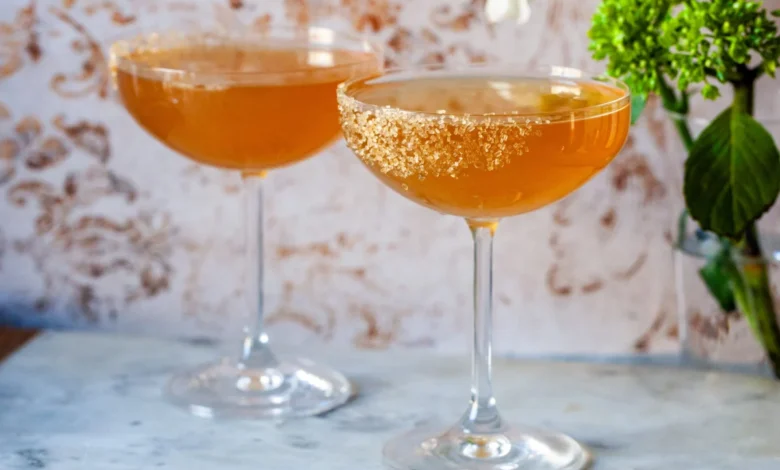
The drink is traditionally served in a stemmed cocktail glass, frequently accompanied by a sugared rim. While culinary purists debate the functional necessity of the sugar rim—arguing that the orange liqueur provides ample sweetness—mixologists often retain the feature for visual presentation, noting that raw or coarse sugar adds a textural contrast and a golden sheen to the glass’s edge. Preparation generally involves vigorous shaking with ice in a standard cocktail shaker until the vessel becomes intensely chilled, ensuring rapid dilution and chilling before straining the liquid directly into the serving glassware.
Chronology and Historical Origins
The precise chronology of the Sidecar remains a subject of considerable debate among cocktail historians, culinary researchers, and beverage enthusiasts, largely due to the oral tradition of early 20th-century bar culture. The cocktail’s emergence is broadly anchored in the interwar period of the 1920s, coinciding with an era of significant cross-cultural exchange between American expatriates, soldiers, and European bartenders, particularly in Paris.
Two primary origin narratives dominate the historical discourse surrounding the Sidecar, both attributing its creation to the closing years of the First World War or the immediate post-war period. The first, and most widely circulated, places the narrative in Paris, France. According to this account, an American army captain stationed in the French capital during World War I frequented prominent establishments such as the bar at the Hôtel Ritz Paris or Harry’s New York Bar. The officer allegedly arrived at the establishment utilizing a motorcycle sidecar as his primary mode of transportation. Becoming a regular patron, he routinely requested a specific combination of cognac, orange liqueur, and lemon juice. Impressed by the patron’s distinct vehicular arrival, local bartenders ultimately named the concoction in honor of his preferred transport.
An alternative historical perspective focuses on operational mechanics within the bar environment rather than a specific patron. This theory suggests that the drink was devised by bartenders who frequently found themselves with surplus liquid remaining in the cocktail shaker after filling a primary glass. Rather than discarding the excess, bartenders poured the remaining portions into a secondary, smaller glass—referred to in industry parlance as a "sidecar." Over time, this byproduct of batching evolved into an intentional, standalone recipe.

Despite the proliferation of these competing narratives, written documentation provides a clearer terminus ante quem for the drink’s existence. The Sidecar first appeared in print in two cocktail manuals published in 1922: Robert Vermeire’s "Cocktails: How to Mix Them" and Harry MacElhone’s "Harry’s ABC of Mixing Cocktails." MacElhone, operating out of Harry’s New York Bar in Paris, famously attributed the creation of the recipe to Pat MacGarry, a prominent bartender at Buck’s Club in London, further complicating the transatlantic claims of the drink’s provenance.
Supporting Data and Industry Trends
The resurgence of the Sidecar aligns with broader quantitative trends within the global beverage and hospitality sector, which has experienced a sustained renaissance of pre-Prohibition and mid-century classic cocktails over the past fifteen years. Market research within the spirits industry indicates that consumer demand for high-end brandies, cognacs, and artisanal orange liqueurs has steadily grown, driven by consumer interest in premium ingredients and historical authenticity.
Data compiled by hospitality industry analysts suggest that classic cocktails like the Sidecar serve as a reliable barometer for the health of the high-end spirits market. Because the drink relies heavily on the quality of its primary components—specifically the aging and flavor profile of the cognac—sales of premium and VSOP (Very Superior Old Pale) cognacs often experience measurable upticks during periods when heritage cocktails gain traction in metropolitan bar scenes. Furthermore, the adaptability of the Sidecar template has allowed contemporary cocktail bars to introduce seasonal variations, incorporating local citrus fruits, alternative sweeteners, or barrel-aged spirits to appeal to demographic segments seeking both tradition and novelty.
Statements and Industry Reactions

Professional mixologists and beverage directors point to the enduring appeal of the Sidecar as a testament to the mathematical precision of classical cocktail formulation. Unlike overly complex modern concoctions that rely on extensive ingredients or esoteric garnishes, the Sidecar’s reliance on three distinct components highlights the skill of the bartender and the quality of the raw materials.
"The beauty of a properly executed Sidecar lies in its unforgiving simplicity," notes James Vance, a veteran beverage director based in Chicago. "When you work with a drink that has only three ingredients, there is nowhere to hide flaws. If the cognac is too harsh, or the citrus is unbalanced, the entire structure collapses. Conversely, when it is balanced correctly, it offers a level of crisp refreshment and depth that few modern recipes can replicate."
Culinary commentators have similarly emphasized the drink’s structural kinship with other foundational citrus-based cocktails, noting that its transatlantic migration from European hotels to American bars established a blueprint that heavily influenced the development of modern mixology. Culinary historians observe that the Sidecar effectively acts as the European bridge between the traditional punch traditions of the 18th and 19th centuries and the modern craft cocktail movement.
Broader Impact and Implications
The continued cultural and commercial relevance of the Sidecar carries broader implications for the hospitality and tourism industries, particularly in historic urban centers associated with cocktail heritage. Destinations such as Paris and London continue to leverage their historical ties to classic mixology as a pillar of culinary tourism, drawing visitors interested in experiencing historic bars and authentic beverage preparations.

Moreover, the cocktail’s adaptability underscores a wider shift in consumer preferences toward customizable, high-craft beverages that offer a narrative connection to the past. As supply chains for artisanal spirits expand and global interest in historical gastronomy deepens, recipes like the Sidecar provide a vital link between historical preservation and contemporary culinary innovation. By bridging the gap between traditional French brandy culture and modern mixology standards, the Sidecar remains an enduring fixture of global beverage culture, demonstrating that foundational culinary principles can withstand the test of a rapidly evolving consumer market.