for the Ultimate Peach Cobbler Loaf: A Culinary Case Study in Recipe Development
The pursuit of culinary perfection often demands patience far beyond the standard parameters of home baking. While commercial recipe development typically operates on strict corporate timelines, independent bakers and culinary creators frequently find themselves locked in multi-year projects driven by personal obsession. A prominent case in point is the newly finalized Peach Cobbler Loaf, a recipe that recently debuted after a grueling six-year iteration cycle. The journey from an initial concept to a finalized, reproducible baking formula highlights the intricate physics of moisture management, fruit distribution, and structural integrity that govern modern pastry development.
Main Facts of the Development Cycle

The recipe in question bridges the gap between traditional Southern peach cobbler and a structured, portable pound-style loaf cake. According to the developer, the core challenge over the six-year period lay in reconciling competing physical properties: the high water content of fresh stone fruit versus the need for a stable, crumb-forward cake structure.
Early iterations consistently failed due to fundamental flaws in fruit preparation and batter formulation. Diced peaches yielded a bland flavor profile because the surface area-to-volume ratio restricted the release of natural sugars and aromatics during baking. Conversely, overly thin peach slices virtually disappeared into the batter, leaving behind pockets of excess moisture that compromised the crumb. Furthermore, premature attempts to incorporate complex spice profiles into the batter resulted in a muted, unappealing beige aesthetic without delivering the intended depth of flavor.
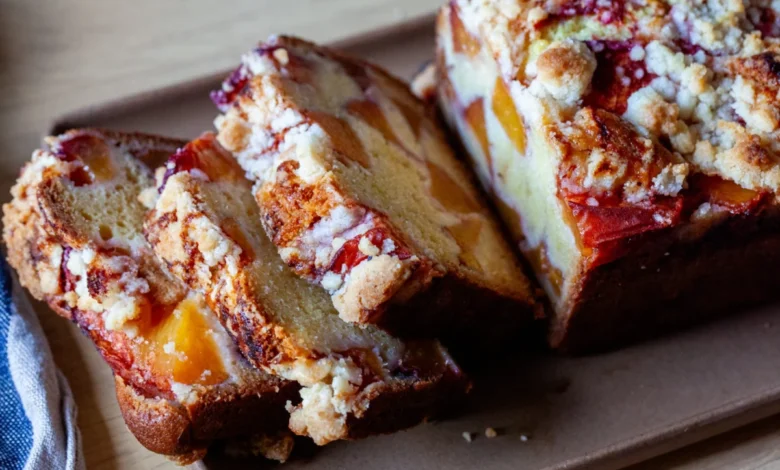
The final breakthrough relied on precise technical specifications. The approved recipe requires a specific loaf pan capacity of six liquid cups (1,420 milliliters), measuring 8 by 4 inches at the base and tapering to 9 by 5 inches at the rim. To manage the inevitable release of fruit juices during baking, the loaf pan must be placed on a larger rimmed baking sheet. The assembly process utilizes a layered architecture: half the batter forms the base, followed by a dense layer of seasoned peach wedges, the remaining batter, a top layer of peaches, residual fruit juices, and a traditional butter-and-sugar streusel topping. Baking times range strictly between 60 and 70 minutes at 375°F (190°C), with mandatory internal temperature and texture testing beneath the top fruit layer where raw batter frequently accumulates.
Chronology and Iteration History

The timeline of the Peach Cobbler Loaf’s creation reflects the seasonal limitations inherent to baking with fresh agricultural produce. Because stone fruit seasons are relatively brief—typically spanning a few peak summer months—each iteration window was restricted to a narrow annual window of opportunity.
Summer 2018 to Summer 2020: The Exploratory Phase
The initial three years were characterized by exploratory trials focusing on flavor integration. During this period, the developer experimented with various spice combinations, including cinnamon, nutmeg, and cardamom, blended directly into the flour mixture. The results were consistently substandard, as the spices overwhelmed the delicate flavor of the peaches while turning the crumb a drab, uniform brown. Data logs from these summers indicate that moisture control was not yet prioritized, leading to soggy centers and structural collapses upon cooling.
Summer 2021 to Summer 2023: The Structural and Mechanical Adjustments
Midway through the project, the focus shifted from flavor additives to structural mechanics. The developer tested multiple pan sizes, discovering that standard 8.5 by 4.5-inch loaf pans were either prone to overflowing or left the cake too shallow to support the weight of the fruit. During the summer of 2022, trials involving macerated peaches—tossed with lemon juice, a fraction of the brown sugar, and cinnamon—proved that pre-treating the fruit could concentrate its flavor. However, uniform distribution remained elusive, as all the fruit tended to sink directly to the bottom of the pan during the baking process.
Summer 2024: The Architectural Breakthrough
The final configuration was achieved through a dual-layer assembly method. By splitting the batter and the fruit into two distinct strata, the baker prevented the peaches from migrating to the bottom of the pan. Furthermore, the inclusion of a high-fat dairy component—specifically full-fat yogurt or sour cream—provided the necessary acidity to activate the leavening agents while maintaining a tender crumb that could support the weight of the heavy fruit layer.

Supporting Data and Nutritional-Culinary Metrics
Baking science relies heavily on ratios of fats, proteins, carbohydrates, and moisture. In the finalized Peach Cobbler Loaf, the ingredient ratios have been carefully calibrated to withstand the inclusion of high-moisture fruit.
The formula utilizes a standard creaming and whisking hybrid method:
- Fats: A total of 8 tablespoons of unsalted butter (6 melted for the cake batter, 2 melted for the streusel) combined with high-fat dairy (yogurt or sour cream) to ensure emulsification and moisture retention.
- Sugars: Granulated and light brown sugars are split between the cake batter and the streusel topping, providing both structural tenderness and a contrasting crunchy exterior texture via the streusel.
- Leavening: A precise balance of baking powder and baking soda interacts with the lactic acid in the yogurt or sour cream, generating sufficient carbon dioxide to lift the heavy batter, which includes 1⅓ cups of all-purpose flour.
- Fruit Sourcing: The recipe mandates fresh freestone peaches, treated with fresh lemon juice to prevent enzymatic browning and to provide an acidic counterpoint to the sweetness of the fruit and sugars.
According to culinary analysts who examine home-baking trends, recipes requiring more than three years of development are exceptionally rare outside of commercial test kitchens, where consumer-packaged goods undergo rigorous multi-stage trials. For an independent recipe developer, dedicating six years to a single baked good underscores a growing cultural shift toward slow craftsmanship in home cooking, pushing back against the fast-paced, algorithm-driven content cycles that prioritize rapid output over enduring quality.

Official Statements and Creator Reflections
Reflecting on the completion of the project, the developer noted the psychological hurdle of abandoning the pursuit of perfection versus the stubborn drive required to finalize complex dishes.
"A friend asked me last week how long it takes to get a recipe right," the creator stated in development notes. "I told him the only answer I know: As long as it takes. I’d like to be someone who could adjust my expectations, make peace with close enough, or have the slightest amount of chill when it’s clear that whatever I’m trying to do isn’t something I can pull off, but we’re wired how we’re wired."
This sentiment resonates widely within the broader culinary community, where perfectionism is simultaneously praised as a hallmark of dedication and critiqued as an inefficient use of time. Professional pastry chefs often emphasize that home bakers face unique challenges that commercial operations do not encounter. Commercial kitchens utilize industrial ovens with precise thermal convection, standardized ingredients, and professional-grade pans. Home bakers, conversely, must contend with variable oven temperatures, regional flour humidity differences, and inconsistent seasonal produce.

Broader Impact and Culinary Implications
The release of the Peach Cobbler Loaf arrives near the conclusion of the northern hemisphere’s stone fruit season, a timing that the developer acknowledged with characteristic pragmatism. "I know we’re about two minutes from the end of peach season, but the cake doesn’t care. It’s ready, and I humbly think it’s worth the wait."
From a market and trend perspective, detailed narrative-driven recipes that document failures alongside successes have gained significant traction among consumers. Modern home cooks increasingly value transparency, seeking out recipes that explain the ‘why’ behind specific techniques—such as why a loaf pan requires parchment paper extensions or why the batter must be split into two distinct layers.
Furthermore, the storage recommendations included in the recipe highlight a practical understanding of baked goods chemistry. The developer advises storing the cake unwrapped at room temperature inside a makeshift bread box (such as an idle microwave or oven) to preserve the integrity of the streusel crust over a three-day period. Culinary tests indicate that the flavor profile actually improves on the second and third days as the fruit juices fully permeate the surrounding crumb, making it an ideal make-ahead item for domestic entertaining.

As the culinary world looks toward the autumn baking season, the six-year journey of the Peach Cobbler Loaf stands as a testament to the rigorous standards of modern recipe development. It illustrates that while food trends move rapidly, the fundamental laws of baking physics cannot be rushed—demanding exactitude, resilience, and an unwavering commitment to the final product.