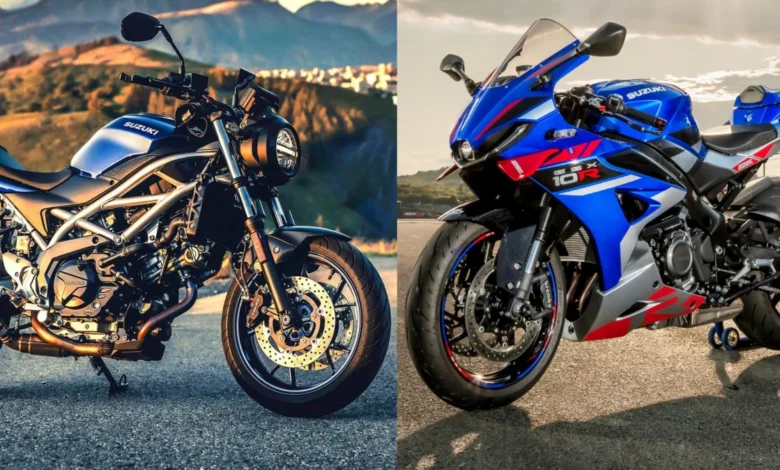
The EICMA motorcycle show in Milan remains the global epicenter for the two-wheeled industry, serving as the definitive stage where manufacturers unveil their strategic visions for the coming model year. At this year’s exhibition, Suzuki Motor Corporation reinforced its reputation for industrial pragmatism. Rather than chasing the ephemeral trends of hyper-performance race replicas, the Hamamatsu-based manufacturer has elected to leverage its most reliable, time-tested engineering platforms to address modern market demands. The introduction of the SV-7S and the GSX-10R signals a deliberate pivot toward accessibility, reliability, and street-focused ergonomics, effectively bridging the gap between historical legacy and contemporary regulatory requirements.
A Legacy of Engine Longevity
To understand the significance of the new announcements, one must analyze the history of Suzuki’s powerplant architecture. The SV-7S is built upon the foundation of the 645cc V-twin engine, a platform that first debuted in 1999 with the original SV650. For nearly three decades, this engine has been lauded for its broad torque curve and mechanical simplicity. By updating this architecture to meet the stringent Euro 5+ emissions standards, Suzuki has ensured that one of the most beloved middleweight engines in history remains relevant for European markets.
Similarly, the GSX-10R draws its spiritual lineage from the legendary K5 generation of the GSX-R1000, produced between 2005 and 2006. That engine, specifically, is frequently cited by enthusiasts and mechanical engineers alike as a "golden era" motor—noted for its compact design, robust internal components, and an exceptional power-to-weight ratio that set the standard for liter-class sportbikes for nearly a decade. By revisiting the philosophy of the K5, Suzuki is betting that modern riders are less interested in chasing the 200+ horsepower figures of current superbikes and more interested in the tractable, reliable power that defined the mid-2000s.
The SV-7S: Refinement Over Revolution
The SV-7S represents a sophisticated evolution of the outgoing SV650. In the current economic climate, where manufacturing costs are rising, Suzuki has opted for a "value-add" approach. The SV-7S incorporates essential technological upgrades that have become standard expectations for the modern commuter and weekend rider. These include a ride-by-wire throttle system, which allows for more precise fuel management, and a factory-integrated quickshifter.
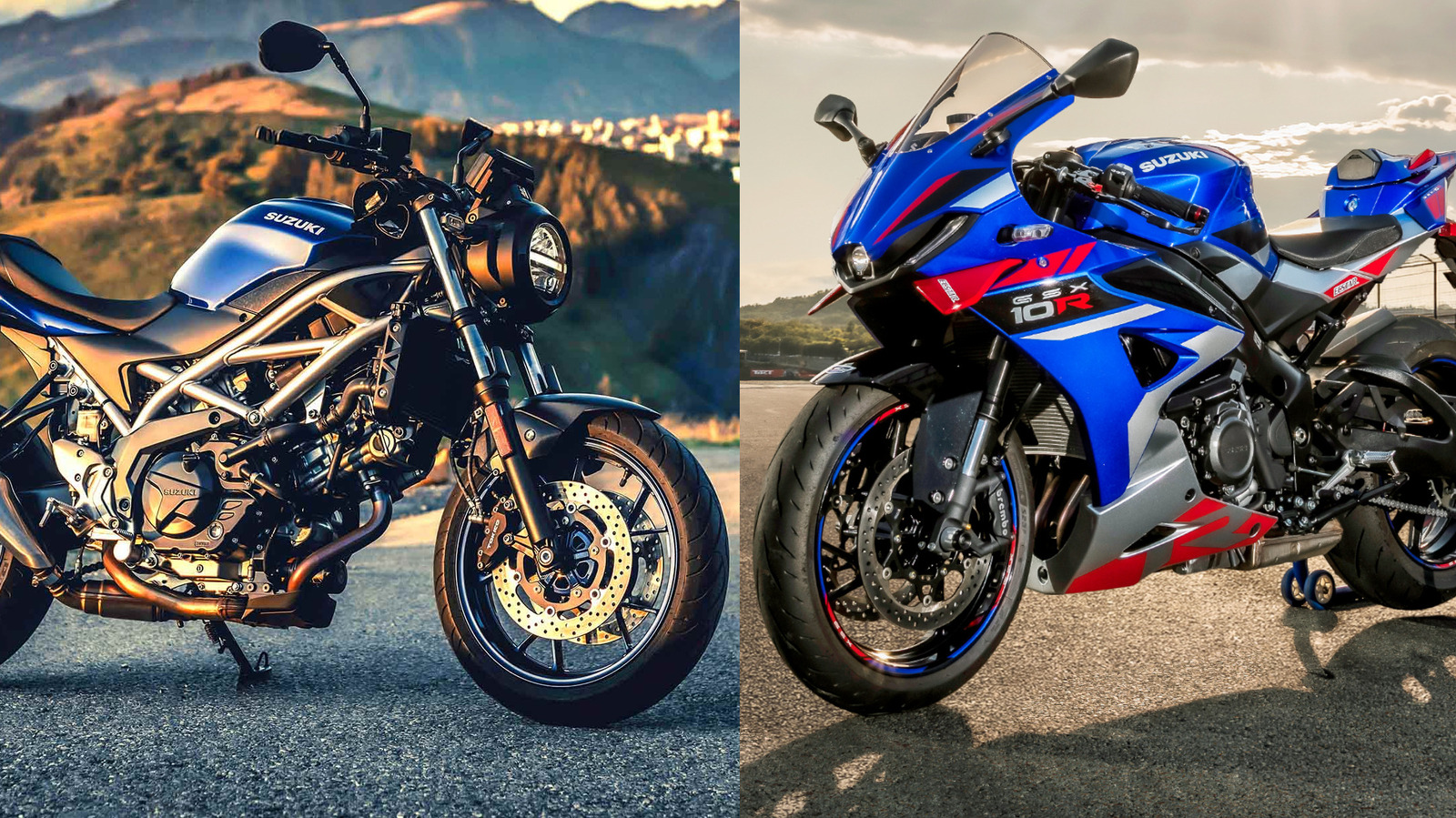
The transition from the SV650 to the SV-7S is characterized by improved lighting—transitioning to LED arrays that increase visibility—and refined emissions control systems. While official power figures remain consistent with the legacy 73-horsepower output, the integration of these electronic aids suggests a bike that is significantly more polished in urban traffic. For the European market, where displacement categories are often tied to insurance and licensing tiers, the preservation of the 645cc V-twin architecture is a tactical masterstroke, maintaining a product that is both familiar to loyalists and competitive against newer, often more complex, twin-cylinder rivals.
The GSX-10R: A Strategic Rebranding of Performance
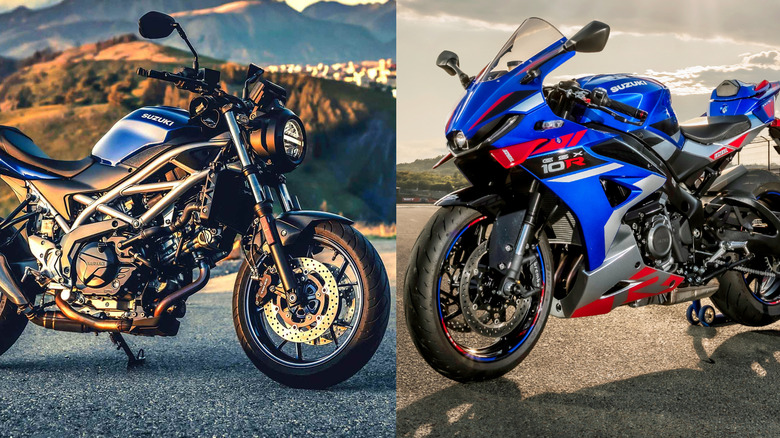
If the SV-7S is an exercise in preservation, the GSX-10R is an exercise in strategic repositioning. Market analysts have noted that the "Gixxer" brand has struggled to balance its track-focused heritage with the realities of modern road riding. The GSX-10R appears to solve this by pivoting away from the race-track-only profile of the flagship GSX-R1000.
The GSX-10R is structurally derived from the GSX-S1000 platform, utilizing the inline-four configuration that has powered Suzuki’s naked bike lineup. However, the inclusion of full fairings and a revised ergonomic triangle suggests that Suzuki is targeting the "Sport-Touring" and "Real-World Sport" segments. By lowering the footpegs and integrating modern amenities such as USB charging ports and a comprehensive suite of rider-assist electronics—including cornering ABS, multi-level traction control, and engine-braking management—Suzuki is positioning the GSX-10R as an alternative to the increasingly common high-displacement parallel-twin bikes currently flooding the market.
Chronology of Development and Market Context
The development path of these motorcycles reflects a broader industry trend toward "platform sharing." Suzuki’s history is defined by its ability to amortize the high costs of research and development over long product cycles.
- 1999: The original SV650 is introduced, setting a benchmark for entry-level and mid-level V-twin performance.
- 2005: The K5 GSX-R1000 enters production, earning a cult following for its balance of power and chassis dynamics.
- 2015–2020: As global emissions standards tighten, many manufacturers discontinue long-running engine platforms. Suzuki, however, begins a multi-year effort to modernize these engines through refined fuel injection and exhaust catalyst technology.
- 2024: EICMA reveal of the SV-7S and GSX-10R, marking the formal integration of these legacy powerplants into the 2025/2026 model lineup.
The decision to lean into these legacy platforms is not merely a cost-saving measure; it is a response to consumer feedback. Market research suggests that a significant demographic of veteran riders is growing disillusioned with the complexity and maintenance costs of modern, tech-heavy superbikes. By offering a bike that provides 21st-century safety features while retaining the mechanical soul of a proven engine, Suzuki is effectively creating a "new vintage" category.
Technical Implications and Official Positioning
From an engineering perspective, the transition to Euro 5+ compliance while maintaining the character of the older engines is a significant achievement. Euro 5+ regulations necessitate stricter on-board diagnostic (OBD) requirements and long-term emissions stability. Suzuki’s ability to meet these without sacrificing the torque-rich performance of the K5-derived engine suggests a high level of mastery in ECU tuning and catalytic converter integration.
While Suzuki has not released official pricing or availability for North American markets, the industry consensus is that these models will serve as the "anchor" for the brand’s portfolio. The SV-7S will likely compete directly with the Yamaha MT-07 and Kawasaki Z650, while the GSX-10R will occupy the space between the naked GSX-S1000 and the high-performance GSX-R1000R, providing a comfortable, high-torque alternative for riders who want liter-bike power without the aggressive, wrist-heavy riding position.
Broader Industry Impact
The reveal of these two models at EICMA suggests a shift in how legacy manufacturers will navigate the future. As the industry faces pressure to transition toward electrification, the "internal combustion engine" (ICE) segment is splitting into two distinct paths: high-tech, high-complexity performance machines, and refined, reliable, and accessible everyday motorcycles.
Suzuki’s strategy is clearly the latter. By focusing on the "GSX-8R" philosophy—a platform that prioritizes rider comfort, daily utility, and technological integration—the company is ensuring that its brand remains accessible to a broad spectrum of riders. The implications for the secondary market are also notable; by continuing to produce parts and support for these engine architectures, Suzuki is protecting the residual value of the millions of SV and GSX-R models currently on the road.
As the EICMA show concludes, the industry is left with a clear picture of Suzuki’s trajectory. The company is not interested in the "arms race" of peak horsepower numbers that characterized the 2010s. Instead, it is doubling down on what it does best: refining proven mechanical platforms to meet the demands of a changing regulatory and consumer landscape. Whether these new iterations will satisfy the market remains to be seen, but the return of the K5-inspired literbike and the modernized V-twin marks a significant chapter in the ongoing history of the Suzuki brand. The engineering team in Hamamatsu has demonstrated that an "old" engine, when paired with the right chassis and modern electronic support, can still be the most compelling motorcycle on the showroom floor.
Related posts: