New York Governor Kathy Hochul Signs Controversial Law Empowering State Attorney General to Fine Groups Over Deceptive Union Communications

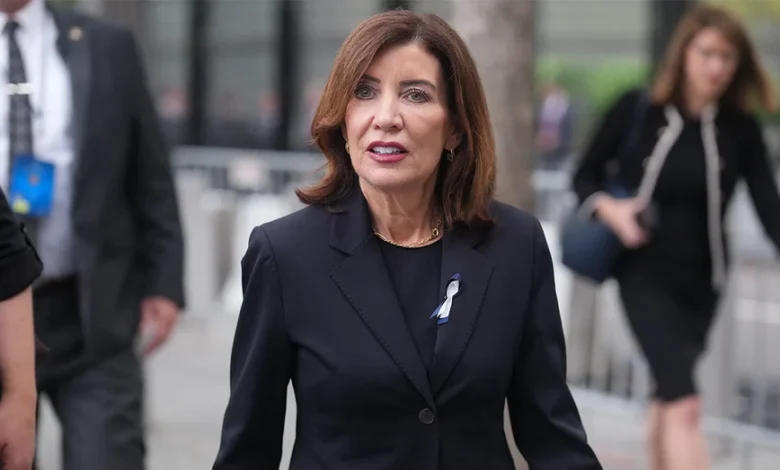
New York Governor Kathy Hochul has signed a contentious new piece of legislation that grants the state attorney general sweeping authority to investigate, subpoena, and penalize organizations engaging in communications deemed deceptive or falsely represented as authorized by labor unions. While labor advocates and Democratic lawmakers hail the measure as a vital shield protecting workers from fraudulent actors, conservative nonprofit organizations and free-speech advocates have fiercely condemned the statute. Critics argue that the law is a targeted "hit job" orchestrated by powerful teachers unions designed to suppress dissent, restrict political outreach, and shield union leadership from declining membership figures.
The legislation, which took effect immediately upon its signing, intersects deeply with broader national debates concerning public-sector union dues, First Amendment rights, and the legacy of the landmark 2018 Supreme Court ruling in Janus v. AFSCME. As legal challenges loom on the horizon, the law has ignited a fierce political firestorm regarding the intersection of labor politics, government regulation, and freedom of expression.
Legislative Overview and Enforcement Mechanisms
Under the newly enacted statute, Democratic Attorney General Letitia James is empowered to investigate individuals and organizations accused of utilizing deceptive communications that falsely appear to be authorized by a labor union or union representative. The enforcement mechanisms provided by the legislation are robust:
- Investigation and Subpoena Power: The Attorney General’s office may independently launch inquiries, issue subpoenas, and gather documentation regarding targeted outreach campaigns.
- Judicial Relief: The state can seek emergency and permanent injunctions in court to immediately halt communications deemed deceptive or misleading.
- Financial Penalties: Courts are authorized to impose civil fines of up to $1,000 per violation.
- Extraterritorial Reach: The law explicitly applies to out-of-state entities and national advocacy groups conducting outreach within New York State borders.
Supporters of the legislation argue these tools are necessary to protect unsuspecting workers from bad-faith actors who might misrepresent themselves to harvest personal data or mislead employees about their legal standing. However, civil liberties advocates point out that the broad definition of "deceptive communications" leaves significant room for subjective interpretation, creating a chilling effect on legitimate political discourse and educational campaigns run by independent organizations.
Chronology and Political Context
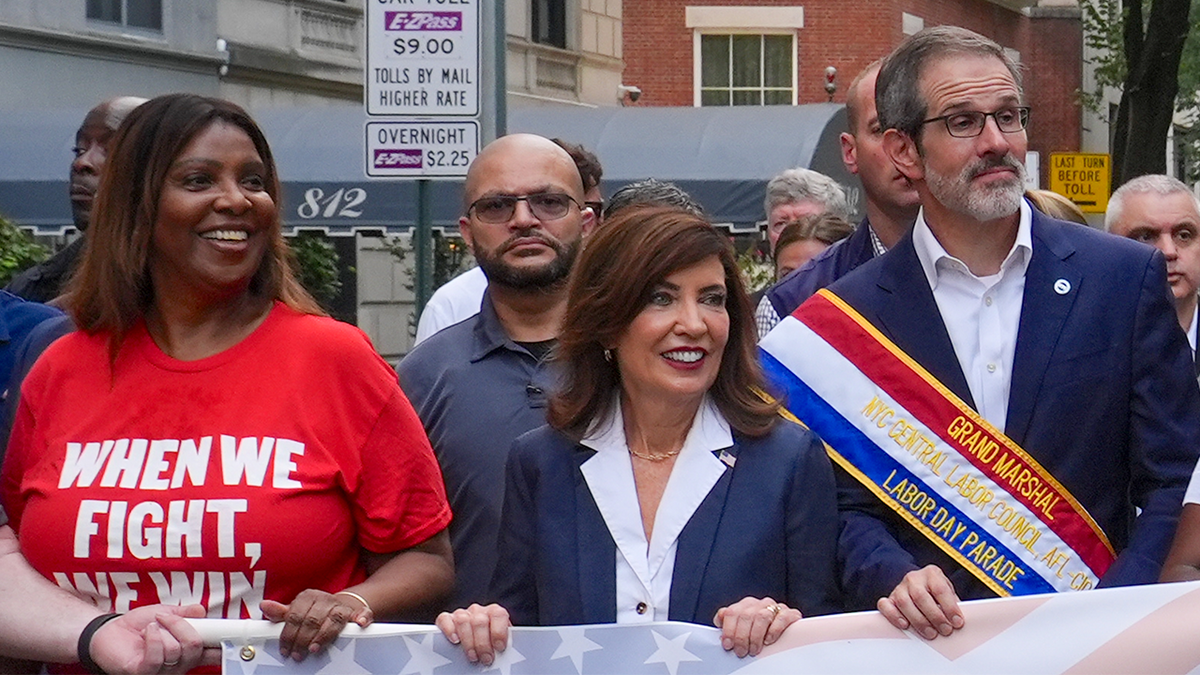
The legislative push culminated following a high-profile labor season in New York. On September 6, 2025, Governor Hochul and Attorney General James marched side-by-side in the historic New York City Labor Day parade—America’s oldest continuous labor celebration—alongside representatives from more than 200 labor organizations. During this period, the administration prioritized a slate of labor-focused bills aimed at solidifying union protections across the state.
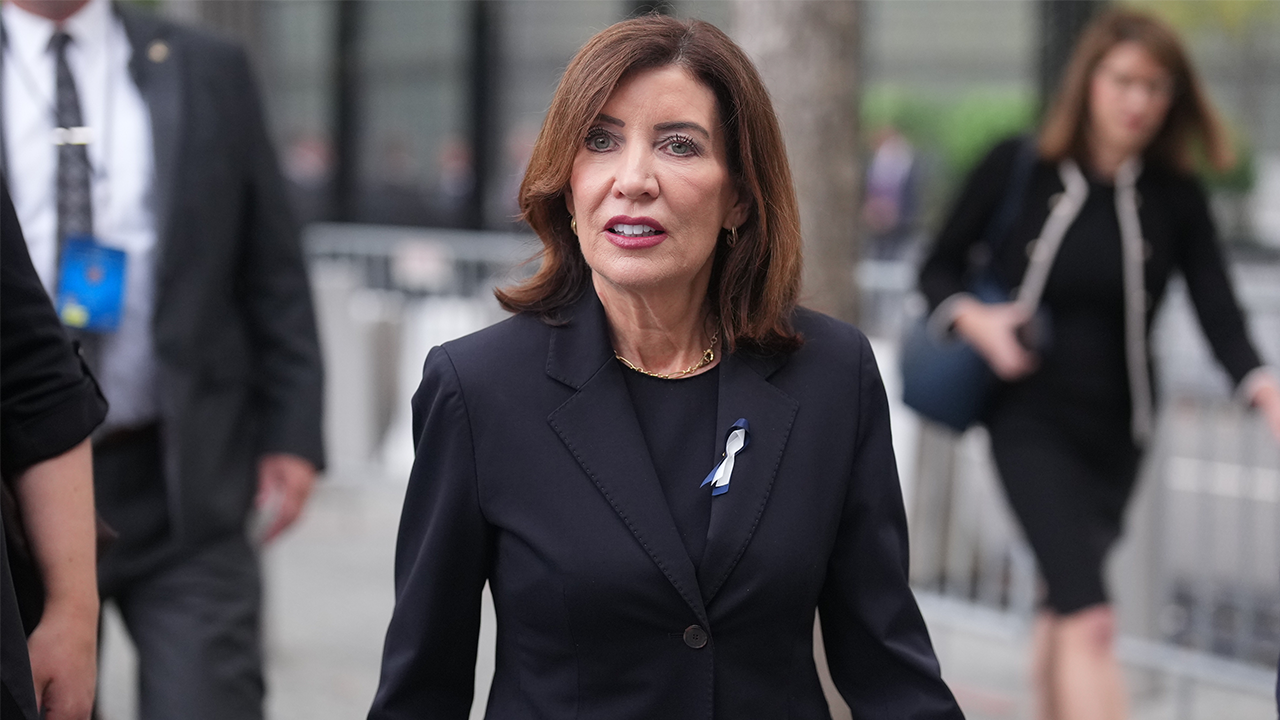
Governor Hochul formalized the enactment of the law last week, grouping it alongside other measures designed to reinforce labor rights. Upon signing the bills, Hochul took to social media to emphasize her administration’s commitment to the labor movement, writing on X (formerly Twitter) that New York "gave birth to the labor movement" and that she would "never stop fighting for our workers."
Labor leaders quickly rallied behind the governor’s actions. Mario Cilento, president of the New York State American Federation of Labor and Congress of Industrial Organizations (NYS AFL-CIO), praised the measure, asserting that it would successfully hold individuals accountable for fraudulently claiming to be union representatives and would consistently "put workers first."
The Opposition: Free Speech and the Freedom Foundation
The primary target of the legislation, according to its critics, is the Freedom Foundation, a prominent conservative, Washington-based nonprofit that actively campaigns against public-sector unions. For years, the foundation has engaged in direct-mail campaigns, digital outreach, and direct communication with New York public employees—including public school teachers—to inform them of their rights regarding union membership.
According to data released by the Freedom Foundation, approximately 7,500 New York public employees have utilized the group’s educational materials to formally cancel their union memberships, including more than 1,400 cancellations recorded in the current calendar year alone.
Aaron Withe, CEO of the Freedom Foundation, did not mince words when reacting to the governor’s signature, characterizing the statute as a direct assault on the First Amendment.
"This isn’t about protecting anyone," Withe stated. "It exists because government unions in New York are terrified of an inconvenient fact: when public employees learn they don’t have to pay union dues, a lot of them stop. So instead of making their case to their own members, union bosses ran to their friends in the legislature and got them to write a law that makes speech illegal."
Withe emphasized that the organization’s outreach does not impersonate unions, but rather provides objective information regarding rights established by the highest court in the land.
Legal Precedent: The Shadow of Janus v. AFSCME
The core tension underlying the New York statute traces back to the Supreme Court’s milestone 2018 ruling in Janus v. American Federation of State, County, and Municipal Employees (AFSCME). In a 5-4 decision, the Supreme Court ruled that public-sector employees cannot be compelled to pay agency fees or union dues as a condition of employment. The court reasoned that compelling non-members to subsidize union collective bargaining violates the First Amendment, because public-sector bargaining is inherently intertwined with political matters, public policy debates, and government spending.
In the wake of Janus, public-sector unions nationwide faced structural financial challenges as thousands of teachers, state workers, and municipal employees opted out of membership. Organizations like the Freedom Foundation stepped into this vacuum, utilizing direct communication channels to notify workers that union membership is entirely voluntary.
Withe argued that the New York law is an unconstitutional workaround designed to neutralize the practical effects of Janus. "All we’re doing is telling public employees what the law already gives them: the right to leave their union and stop paying dues," Withe said. "This is an anti-speech law aimed at one kind of speaker."
National Implications and Broader Political Fallout
The ripple effects of New York’s new statute are expected to extend far beyond the state’s borders, drawing sharp scrutiny from national political figures and education reformers.
Ryan Walters, former superintendent of Oklahoma public schools and CEO of the Teacher Freedom Alliance—the education arm of the Freedom Foundation—offered a stark assessment of the legislation. Walters categorized the measure as "pure censorship and targeting of political opponents by Democrats protecting their union bosses."
"This is such a canary in the coal tin moment where if New York is allowed to do this… it’s going to go on across the country," Walters warned. He argued that public education systems cannot achieve meaningful academic improvement if dominant political and labor structures are legally insulated from dissenting perspectives. "Where New York goes with this is going to be where the other blue states follow."
Walters further asserted that the legislative push underscores the foundational importance of educational systems to the Democratic Party’s political coalition. "They have to control the school system to continue to control the country," he remarked. "Despite elections, they still control these education systems at large. That’s why the teachers’ unions are enemy number one of progress in this country and why New York needs to be taken on directly for what they’re doing."
Projected Legal Challenges
Legal scholars and constitutional experts anticipate immediate court challenges to the New York statute. The Freedom Foundation has indicated it intends to replicate the legal strategy it is currently deploying in the 9th U.S. Circuit Court of Appeals against a strikingly similar statute enacted in Oregon.
In that ongoing litigation, free-speech advocates argue that state laws granting administrative agencies or attorneys general the power to penalize communication based on nebulous criteria of "deception" or "misrepresentation" violate constitutional protections against viewpoint discrimination and prior restraint.
As the legal battles take shape, the debate over New York’s law highlights a deepening national chasm over labor relations, the boundaries of state regulatory power, and the extent to which governments can regulate informational campaigns directed at public employees. While Governor Hochul and her allies maintain that the measure preserves labor integrity and safeguards workers from fraudulent schemes, opponents remain steadfast in their commitment to dismantling what they view as an unconstitutional infringement on free speech and public transparency.