Medicaid Work Requirements Spark Physician Concern Over Patient Care and Bureaucratic Burden


The landscape of public health assistance is undergoing a significant shift as new Medicaid work requirements are poised to affect millions of Americans, sparking considerable apprehension among healthcare providers who fear the administrative burden and potential negative impact on patient care. At the heart of this concern is the looming mandate, set to take effect in most of the country on January 1st, which requires certain Medicaid enrollees, primarily adults without dependents, to demonstrate engagement in qualifying activities for at least 80 hours per month. While provisions for medical exemptions exist, the process of proving "medical frailty" is proving to be a point of contention, raising questions about the capacity and role of physicians in this complex new system.
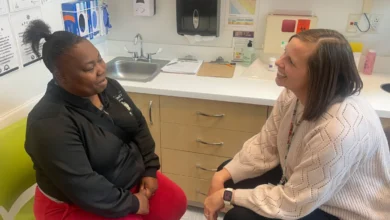
For over two decades, Alice Thornton, a healthcare professional in Lexington, Kentucky, has dedicated her career to treating individuals living with HIV. Her team has long found the extensive paperwork associated with applications for benefits, such as Social Security Disability, to be a source of frustration and distress for their patients. "We cringe anytime we hear about patients having to fill out lots of paperwork," Thornton stated, acknowledging the inherent difficulty and burden of such processes. While she strives to support her patients, Thornton recognizes the limitations of her medical training when navigating the labyrinthine requirements of benefit applications. "A lot of times the forms are so complex that I don’t really know what’s the true definition of what this form is asking me," she admitted. This sentiment underscores a broader professional dilemma: medical practitioners are increasingly being asked to perform tasks that extend far beyond their core expertise.
The forthcoming Medicaid changes are a direct consequence of the "One Big Beautiful Bill Act," a sweeping tax-and-spending law enacted last year. This legislation introduced work requirements that are projected to impact an estimated 18.5 million Americans as more states begin to implement them. The Congressional Budget Office (CBO) analysis of the bill indicated that these work mandates are anticipated to be the single largest driver of an increase in the number of uninsured individuals compared to any other provision within the law. This projection, highlighted by KFF, a non-partisan health information nonprofit, underscores the potential reach and severity of these policy changes.
The "Medically Frail" Conundrum: A New Administrative Burden
Central to the controversy are the final regulations issued in June, which outline an exemption for individuals deemed "medically frail." This designation, intended for those too sick or disabled to engage in work, may necessitate documentation from a medical professional. However, the definition of "medically frail" itself has become a focal point of anxiety for physicians. Thornton expressed her bewilderment, stating, "If I’m asked, ‘Is this person medically frail? What does that even mean?’ I don’t know, and I’ve been doing this for 25 years." This lack of clarity is not isolated to Thornton; many physicians feel ill-equipped to make such determinations, which often require nuanced assessments of an individual’s physical and mental capacity to work, potentially involving evaluations of lifting ability or walking distance.
The complexity arises from the fact that physicians are trained to diagnose and treat illness, not to serve as arbiters of an individual’s employability. Christopher Chen, a senior healthcare advisor at the consulting firm Manatt and a hospitalist at Valley Medical Center in Renton, Washington, articulated this concern. "We’re trained to take care of people," Chen said. "We’re trained to learn about someone’s symptoms, make diagnoses, treat them. We’re not trained to make these kinds of work determinations." He further characterized the imposition of such policies as introducing "unnecessary, non-evidence-based, confusing, and bureaucratic policies into clinical care," which he believes "just raises the level of moral distress for providers."
Timeline of Regulatory Changes and Legal Challenges
The genesis of these work requirements can be traced back to legislative proposals and discussions throughout 2024, culminating in the passage of the "One Big Beautiful Bill Act" in late 2024. The subsequent issuance of final regulations by the Centers for Medicare & Medicaid Services (CMS) in June 2025 laid out the operational framework for these requirements. The implementation date of January 1, 2026, for most of the country marks a critical juncture.
However, the "medically frail" standard has already ignited significant opposition. At the end of June 2025, a lawsuit was filed by dozens of mostly Democratic-led states, challenging the legality and practicality of these regulations. The plaintiffs argue that the standard is overly burdensome for both enrollees and state Medicaid agencies, effectively forcing state agencies to "take on the role of occupational medicine experts" or shifting that burden onto physicians who may lack the specialized training in occupational medicine. The legal challenge underscores the deep-seated concerns about the feasibility and fairness of the new requirements.
The Role of Documentation and State Determinations
The Centers for Medicare & Medicaid Services (CMS) has acknowledged that enrollees may need to obtain documentation from a clinician to prove they are too sick to work. However, the agency has stated that states will be responsible for making the final determinations regarding eligibility for exemptions. This delegation of authority, while standard in many government programs, adds another layer of complexity, as each state may interpret and apply the "medically frail" standard differently.
During a press call on June 1st, CMS administrator Mehmet Oz suggested that documentation should be "relatively easy to provide," implying that existing data sources, such as medical claims and payment data, could be leveraged by states before requiring patients to submit proof of medical frailty directly from a provider. This approach aligns with the Trump administration’s broader efforts to combat fraud in government health programs, which has recently led to the charging of hundreds of defendants in connection with alleged fraud schemes exceeding $6.5 billion. CMS has indicated it will closely monitor state administration of these work requirements and may intervene if states deviate from federal guidelines.
The Impact on the Doctor-Patient Relationship
Beyond the administrative and definitional challenges, a significant concern is the potential erosion of the doctor-patient relationship. When physicians are placed in a position where their attestation can directly impact a patient’s access to essential healthcare coverage, it can introduce a level of distrust and alter the nature of medical consultations. The American Medical Association (AMA), the nation’s largest professional association for physicians, has been a vocal critic of these changes.
In May, the AMA sent a letter to CMS Administrator Oz, arguing that requiring doctors to attest to their patients’ ability to work would not only create an administrative burden but would fundamentally alter the dynamics of patient care. "The work rule transforms the clinical encounter into an eligibility gatekeeping process," stated AMA President Willie Underwood III. "Patients will likely sense that shift. And if they begin to suspect that what they share with their physician could affect their coverage, the conditions for open and honest communication will start to break down." This perspective highlights the ethical quandary physicians face when their role in patient advocacy potentially conflicts with their perceived obligation to comply with government regulations.
Barriers to Accessing Exemptions
The practical challenges of obtaining medical exemptions are further compounded by existing systemic issues within the healthcare landscape. The United States is facing a significant shortage of primary care providers, with thousands of positions unfilled across the country. This scarcity could make it difficult for individuals seeking an exemption to secure an appointment with a clinician who can provide the necessary documentation.
Jennifer Wagner, a researcher at the Center on Budget and Policy Priorities, an organization that advocates for policies benefiting low-income individuals, pointed out an even more significant barrier for those without insurance. "How could an applicant who doesn’t have health coverage get a doctor’s note?" she questioned. This scenario highlights a critical flaw in the system: individuals who may be most vulnerable and likely to need an exemption are precisely those who may lack the means to obtain the required medical evidence.
Lauren Davis, an attorney with Community Legal Services of Philadelphia, who assists clients with navigating other public benefit programs like the Supplemental Nutrition Assistance Program (SNAP), which also has work requirements with medical exemptions, shared a poignant anecdote. She recalled a client with a cognitive condition that affected her memory. The client’s doctor was hesitant to complete an exemption form without an in-person evaluation, but the client repeatedly forgot to schedule the appointment and eventually abandoned the effort. Davis fears that Medicaid enrollees could face similar obstacles. "This person is eligible," Davis emphasized. "The reason that they’re not able to get what they need to show that they’re eligible is because of their medical condition."
Broader Implications and Future Outlook
The introduction of these stringent work requirements and the complex "medically frail" exemption process carries significant implications for public health. Critics argue that these measures could lead to a substantial increase in the number of individuals losing their Medicaid coverage, potentially exacerbating existing health disparities. The focus on administrative compliance and work verification, some argue, detracts from the fundamental goal of ensuring access to healthcare for vulnerable populations.
The legal challenges mounted by multiple states suggest that the implementation of these work requirements will likely be met with ongoing resistance and potentially lengthy court battles. The outcome of these legal proceedings could significantly shape the future of Medicaid and the extent to which work mandates are enforced.
Physicians like Alice Thornton and organizations like the AMA are calling for a re-evaluation of the current approach, advocating for policies that streamline the exemption process, provide clearer guidance, and prioritize patient well-being over bureaucratic hurdles. The debate over Medicaid work requirements underscores a fundamental tension between the desire for fiscal responsibility and the imperative to provide a safety net for those in need. As January 1, 2026, approaches, the healthcare community and policymakers alike will be watching closely to see how these new mandates unfold and what impact they will have on the millions of Americans who rely on Medicaid for their healthcare. The administrative burden on physicians, the potential for patient disenfranchisement, and the long-term effects on public health remain critical areas of concern that demand ongoing scrutiny and potential reform.