House lawmaker requests federal audit of TrumpRx platform amid transparency concerns regarding drug price savings claims

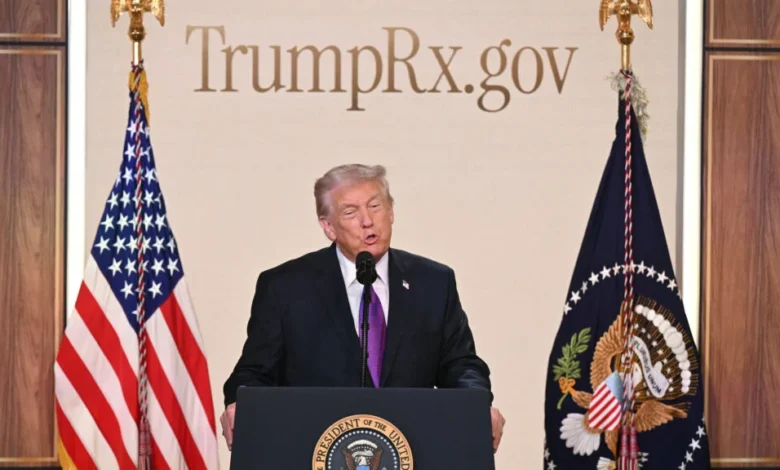
The federal government’s oversight apparatus has been formally tapped to investigate the financial impact and operational validity of the TrumpRx platform, a digital initiative championed by the White House to lower prescription drug costs. In an October 27 letter addressed to the Government Accountability Office (GAO), Representative Frank Pallone (D-N.J.), the ranking member of the House Committee on Energy and Commerce, has called for a comprehensive audit to determine whether the portal has genuinely delivered the $700 million in savings that the administration has publicly touted since the site’s inception in February 2026.
The request for an audit signals a deepening legislative rift regarding the efficacy of the Trump administration’s pharmaceutical pricing strategy. While the White House has framed TrumpRx as a transformative tool that bridges the gap between consumers and pharmaceutical manufacturers, skeptics argue that the platform functions more as a marketing conduit for existing discount programs rather than a structural reform of the drug pricing market.
The Genesis and Evolution of the TrumpRx Initiative
The launch of the TrumpRx platform in February 2026 was presented by the White House as a cornerstone of its second-term healthcare agenda. The platform was designed to serve as a centralized hub where patients could search for medications and receive guidance on where to find the lowest available prices, often via third-party coupons or manufacturer-led discount programs.
Crucially, the platform does not function as a pharmacy; it does not dispense, warehouse, or handle any physical medications. Instead, it operates as a digital aggregator, providing links and redirecting users to various pharmaceutical discount cards and pharmacy benefit manager (PBM) portals. Following the initial launch, the White House aggressively expanded the scope of the project, announcing in August 2026 a series of "most-favored nation" (MFN) agreements with nine additional pharmaceutical manufacturers. These agreements were touted as a mechanism to align U.S. drug prices with lower international benchmarks.
The Conflict Over Transparency and Verification
The central point of contention in Representative Pallone’s request is the discrepancy between the administration’s public success metrics and the lack of transparent, verifiable data provided to Congress. The administration has frequently cited a cumulative $700 million in consumer savings, a figure that the White House attributes to the successful utilization of the platform’s discount links.

However, Representative Pallone’s correspondence to the GAO suggests that these numbers lack the requisite evidentiary support. "The administration has made sweeping statements regarding the platform’s impact on the financial well-being of American patients," Pallone wrote in the letter. "Yet, they have failed to disclose key information that would allow for an independent, objective evaluation of whether this platform has provided any meaningful financial benefit to the average consumer."
The ranking member’s request highlights several areas where the administration has been notably quiet:
- Methodology of Savings: The government has not provided a breakdown of how the $700 million figure is calculated. It remains unclear whether this number represents actual cash savings realized at the pharmacy counter or if it includes projected savings based on manufacturer price lists that may not reflect real-world market competition.
- Most-Favored Nation Agreements: Despite the high-profile announcements involving two dozen drugmakers, the specific terms, pricing formulas, and compliance mechanisms of these MFN agreements remain shielded from public scrutiny.
- Operational Transparency: Questions remain regarding whether the platform receives any form of data-sharing or referral fees from the third-party discount card providers to which it directs traffic.
Chronology of the TrumpRx Rollout
- February 2026: The TrumpRx platform officially launches, with the administration claiming it will provide immediate relief for uninsured and underinsured Americans.
- April 2026: Early reports suggest the platform is gaining traffic, though industry analysts begin questioning the accuracy of the savings data.
- August 2026: The White House announces a significant expansion, signing agreements with nine major pharmaceutical manufacturers to incorporate their products into the TrumpRx discount framework under "most-favored nation" principles.
- September 2026: House Committee on Energy and Commerce staff begin requesting internal documentation regarding the efficacy of the site.
- October 27, 2026: Representative Frank Pallone formally petitions the Government Accountability Office to launch a federal audit of the platform’s claims and operational structure.
Broader Implications for Pharmaceutical Policy
The demand for a GAO audit places the pharmaceutical industry at a crossroads. Pharmaceutical companies are currently operating under a complex web of pricing pressures, ranging from the Inflation Reduction Act’s legacy mandates to the new, potentially more volatile, MFN agreements pushed by the current administration.
Industry analysts observe that if the GAO audit determines that the savings claims are inflated or that the platform is merely redirecting traffic to existing commercial discount programs, it could severely damage the credibility of the White House’s current strategy. Conversely, if the audit finds that the platform is indeed successfully lowering out-of-pocket costs, it could embolden the administration to expand the model further.
Furthermore, the involvement of the GAO raises the question of whether digital portals should be subject to the same regulatory reporting standards as PBMs or health insurance exchanges. As the healthcare sector moves toward greater digitization, the ability of the government to monitor these portals becomes paramount to protecting patient financial interests.
Expert Perspectives on Digital Health Tools
Market researchers and healthcare economists have long held a cautious view of discount-aggregation websites. While these tools can offer immediate relief for a cash-paying patient, they often bypass the broader health insurance infrastructure, which can have unintended consequences for patient care continuity.

"When you provide a patient with a discount coupon, you are often providing them with a short-term financial band-aid," says a policy analyst at a leading healthcare think tank. "The concern is that these tools may inadvertently encourage patients to move outside of their established pharmacy networks, potentially complicating their medication history and making it harder for providers to monitor adherence. If the government is going to put its seal of approval on these tools, they must be held to a higher standard of transparency than a private-sector discount app."
Next Steps for the GAO and the House Committee
The GAO’s decision to accept the request will likely involve an assessment of whether the project falls within the scope of federal performance audits. If accepted, the audit would likely take several months, involving interviews with Department of Health and Human Services (HHS) officials, data analysis of the platform’s traffic and conversion metrics, and a review of the contracts signed between the administration and the pharmaceutical companies.
For now, the White House has maintained that the TrumpRx platform is a vital tool for consumer empowerment. In a statement released following the news of the GAO letter, an administration spokesperson noted that the platform was designed to "put the power back in the hands of the American patient" by exposing opaque drug pricing structures. However, until the administration releases the supporting documentation or agrees to cooperate fully with a GAO inquiry, the $700 million figure will remain a subject of intense political and economic debate.
As the legislative cycle continues, the House Committee on Energy and Commerce is expected to keep the pressure on the administration. Whether through additional committee hearings or further information requests, the push for transparency regarding the TrumpRx initiative is indicative of a broader, ongoing struggle to define the federal government’s role in managing the cost of prescription drugs in an era of digital-first healthcare solutions. The outcome of the potential audit will not only shape the future of this specific platform but could also set a precedent for how future administrations utilize digital infrastructure to influence market behavior in the pharmaceutical sector.