Congressional Absences Spark Debate on Transparency, Accountability, and Constitutional Limits

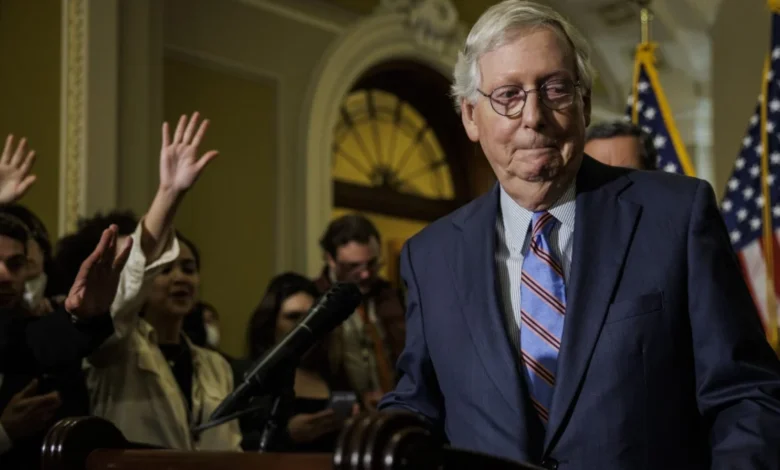
Recent prolonged absences from Capitol Hill by prominent lawmakers, including Representative Tom Kean Jr. (R-N.J.) and former Senate Majority Leader Mitch McConnell (R-Ky.), have reignited a national discussion concerning the health and fitness of elected officials, the public’s right to information, and the intricate constitutional framework governing congressional service. These parallel situations, marked by initial secrecy and subsequent revelations, underscore a growing tension between the personal privacy of public servants and the imperative of transparent governance, particularly as a disenchanted American electorate demands greater accountability from its representatives. The constitutional provisions for congressional membership, largely silent on issues of health, mental capacity, or attendance, present significant challenges to any swift mechanism for addressing such prolonged incapacitations, leaving constituents and legislative bodies grappling with a system designed for a different era.
A Tale of Two Absences: Kean and McConnell’s Health Battles
The experiences of Representative Tom Kean Jr. and Senator Mitch McConnell serve as potent examples of the challenges inherent in the current system. Representative Kean’s absence from Capitol Hill spanned several months this past winter and spring, leaving his constituents and colleagues in the dark regarding his whereabouts and well-being. During this period, neither Kean himself, his office, nor his family offered any public explanation for his prolonged disappearance from legislative duties. The lack of transparency fueled speculation and concern within New Jersey’s 7th Congressional District. Upon his return in June, Representative Kean disclosed that he had endured a lengthy hospital stay for depression, a revelation that brought clarity but also highlighted the significant delay in communication. His absence, occurring within a Republican-controlled House with an exceptionally narrow majority, directly impacted the party’s ability to conduct legislative business, underscoring the functional consequences of such situations.
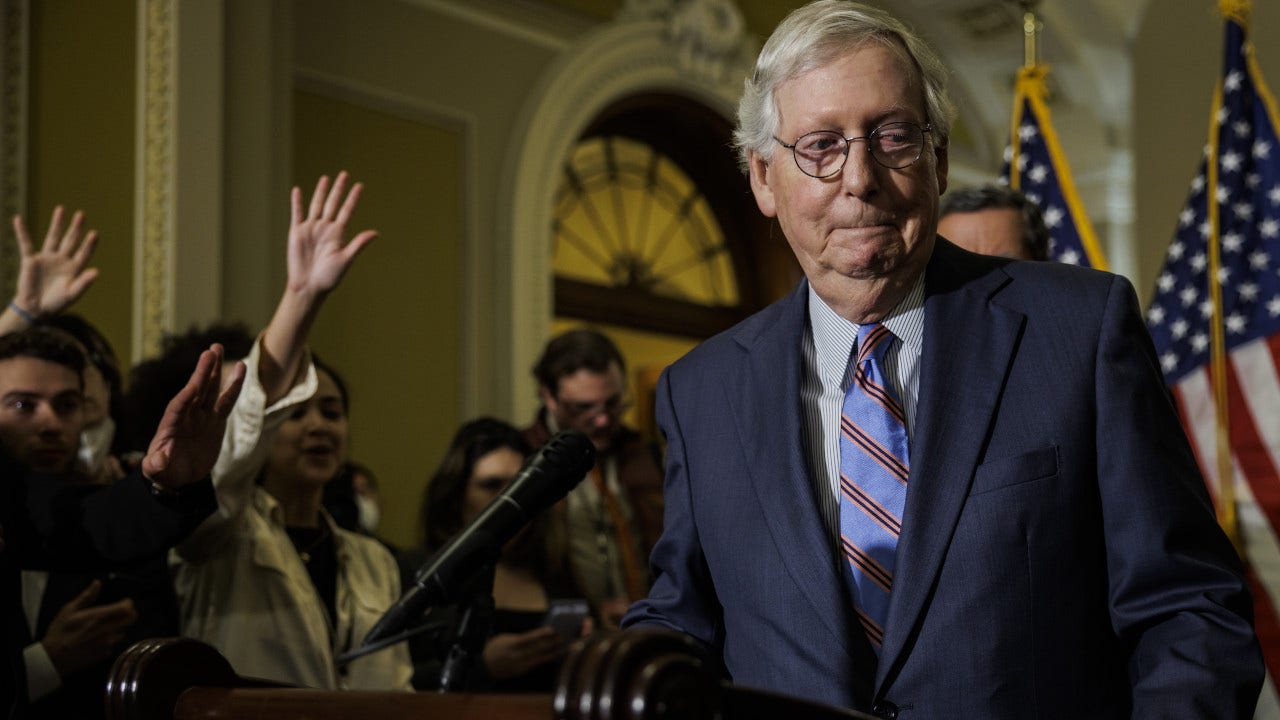
Senator Mitch McConnell’s absence presented a similarly opaque scenario. Beginning in June, his office initially issued a terse statement merely declaring that the Kentucky Republican was hospitalized and receiving "excellent care." For weeks, further details remained elusive, leading to widespread conjecture and public anxiety. It was only after a significant period that the nature of his hospitalization was revealed: first, a fall, and subsequently, pneumonia. This dearth of timely and specific information fueled a flurry of public speculation, with some conspiracy theories even questioning the senator’s very survival. The situation became so pressing that Kentucky Governor Andy Beshear (D) publicly inquired about McConnell’s well-being, stating to SiriusXM that he had not "heard a thing. Not an email. Not a letter. Not a call." These episodes illustrate a broader pattern where the health-related absences of high-profile political figures are often shrouded in secrecy, creating a vacuum filled by rumor and public frustration.
Public Outcry and the Demand for Accountability
The extended absences of Kean and McConnell, and the preceding lack of clear communication, have resonated deeply with an American electorate already expressing high levels of disenchantment with politics. In an era where economic pressures, such as rising prices, weigh heavily on households, voters expect their elected representatives to be actively engaged in addressing national challenges. The idea that a public official could be absent for months without transparent explanation strikes many as antithetical to the principles of public service.
This sentiment has manifested in various ways, from casual inquiries about potential successors to more formal demands for mechanisms to declare seats vacant. During Representative Kean’s absence, there was considerable conjecture among constituents and political observers about how his seat might be filled. Similar discussions have surrounded Senator McConnell, with a common refrain echoing the frustration of average citizens: "If I didn’t show up for work for months, I’d lose my job." This comparison highlights a perceived double standard, where ordinary workers face immediate consequences for prolonged absence, while elected officials, protected by constitutional provisions and political realities, do not. The public’s desire for timely explanations from those who serve them is not merely a preference but, for many, an entitlement rooted in the democratic contract. The absence of such clarity erodes public trust and fuels cynicism about the responsiveness and accountability of the political system.
Constitutional Conundrum: The Limits of Removal
Addressing prolonged absences due to health issues is not as straightforward as public sentiment might suggest, primarily due to the specific and limited provisions of the U.S. Constitution regarding congressional membership and removal. The foundational document primarily outlines the qualifications for serving in the House and Senate, but remains largely silent on mechanisms for involuntary removal based on incapacitation.
Article I, Section 2 of the Constitution stipulates the qualifications for a Representative: "No person shall be a Representative who shall not have attained to the age of twenty-five years, and been seven Years a Citizen of the United States, and who shall not, when elected, be an Inhabitant of that State in which he shall be chosen." Similarly, Article I, Section 3 outlines the Senate’s mandates: "No person shall be a Senator who shall not have attained to the age of thirty years, and been nine years, a Citizen of the United States, and who shall not, when elected, be an Inhabitant of that State for which he shall be chosen." These criteria are clear, focusing on age, citizenship, and residency at the time of election.
Beyond initial qualifications, Article I, Section 5 grants each legislative body the authority to manage its own membership: "Each House shall be the judge of the elections, returns and qualifications of its own Members." It further states that each House may, "with the Concurrence of two thirds, expel a Member." While these provisions allow Congress to decline to seat an unqualified individual or to expel a member, the Constitution is notably vague on the specific reasons for such actions. Crucially, it says nothing about health, mental capacity, attendance, or dereliction of duty as explicit grounds for expulsion or deeming someone unqualified after they have taken office. This constitutional silence means that short of a two-thirds vote for expulsion—a politically arduous and rarely invoked process typically reserved for severe misconduct—or a voluntary resignation, there is no straightforward legal mechanism to compel a lawmaker to step aside due to illness or incapacitation. This legislative lacuna forces a reliance on political negotiation and the goodwill of the incapacitated member and their family, rather than a clear legal framework.
Historical Precedents of Prolonged Absences
The current situations with Kean and McConnell are not isolated incidents but rather echo a long history of lawmakers serving while significantly incapacitated or absent for extended periods due to illness. These historical cases underscore the deep-seated nature of this constitutional and political challenge.
One prominent example is Senator Carter Glass (D-Va.), known for his role in the Glass-Steagall Act. Glass fell seriously ill in 1942 and was subsequently absent from the Senate for four years until his death in 1946. Despite entreaties for him to resign, he steadfastly refused, maintaining his seat throughout his incapacitation. Another significant case involved Senator Karl Mundt (R-S.D.), who suffered a debilitating stroke in 1969, leaving him unable to speak. Calls for his resignation from within his own party were reportedly rebuffed by his wife, and Mundt remained in office until his term expired in early 1973, nearly four years after his stroke. In both instances, the Senate lacked the explicit constitutional authority or political will to force their removal, highlighting the enduring nature of this dilemma.
More recently, several lawmakers have experienced significant health-related absences without facing removal:

- Rep. Lane Evans (D-Ill.) was absent for extended periods in the 1990s and 2000s due to Parkinson’s Disease.
- Former Sen. Mark Kirk (R-Ill.) suffered a major stroke in 2012, missing over a year before returning to the Senate.
- House Majority Leader Steve Scalise (R-La.) missed several months in 2017 after being shot at the GOP Congressional baseball practice.
- Sen. John Fetterman (D-Pa.) was away for a couple of months in 2023, shortly after joining the Senate, to seek treatment for clinical depression.
These cases demonstrate a consistent pattern: while public and political pressure may mount, the constitutional and procedural barriers to removing an incapacitated lawmaker are exceptionally high.
The Gladys Noon Spellman Case: A Unique Precedent
Amidst this history of inaction, there is one notable instance in recent history where the House took extraordinary steps related to a member’s health, though it was a unique situation that did not involve the removal of a sitting, sworn-in member. On October 31, 1980, Representative Gladys Noon Spellman (D-Md.) suffered a severe heart attack. Despite her critical condition, voters re-elected her just days later. However, Spellman subsequently fell into a coma and was unable to take the oath of office when the new 97th Congress convened in January 1981.
Recognizing the unprecedented nature of the situation and the clear impossibility of her assuming her duties, the House took several extraordinary steps. Initially, in a gesture of compassion, they voted to pay her, even though she was technically not yet a sworn-in Member. However, it became evident that the Maryland Democrat would never recover sufficiently to assume office. Consequently, the House voted to declare her seat vacant, compelling Maryland to hold a special election. This action was not an expulsion of a sitting member, but rather an assertion of the House’s authority under Article I, Section 5, to "be the judge of the elections, returns and qualifications of its own Members." The House deemed that Spellman, despite being re-elected, was not "qualified" to assume the duties of office due to her permanent incapacitation. This unique interpretation allowed for the vacancy to be created, which was subsequently filled by a special election won by former Maryland Senate President Steny Hoyer (D-Md.), marking his entry into Congress. Spellman remained in a coma until her death in 1988, never regaining consciousness. This case stands as a singular example of a legislative body addressing a member’s incapacitation, but it hinges on the specific timing of her inability to take the oath of office, rather than her removal from an already held seat.
Vacancy Procedures: House vs. Senate
The mechanisms for filling a congressional vacancy further illustrate the differences between the House and Senate, and the potential impact of prolonged absences or deaths. The Constitution itself outlines different procedures.
For Senate vacancies, the Seventeenth Amendment states that when vacancies happen in the representation of any State in the Senate, "the executive authority of such State shall issue writs of election to fill such vacancies: Provided, That the legislature of any State may empower the executive thereof to make temporary appointments until the people fill the vacancies by election as the legislature may direct." This means that all but four states currently allow their governors to appoint a temporary senator to fill a vacancy until a special election can be held, or until the next regularly scheduled election. This provision allows for continuity of representation, as demonstrated recently with the passing of Senator Lindsey Graham (R-S.C.). His seat was vacant for barely two days before South Carolina Governor Henry McMaster (R) appointed his sister, Darline Graham, to serve out the balance of his term, which expires in January. Darline Graham was sworn in as a full senator, possessing all the rights and responsibilities of the office, including voting and serving on committees, and is now running for the full term.
In contrast, the Constitution explicitly bars appointments to the House of Representatives. If a House member dies, resigns, or is removed, the state must fill the seat via a special election. This process can be lengthy, often taking several months due to state election laws and logistical requirements. Consequently, House seats can sit vacant for protracted periods, directly impacting the numerical strength of a party.
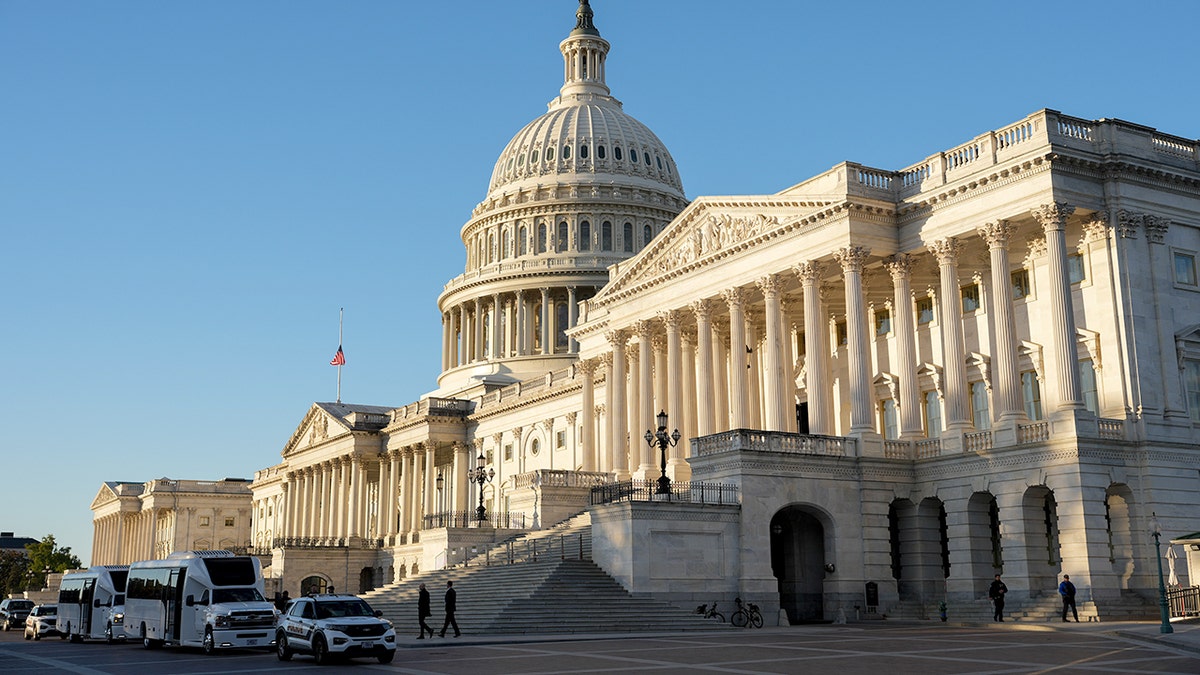
This distinction has significant implications for legislative power, especially in a narrowly divided Congress. Currently, the Republican Party holds a tenuous majority in the House, with 218 Republicans, 212 Democrats, and one Independent who typically caucuses with the GOP. Extended absences, such as Representative Kean’s, and to a lesser degree, Representative Neal Dunn (R-Fla.) due to a major heart condition, directly impair the Republican majority’s ability to pass legislation, as every vote becomes critical. A resignation or death in such a slim majority could dramatically alter the balance of power, leading to legislative gridlock or even a shift in control. The rapid filling of a Senate vacancy through gubernatorial appointment provides a degree of stability not afforded to the House, where each vacancy creates a prolonged period of underrepresentation for a district and potential legislative paralysis for the majority party.
Implications for Governance and Public Trust
The recurring issue of prolonged congressional absences due to health challenges, coupled with the constitutional and procedural difficulties in addressing them, carries significant implications for American governance and public trust. The current framework, rooted in an 18th-century understanding of public service and privacy, struggles to reconcile with 21st-century demands for transparency and continuous representation.
From a governance perspective, prolonged absences, particularly in a narrowly divided Congress, can lead to legislative stagnation. Critical votes on appropriations, national security, or social policy can be stalled or even fail if a party cannot muster its full strength. This impact is magnified in today’s highly partisan environment, where legislative margins are often razor-thin. Furthermore, the absence of a representative means their constituents are effectively disenfranchised, lacking a voice in the national legislature for potentially extended periods. This functional deficit can have real-world consequences for the districts affected, impacting everything from federal funding to policy advocacy.
Beyond the operational challenges, the issue deeply affects public trust. When lawmakers are perceived as being absent without adequate explanation, or when mechanisms for accountability appear insufficient, it reinforces a public narrative of unresponsive and entitled politicians. This sentiment contributes to the broader cynicism about political institutions and can depress civic engagement. While the desire for transparency is understandable, balancing it with the personal privacy of individuals, particularly concerning sensitive health matters, remains a delicate ethical challenge.
The experiences of Representatives Kean and Senator McConnell highlight the need for a national conversation about how to navigate these complex issues. While constitutional amendments are notoriously difficult to achieve, discussions might arise concerning legislative reforms that could provide clearer guidelines for disclosing health information, defining incapacitation, or establishing temporary representation without resorting to a full vacancy. However, any such proposals would inevitably face constitutional scrutiny and political resistance, as they touch upon the fundamental nature of elected representation and individual rights. Ultimately, while the American public expects its representatives to be "on the job," the constitutional design ensures that removing them, even when incapacitated, remains a protracted and arduous process, often only resolvable at the ballot box every two or six years.