Byron York blasts el Sayed interview on Fox: ‘You need to be smart enough to handle them’

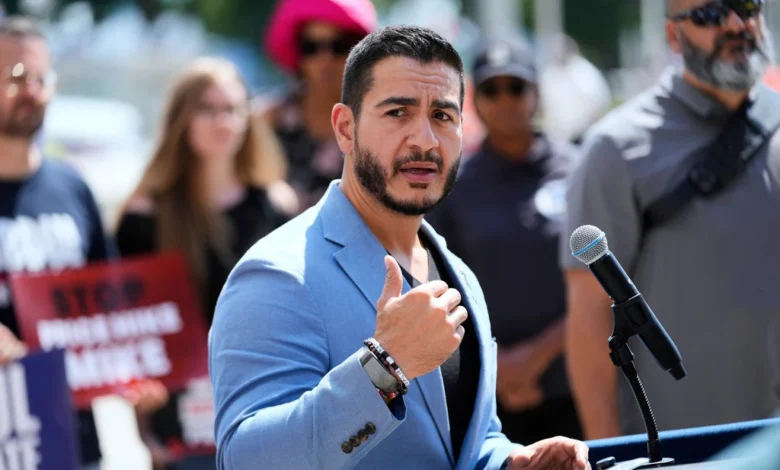
Michigan Democratic Senate nominee Abdul El-Sayed has drawn intense nationwide scrutiny and sharp political backlash following a contentious television appearance in which he defended gender-affirming surgical procedures for minors by comparing them to routine infant circumcisions. The exchange, which occurred during a live interview on Fox News’s Jesse Watters Primetime, immediately became a flashpoint in the state’s high-stakes Senate race, thrusting polarizing cultural debates over parental rights, bodily autonomy, and pediatric healthcare directly into the center of the legislative campaign.
The controversy unfolded on a Monday evening broadcast when El-Sayed, a prominent progressive figure and self-identified democratic socialist running for the U.S. Senate in Michigan, sat down with host Jesse Watters. The interview quickly pivoted to matters of public policy and social legislation, zeroing in on the contentious legislative landscape surrounding pediatric gender-affirming care and restrictions related to religious and traditional laws.
As the discussion escalated, Watters pressed the candidate directly on his stance regarding surgical interventions for minors experiencing gender dysphoria. Using provocative phrasing, Watters asked El-Sayed whether he believed it was acceptable for a parent to authorize surgical procedures that alter a child’s genitalia. In response, El-Sayed deflected the line of questioning by pivoting to cultural and medical precedent, asking the host directly whether he himself had been circumcised as an infant, before attempting to steer the conversation toward other policy matters.
The exchange was instantly seized upon by political opponents, conservative commentators, and advocacy groups, igniting a firestorm across digital media platforms and cable news networks. Critics argued that the comparison trivialized complex pediatric medical ethics and dismissed the irreversible nature of gender-affirming surgeries, while supporters and campaign representatives countered that the candidate was attempting to highlight institutional double standards regarding bodily modifications performed on minors.
Background and Context of the Michigan Senate Race
The inflammatory television appearance occurs against the backdrop of an intensely competitive and politically volatile election cycle in Michigan. As a critical battleground state, Michigan routinely plays a decisive role in determining the balance of power in Washington, D.C. The race to secure a seat in the United States Senate has attracted substantial national funding, heavy media scrutiny, and high-profile visits from political leaders across the ideological spectrum.
Abdul El-Sayed has long been a notable figure in Michigan politics. Rising to prominence during his tenure as the executive director of the Detroit Health Department—where he managed public health policy for a major American city—and through his subsequent progressive primary campaigns, El-Sayed has positioned himself as a champion of universal healthcare, economic justice, and progressive social policies. However, his platform has also made him a frequent target for conservative critics who view his democratic socialist policy framework as out of step with the broader electorate in competitive swing districts.
The debate over pediatric gender-affirming care has emerged as a central pillar of national political discourse in recent years. Across the United States, state legislatures have increasingly grappled with the regulation of medical treatments for transgender youth, including puberty blockers, hormone replacement therapies, and surgical interventions. While proponents of these treatments—including major medical associations such as the American Academy of Pediatrics and the American Medical Association—argue that gender-affirming care is medically necessary and lifesaving for adolescents experiencing severe gender dysphoria, critics and conservative policymakers contend that minors lack the developmental maturity to consent to permanent medical decisions and have pushed for comprehensive legislative bans.
Chronology of Events Surrounding the Interview
The sequence of events leading up to and immediately following the controversial broadcast highlights the rapid amplification of political gaffes and high-stakes media moments in modern campaigns.
- August 26, 2026 (Morning): Media preparations are finalized for El-Sayed’s scheduled appearance on Jesse Watters Primetime, a program known for confronting progressive candidates with direct, unvarnished questions on divisive cultural topics.
- August 26, 2026 (Evening Live Broadcast): El-Sayed appears on the program. The discussion transitions from general economic and social policy to specific questions regarding pediatric medical procedures and sharia law bans.
- August 26, 2026 (The Exchange): Pressed by Watters regarding surgical procedures on minors, El-Sayed responds by invoking circumcision, prompting an immediate standoff over the comparison of distinct cultural, religious, and medical practices.
- Immediate Post-Broadcast (Night of August 26): Clips of the exchange circulate rapidly across social media platforms, accumulating millions of views within hours. Conservative political action committees and opposing campaigns begin packaging the footage for digital advertisements and fundraising appeals.
- Subsequent Days: National media outlets pick up the story, analyzing the rhetorical strategy employed by the candidate and assessing the potential fallout for the broader Democratic ticket in Michigan.
Supporting Data and Medical Landscape of Pediatric Procedures
To understand the weight of the rhetoric used during the interview, political analysts and public health experts frequently examine the statistical and medical realities surrounding both circumcision and pediatric gender-affirming surgeries in the United States.
According to data from the Centers for Disease Control and Prevention (CDC) and pediatric urological studies, newborn male circumcision remains one of the most common surgical procedures performed in the United States, with historical prevalence rates estimated between 55% and 80% depending on geographic region, cultural background, and familial preference. The procedure is typically performed during the neonatal period for hygienic, religious, or preventative health reasons, with consent granted entirely by parents or legal guardians.
Conversely, surgical interventions for minors diagnosed with gender dysphoria are statistically rare. Comprehensive studies published by pediatric endocrinology journals indicate that surgical procedures such as chest reconstruction (top surgery) or genital reassignment (bottom surgery) are exceedingly uncommon among patients under the age of 18. When such procedures do occur, they are typically restricted older adolescents nearing the age of majority, require extensive psychological evaluation, and demand multi-disciplinary medical consensus alongside explicit parental consent.
Because of these stark differences in medical purpose, patient age demographics, and societal acceptance, public health ethicists note that drawing a direct equivalence between the two practices is a rhetorical device designed to provoke a visceral reaction rather than a precise clinical comparison.
Official Responses and Political Fallout
Reactions to El-Sayed’s comments were swift, falling predictably along partisan lines as both sides sought to leverage the controversy to their advantage.
Republican strategists and rival campaigns wasted little time condemning the remarks, characterizing them as deeply offensive and indicative of an extreme ideological agenda. Opponents argued that comparing a widely practiced cultural and religious tradition like circumcision to irreversible gender-transition surgeries on children demonstrated poor judgment and a fundamental disregard for parental and ethical boundaries in pediatric medicine. Campaign spokespersons for conservative groups framed the interview as proof that progressive candidates are out of touch with mainstream American values regarding the protection of children.
Meanwhile, defenders and campaign associates of El-Sayed sought to reframe the debate, arguing that conservative media hosts routinely employ sensationalized and trapping language to corner progressive candidates on complex medical issues. Supporters suggested that the candidate’s counter-question was an attempt to highlight perceived inconsistencies in how society views bodily modifications performed on infants and children without parental or patient consent, pointing to elective cosmetic or religious procedures as subjects that rarely face the same level of legislative criminalization.
Broader Impact and Implications for the Senate Race
The fallout from the Fox News interview underscores the profound influence of culture-war politics on contemporary electoral outcomes. In a swing state like Michigan, where suburban voters and independents often hold the balance of power, candidates must carefully navigate polarizing social issues without alienating their core base of support or providing opponents with potent ammunition.
Political analysts suggest that while incidents of this nature may energize conservative donors and solidify opposition against El-Sayed, they also risk entrenching political polarization, forcing voters to view complex policy questions through an increasingly narrow ideological lens. As the general election approaches, the ability of campaigns to pivot away from viral media controversies and refocus public attention on economic security, healthcare access, and cost-of-living concerns will likely dictate electoral success.
Ultimately, the controversy surrounding Abdul El-Sayed’s comparison of pediatric surgeries and circumcision serves as a case study in the high-risk nature of modern media appearances, where a single off-the-cuff rhetorical pivot can instantly redefine a candidate’s public narrative and dominate the political news cycle for days to come.