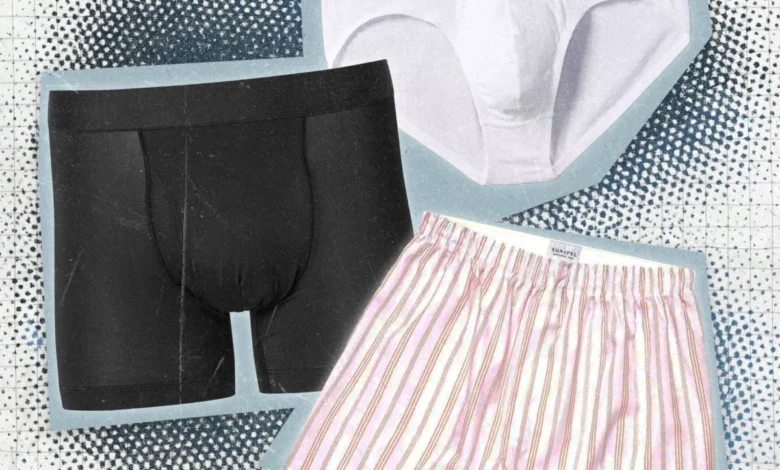
For generations, the undergarment drawer has served as the silent battleground of men’s fashion, defined by a polarized and deeply entrenched debate: boxers versus briefs. For decades, male consumers found themselves ideologically divided into distinct camps. Proponents of traditional boxers praised the garment for its roomy, unrestricted comfort and breathability, viewing it as the ultimate expression of unencumbered ease. Conversely, supporters of briefs advocated for a sleek, anatomical profile that prioritized structural containment, support, and a definitive lack of loose fabric. What began as a good-faith stylistic preference gradually deteriorated into cultural mockery, tribal name-calling, and dubious pseudo-scientific claims regarding masculinity, hygiene, and reproductive health. Both sides fortified their positions, convinced of the moral and functional superiority of their chosen fabric.
The ideological stalemate persisted until the late 20th century, when the market introduced a hybrid savior: the boxer brief. By seamlessly merging the extended coverage and relaxed upper thigh comfort of a boxer with the targeted containment and fitted discretion of a brief, the boxer brief bypassed the social stigmas historically attached to tighty-whities. For a time, peace reigned across the menswear landscape, and the hybrid style dominated retail sales and drawer real estate alike.
However, as contemporary fashion enters an era characterized by unprecedented latitude, historical binaries are dissolving. Today, decades after the introduction of the boxer brief, consumers are rediscovering the distinct utilitarian and aesthetic values of the original trifecta. Rather than viewing the undergarment drawer through a lens of mutual exclusivity, modern style experts and medical professionals argue that retaining all three primary underwear variants is not only practical but essential for navigating a dynamic wardrobe.
The Scientific Consensus: Separating Myth from Medical Reality
To understand the enduring debate surrounding men’s underwear, one must examine the intersection of personal habit and clinical research. For decades, cultural lore dictated that underwear choice played a critical role in male fertility, primarily through thermal regulation. Because the human testicles must remain at a temperature slightly cooler than the internal body temperature to optimize spermatogenesis—the process of producing sperm—conventional wisdom warned that restrictive undergarments would elevate scrotal temperatures and impair reproductive health.
These hypotheses were put to the rigorous test in a comprehensive 2016 fertility study conducted by researchers in the United States. The study examined the daily habits of American men, revealing a diverse baseline: 39 percent of respondents wore boxer briefs during daytime hours, 35 percent opted for traditional boxers, and 26 percent wore briefs. Nighttime habits shifted further toward ventilation, with 43 percent of participants sleeping in boxers, 24 percent in boxer briefs, 13 percent in briefs, and 20 percent opting to sleep entirely nude.
Despite tracking semen quality, hormonal profiles, and the time required for couples to achieve clinical pregnancy, the study’s authors uncovered no statistically significant correlation between underwear type and overall fertility.
Dr. Michael Eisenberg, a professor of urology at Stanford University and co-author of the 2016 study, notes that the question of boxers versus briefs frequently arises during clinical consultations regarding reproductive health. Yet, empirical evidence consistently debunks the fear-mongering surrounding specific cuts. "When we’ve actually studied it, the particular type of underwear tends not to be predictive of semen quality," Dr. Eisenberg confirms. "It’s unlikely any single layer is going to make that big of a difference."
From a physiological and urological standpoint, the medical consensus is clear: underwear choice has a negligible impact on health outcomes. Consequently, medical professionals offer a pragmatic directive. "Just wear what’s comfortable," Dr. Eisenberg advises, effectively liberating consumers from decades of misplaced health anxieties and allowing them to base their purchasing decisions entirely on fit, fabric, and personal preference.
The Stylist’s Perspective: Tailoring Underwear to Modern Trousers
While medical science frees consumers from health-related guilt, the practical realities of modern menswear reintroduce stringent guidelines based on silhouette and tailoring. As trouser cuts fluctuate on the runway—shifting dramatically from ultra-slim fits to voluminous, relaxed-leg silhouettes—the underlying foundation must adapt accordingly.
Daniel Salmon, a Brooklyn-based men’s personal personal stylist and design studio instructor at the Parsons School of Design, emphasizes that the ideal underwear choice is entirely contingent upon outer garments. "It really depends on the pant," Salmon explains. "If you’re wearing a slim or fitted pant, you don’t want a pair of baggy boxer shorts stuffing extra fabric in there. It’s definitely going to show up."
For narrow trousers, particularly those tailored from lightweight, fluid materials such as tropical wool or fine cotton, Salmon recommends briefs or boxer briefs. Boxer briefs, in particular, provide a smooth, continuous line that prevents the bunching and visible panty lines (VPLs) often caused by the excess fabric of traditional boxers or the high-cut leg openings of classic briefs.
Conversely, the cyclical nature of fashion has positioned traditional boxers for an unexpected renaissance. With contemporary runways championing relaxed-fit trousers, lower waistbands, and voluminous silhouettes, old-school boxers are stepping out of the shadows. Recent collections from prominent design houses, such as Haider Ackermann’s menswear presentations for Tom Ford, have showcased boxers intentionally peeking above the waistbands of slouchy trousers.
"It just adds that little bit of a styling element," Salmon notes, pointing to the deliberate integration of undergarments into visible outfit composition. "Sometimes it can allude to what’s underneath, if you want to be a little provocative." This intentional exposure transforms a foundational utility garment into a deliberate stylistic accent, bridging the gap between private comfort and public presentation.
Practical Considerations: Fit, Fabric, and Function
Beyond high-fashion runways and clinical trials, everyday functionality dictates the contents of a well-curated drawer. Practicality remains paramount when selecting undergarments for specific physical activities, body types, and climatic conditions.
For instance, wardrobe physics demand containment when wearing athletic gear or abbreviated shorts. "If you’re wearing really short shorts, you need to be contained," Salmon cautions. "I would say no to a boxer short." In high-mobility scenarios, the structural integrity of a brief or a performance-oriented boxer brief prevents chafing and ensures anatomical security.
Body type and proportion also dictate optimal selection. For individuals with larger frames, stylists recommend avoiding the excessive fabric bunched by loose boxers beneath fitted garments. Conversely, regardless of the chosen style, proper sizing is non-negotiable. Ill-fitting underwear creates distinct aesthetic and physical failures: an undersized waistband causes the skin and flesh to spill over the elastic, while an oversized garment results in uncomfortable bunching, sagging, and friction beneath heavy outerwear.
Ultimately, dressing for the day is an exercise in responsive curation. Comfort is not a static state; it fluctuates based on ambient temperature, physical activity, psychological mood, and sartorial choices. By maintaining a diverse collection of boxers, briefs, and boxer briefs, modern consumers equip themselves to adapt seamlessly to any wardrobe requirement.
Broader Impact and Industry Implications
The realization that consumers no longer need to pledge allegiance to a single undergarment category has profound implications for the global apparel industry. For decades, legacy underwear brands marketed their products through polarizing campaigns that forced consumers to choose a side in the boxer-brief dichotomy. Today, market data indicates a shift toward multi-category purchasing habits.
Retailers and direct-to-consumer labels—ranging from heritage heritage houses like Calvin Klein and Sunspel to modern innovators like Skims—have adapted by expanding their product lines to offer comprehensive multipacks, high-performance technical fabrics, and inclusive sizing ranges. By decoupling underwear choice from obsolete medical myths and rigid stylistic rules, the fashion market has democratized foundational menswear.
The modern undergarment drawer is no longer a monument to ideological warfare; it is a pragmatic toolkit. As fashion embraces unprecedented fluidity, the coexistence of boxers, briefs, and boxer briefs represents a mature approach to style—one that prioritizes individual autonomy, physical comfort, and aesthetic versatility above all else.