Beyond Fiber: New Research Reveals How Plant Proteins and Human Biology Reshape Gut Health

The longstanding nutritional dogma that dietary fiber is the sole protagonist in the health benefits of a plant-based diet is facing a scientifically rigorous challenge. While health authorities globally have long championed fiber for its roles in lowering cholesterol, regulating blood sugar, and maintaining digestive regularity, recent investigations led by researchers at the Princeton Branch of the Ludwig Institute for Cancer Research reveal that fiber represents only a fraction of a much more complex biological narrative. Two groundbreaking studies, spearheaded by researcher Jenna AbuSalim and Joshua Rabinowitz, director of the Princeton Branch of the Ludwig Institute, have upended traditional assumptions about both the components of plant foods and the origin of key metabolites circulating within the human body.
Published respectively in the Proceedings of the National Academy of Sciences (PNAS) and Nature Metabolism, these interconnected studies demonstrate that certain plant proteins—previously dismissed because they resist human digestion—play an unexpectedly pivotal role. Working in tandem with dietary fiber, these indigestible proteins actively shape the composition of the intestinal microbiome and dictate whether gut bacteria produce health-promoting or potentially harmful chemical compounds. Furthermore, the companion study in Nature Metabolism challenges the foundational belief that many vital chemical compounds found in human blood originate exclusively from gut microbes, revealing instead that mammalian cells are independently capable of manufacturing a significant portion of them.
The implications of these discoveries stretch far beyond academic circles. As medical disciplines increasingly look toward microbiome manipulation and metabolite-based therapies to treat conditions ranging from inflammatory bowel disease and metabolic disorders to cancer, these findings suggest that both nutritional science and clinical interventions must adopt a more nuanced paradigm. By decoding the precise chemical dialogues occurring between diet, microbes, and human physiology, scientists are laying the groundwork for a future where dietary guidance and targeted therapeutics can be tailored with unprecedented precision.
Chronology of the Discoveries and Methodological Breakthroughs
The journey toward these revelations began with a concerted effort to untangle the complex chemical interactions that occur when trillions of microorganisms residing in the human gastrointestinal tract digest food. For years, researchers understood that the gut microbiome breaks down dietary components into metabolites—small molecules that can either support physiological functions or contribute to pathology depending on their chemical nature. However, isolating the precise dietary precursors responsible for specific metabolic outputs proved exceptionally difficult.
The research timeline accelerated significantly with the application of stable, non-radioactive isotope tracing techniques. By labeling specific proteins and amino acids with detectable chemical signatures without rendering them radioactive, AbuSalim, Rabinowitz, and their collaborators gained the unprecedented ability to track exact molecular pathways in real-time within animal models, including mice and rats, as well as in human cell cultures.
In June, the team published their findings regarding indole metabolites in Nature Metabolism, challenging the long-held assumption that gut bacteria are the exclusive architects of these compounds. This was followed shortly by the PNAS publication, which focused on phenol metabolites and illuminated the critical, previously overlooked function of indigestible plant proteins—a class of nutrients the researchers termed "proteins imitating fiber," or Prifs. By combining these advanced tracing methods with targeted antibiotic treatments that depleted the microbiome in experimental subjects, the research team successfully mapped out which metabolites truly depend on microbial fermentation and which are synthesized endogenously by the host organism.
Deconstructing Phenol Metabolites: The Dual Role of Plant Foods
To understand the practical impact of these discoveries, one must examine the specific chemical families investigated by the Princeton team. In the PNAS study, the researchers focused on phenol metabolites, which are generated when microorganisms process the amino acids tyrosine and phenylalanine. While amino acids are universally recognized as the essential building blocks of proteins, their bacterial breakdown products diverge sharply in their physiological effects.
Metabolites derived from phenylalanine—specifically phenylpropionate and hippuric acid—have consistently been associated in clinical literature with healthy body weight, robust metabolic function, and overall gastrointestinal integrity. Conversely, metabolites derived from tyrosine, such as p-cresol sulfate and phenol sulfate, exhibit toxic profiles. Accumulation of these tyrosine-derived compounds has been linked to harmful systemic effects in patients with chronic kidney disease and worse clinical outcomes in individuals battling cancer.
The central question facing the researchers was whether specific components of plant-based foods could actively steer gut bacteria away from producing the harmful tyrosine derivatives and toward the synthesis of the beneficial phenylalanine derivatives. The experimental results confirmed this hypothesis, revealing that both traditional dietary fiber and the newly identified Prifs play decisive roles in this chemical steering process.
The Discovery of Prifs: Proteins That Imitate Fiber
Dietary fiber has historically dominated nutritional research concerning plant-based diets. Consequently, scientists have paid minimal attention to the fraction of plant proteins that survive human enzymatic breakdown in the stomach and small intestine, passing intact into the large intestine where the microbiome resides.
The Princeton studies reveal that these digestion-resistant proteins—Prifs—do not simply pass through the digestive tract as inert waste. Instead, they reach the colon and serve as rich substrates for bacterial metabolism. Crucially, Prifs do not operate in isolation; they function synergistically with plant fiber to alter microbial behavior.
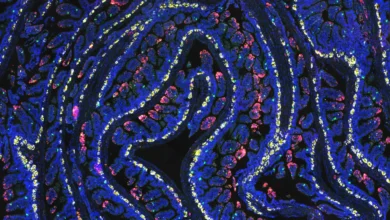
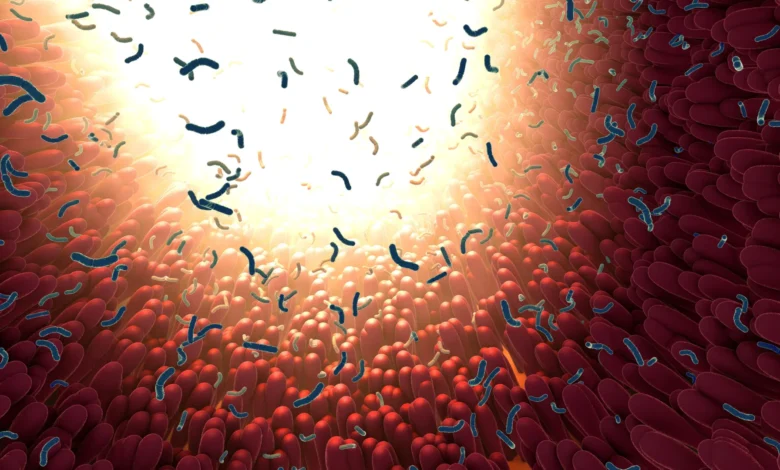
Through isotopic labeling experiments in mice, the researchers uncovered a fascinating protective mechanism involving the gut’s mucosal lining. The gastrointestinal tract is coated in a thick layer of protective mucus that separates resident microbes from the fragile epithelial cells lining the gut wall, forming a vital barrier against infection and inflammation. When dietary fiber intake is low, gut bacteria can become starved for fermentable substrates, prompting them to degrade host-derived proteins, including those found within this protective mucosal layer. This microbial cannibalization of the gut lining generates potentially harmful phenol metabolites.
However, when sufficient fiber is present, it suppresses this destructive bacterial reliance on the host’s protective mucus. Simultaneously, the introduction of Prifs supplies an abundant, alternative dietary protein source for the microbes. This dual dietary input encourages bacteria to utilize food-derived proteins instead of host proteins, effectively shutting down the production of harmful metabolites while fostering an environment rich in beneficial compounds.
"We think Prifs represent an emerging class of dietary nutrients that shape the composition of the gut microbiome and could have a far-reaching influence on metabolic health," noted AbuSalim. The practical implications of this discovery are profound, leading Rabinowitz to suggest that food packaging and nutritional labeling could one day evolve to list Prif content directly alongside dietary fiber.
Challenging Dogma: Endogenous Production of Metabolites
While the PNAS study redefined the role of plant proteins, the companion study published in Nature Metabolism tackled an equally entrenched dogma regarding the origin of circulating biological compounds. For decades, the scientific community operated under the assumption that indole metabolites—formed from the amino acid tryptophan—originated exclusively from the metabolic activity of gut bacteria. Because indoles participate heavily in modulating inflammation, immune responses, and disease pathways such as inflammatory bowel disease, neurodegenerative disorders, and cancer metastasis, vast sums of research capital have been directed toward developing probiotics and dietary interventions aimed at boosting microbial indole production.
However, this therapeutic strategy hinged entirely on the premise that intestinal microbes were the sole manufacturers of these compounds. To test this assumption, the research team utilized isotope tracing across animal models and human cells, followed by experiments examining metabolite levels in antibiotic-treated mice and human clinical samples, including patients undergoing cancer therapy.
The results were striking. When antibiotics decimated the intestinal microbiome, many key metabolites—such as indole-3-propionate and p-cresol sulfate—indeed vanished or plummeted in concentration, confirming their strictly microbial origin. Yet, other crucial compounds, including indole-3-lactate and indole-3-acetate, remained at substantial levels in the blood despite the near-total depletion of gut bacteria.
This empirical evidence demonstrated definitively that mammalian cells possess the intrinsic metabolic machinery to generate numerous phenol and indole metabolites independently. The realization that the human body manufactures compounds previously credited entirely to microbial roommates changes the calculus for medical researchers. If the host organism itself produces substantial quantities of a given therapeutic metabolite, attempting to control its systemic levels solely by altering the microbiome via diet or probiotics may prove ineffective.
Broader Implications for Medicine, Nutrition, and Therapy
The convergence of these two studies offers a sweeping recalibration of how scientists view the intricate triad uniting human nutrition, microbial ecology, and mammalian metabolism. By identifying Prifs as active modifiers of gut chemistry and proving that host cells share metabolic duties traditionally assigned exclusively to bacteria, the research provides a sophisticated framework for future biomedical investigations.
In the realm of clinical nutrition, these findings suggest that future dietary guidelines must move beyond simplistic macronutrient categories. Understanding the specific concentrations and types of indigestible plant proteins in various foods could allow nutritionists to design precision diets that optimize microbial output, protect the intestinal mucosal barrier, and suppress the formation of toxic metabolites associated with kidney disease and oncological complications.
Furthermore, pharmaceutical and therapeutic developments targeting the microbiome must now account for host-derived metabolic contributions. As medical disciplines increasingly embrace personalized medicine, therapies designed to manipulate metabolic outputs for therapeutic gain will need to distinguish clearly between microbial and mammalian pathways to achieve meaningful clinical efficacy.
While the current body of evidence relies heavily on preclinical models and in vitro cellular studies, paving the way for extensive human clinical trials, the trajectory of this research promises to sharpen clinical practices significantly. As Joshua Rabinowitz emphasized, acquiring a clearer, chemically precise picture of how specific food components interact with both the microbiome and human physiology will ultimately empower doctors and nutritionists to deliver vastly superior guidance for disease prevention and targeted patient therapy.
Funding for these foundational studies was provided by the Ludwig Institute for Cancer Research, the National Institutes of Health, the National Institute of Diabetes and Digestive and Kidney Diseases, the Princeton Alliance for Collaborative Research and Innovation, and Princeton University.