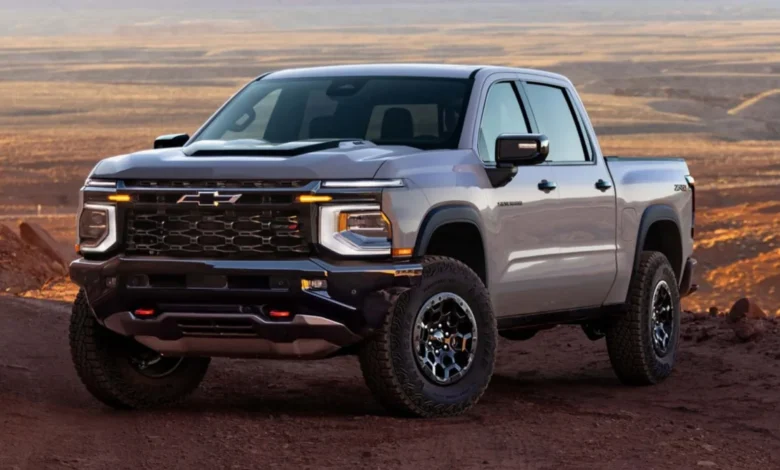
The 2027 Chevrolet Silverado and GMC Sierra V8 Fuel Economy Ratings Represent a Shift in Powertrain Efficiency

The automotive landscape is currently navigating a period of significant regulatory and economic volatility, marked by a recalibration of fuel economy standards and shifting consumer preferences in the light-duty truck segment. General Motors (GM) has officially released the fuel economy figures for its redesigned 2027 Chevrolet Silverado and GMC Sierra, revealing a notable, albeit incremental, decline in efficiency across several V8 powertrain configurations compared to their 2026 predecessors. This development comes at a time when the broader automotive industry is grappling with the interplay between corporate average fuel economy (CAFE) requirements, volatile global energy markets, and the persistent demand for high-performance internal combustion engines.
Chronology of the 2027 Model Year Transition
The transition to the 2027 model year for the Silverado and Sierra represents a significant product refresh for General Motors, which maintains a substantial market share in the full-size pickup segment. Production of the next-generation trucks commenced in October 2026, following a reveal that emphasized updated aesthetics, interior technology, and powertrain refinements.
However, as these vehicles began to clear regulatory certification, industry observers noted a discrepancy in efficiency ratings. According to data documented by GM Authority, the new 5.7-liter and 6.6-liter V8 engines—designed to provide increased power and torque—have registered lower EPA-estimated fuel economy numbers. In the context of the American automotive market, where the Silverado and Sierra consistently rank among the highest-volume vehicle lines, even marginal fluctuations in efficiency have systemic implications for fleet-wide emissions and fuel consumption.
Analysis of Powertrain Efficiency Metrics
The efficiency decline is observed across several drivetrain configurations. The 2027 Silverado equipped with the 5.7-liter V8, in a two-wheel-drive configuration, is rated at 16 mpg city, 19 mpg highway, and 17 mpg combined. When configured with four-wheel drive, the highway and combined figures experience an additional reduction of 1 mpg. Compared to the 2026 equivalent, this represents a decrease of 1 mpg in city and combined metrics, and a 2 mpg reduction in highway efficiency.
The larger 6.6-liter V8, which is exclusively available in four-wheel-drive configurations for the current production run, faces similar constraints. The standard trim is rated at 14 mpg city, 18 mpg highway, and 15 mpg combined. For consumers opting for the off-road-oriented ZR2 trim—a package that traditionally features increased ground clearance, larger tires, and aggressive suspension tuning—the fuel economy dips further to 13 mpg city, 15 mpg highway, and 14 mpg combined. These figures represent a consistent regression of 1 to 2 mpg compared to the 2026 model year baseline.
Furthermore, the impact extends to the 3.0-liter inline-six turbodiesel engine. Often favored by consumers for its superior range and towing efficiency, the 2027 diesel-powered variants also show a decline in fuel economy, with most configurations returning 1 to 2 mpg less than the previous year. While official ratings for the 2.7-liter turbocharged four-cylinder engine remain pending, the trend across the high-output engines suggests a prioritization of power delivery and thermal performance over absolute fuel economy in the current design cycle.
Market Context and Industry Implications
The full-size pickup segment is the financial engine of the domestic automotive industry. Through the third quarter of 2026, Chevrolet reported sales of 413,383 units of the Silverado, while GMC moved 252,639 units of the Sierra. Given these volumes, the cumulative effect of a 1 to 2 mpg reduction is substantial.
From a macro-economic perspective, the decline in fuel economy occurs alongside a broader trend of rising energy costs and an affordability crisis within the automotive retail sector. While fuel economy is only one variable in the total cost of ownership, it remains a critical factor for commercial fleet operators and private owners alike. The current regulatory environment, characterized by recent adjustments to fuel economy requirements, allows for a degree of flexibility that manufacturers are utilizing to balance consumer demand for power with compliance mandates.
Analysts suggest that the decision to prioritize engine performance at the expense of fuel efficiency is a calculated response to the competitive landscape. With rivals like Ford and Stellantis also vying for dominance in the high-torque, heavy-duty capability space, GM appears to be banking on the consumer’s desire for increased engine output. However, this strategy risks alienating buyers sensitive to fluctuating gasoline prices, particularly as the average cost of fuel remains elevated in many regions.
Regulatory and Environmental Considerations
The federal government, through the National Highway Traffic Safety Administration (NHTSA) and the Environmental Protection Agency (EPA), sets the standards that dictate the trajectory of automotive engineering. The current administration has overseen various policy shifts regarding CAFE standards. These policies are designed to incentivize the transition to lower-emission vehicles, yet they often face pushback from manufacturers who argue that the pace of electrification must align with consumer demand and existing supply chain realities.
The 2027 Silverado and Sierra, by relying on internal combustion engines that consume more fuel than their predecessors, highlight the ongoing tension between technological advancement and environmental goals. While the trucks feature advanced cylinder deactivation and sophisticated transmission tuning, these are clearly insufficient to offset the aerodynamic and mass-related penalties of the new designs. The result is a product that meets current safety and performance benchmarks but moves in the opposite direction of the long-term industry trend toward decarbonization.
Stakeholder Perspectives and Future Outlook
While GM has not issued a formal statement regarding the specific engineering decisions behind the lowered efficiency, the company has consistently emphasized its "all-of-the-above" strategy. This approach involves heavy investment in electric vehicles, such as the Silverado EV, while simultaneously maximizing the profit margins of internal combustion trucks. For many stakeholders, the profitability of the V8-powered trucks is essential to funding the research and development required for future battery-electric initiatives.
Industry experts anticipate that the next few years will see a bifurcated market. On one end, there will be a continued demand for high-capability, high-displacement internal combustion trucks for work and recreation. On the other, the adoption of battery-electric pickups is expected to grow as charging infrastructure matures. The 2027 Silverado and Sierra serve as a reminder that as long as the market demands traditional V8 performance, manufacturers will continue to produce them, even if it necessitates a retreat from previous efficiency gains.
For the consumer, the implications are clear: the cost of operating a full-size pickup is set to rise, not only due to fuel prices but also due to the decreased efficiency of the latest hardware. As the 2027 models hit dealership lots in higher numbers, the real-world performance data will be closely monitored by both environmental advocacy groups and the automotive press. Whether this trade-off between power and efficiency will impact long-term sales remains to be seen, but it marks a distinct chapter in the evolution of the American pickup truck, signaling a prioritization of capability over the incremental efficiency gains that characterized the industry for much of the previous decade.
As the industry moves into the latter half of the decade, the focus will likely shift toward how these vehicles comply with future, more stringent emissions targets. If manufacturers continue to experience efficiency regressions, they may face increased scrutiny from regulatory bodies, potentially leading to higher compliance costs that could eventually be passed on to the consumer. For now, the 2027 Silverado and Sierra stand as a testament to the enduring, albeit fuel-intensive, power of the V8 engine in the American automotive market.