Chinese brands are building EU plants as Honda, a 35-year European producer, weighs whether it can afford a return. By Stewart Burnett


The global automotive landscape is undergoing a profound structural realignment, driven less by traditional trade tariffs and more by aggressive geographic protectionism. While rising Chinese electric vehicle manufacturers rapidly establish their own manufacturing footprints across the European Union to circumvent emerging regulatory hurdles, legacy automakers are forced to re-evaluate long-term operational strategies. Among them is Japanese automotive giant Honda, an enterprise with a 35-year operational history in Europe, which is now cautiously weighing the economic viability of a manufacturing return to the continent.
This potential strategic pivot hinges entirely on the final formulation of the European Union’s proposed "Made in EU" regulations. If these rules are codified as anticipated—favouring locally assembled vehicles through targeted public procurement policies and stringent domestic-content thresholds—automakers relying exclusively on imports could find themselves entirely shut out of lucrative state incentives. For Honda, this regulatory evolution presents a stark paradox. The company systematically dismantled its European manufacturing backbone only a few years ago under the reverse logic of a sweeping free-trade agreement, trusting that tariff-free access from Asia would suffice. Now, shifting political winds in Brussels threaten to render that import-reliant business model obsolete, forcing executives to contemplate whether the volume and financial outlay required to resume local European production are justifiable.
The Shifting Regulatory Landscape in Brussels
At the heart of Honda’s strategic dilemma is the European Commission’s aggressive industrial policy agenda, spearheaded by initiatives such as the proposed Industrial Accelerator Act. Brussels is increasingly moving away from mere border tariffs toward a regime of geographic industrial policy designed to safeguard domestic manufacturing capacity, protect local employment, and dramatically reduce strategic dependencies on foreign industrial powers.
Under the framework of the proposed legislation, certain categories of public procurement, corporate fleet subsidies, and state-backed green incentives would be strictly reserved for vehicles that meet high local assembly percentages and stringent European-content benchmarks. While this policy architecture is primarily constructed to counter the surging wave of heavily subsidized Chinese automotive imports, its net administrative cast is wide. It inadvertently ensnares trusted trade partners from other regions, including Japan, whose automotive industries spent decades integrating into the globalized trading system under the assumption that open borders and zero tariffs were permanent fixtures of international commerce.
Speaking at the high-profile EICMA motorcycle show in Milan, Hans De Jaeger, President of Honda Motor Europe, articulated the company’s complex stance. De Jaeger made it unequivocally clear that Honda has "certainly no intention to leave Europe," pointing to the brand’s enduring commitment to its European customer base. However, he was equally frank about the absence of concrete blueprints, confirming that no finalized plans for local production facilities or manufacturing partnerships are currently active on the corporate table.
Instead, leadership in Tokyo and Amsterdam maintains a cautious optimism that the European Parliament and member states will ultimately recognize Japan as a trusted strategic partner, granting exemptions or favorable adjustments given the immense scale of historical Japanese industrial investment within the EU. Yet, without formal concessions, Honda faces the uncomfortable prospect of watching its European market share erode as competitors leverage state-backed incentives that Honda-branded vehicles cannot legally access.
A Retrospective Chronology: The Rise and Fall of Honda in Swindon
To understand the magnitude of Honda’s current deliberations, one must examine the timeline of its manufacturing footprint in Europe, which reached its zenith in the late 20th century before being systematically unwound in the early 2020s.
Honda’s historical engagement with European manufacturing officially began in the late 1980s, culminating in the establishment of its flagship European production facility in Swindon, Wiltshire, United Kingdom. Opened in 1992, the Swindon plant became a cornerstone of Honda’s global manufacturing network, producing iconic models such as the Civic and the CR-V for export across the European continent and various international markets. For decades, the plant symbolized the deep integration of Japanese manufacturing expertise into the British industrial economy.
However, the 2008 global financial crisis exposed deep vulnerabilities in Honda’s European volume strategy. In the years following the crash, consumer demand failed to return to pre-crisis peaks, leaving the Swindon facility chronically underutilized. By the mid-2010s, industry analysts estimated that the plant was running at roughly 60 percent of its total production capacity, severely eroding profit margins.
The tipping point arrived in a convergence of geopolitical and strategic shocks between 2016 and 2021:
- June 2016: The United Kingdom votes to leave the European Union, introducing long-term regulatory divergence, customs friction, and supply chain uncertainty for automakers operating British plants destined for the EU single market.
- 2019: Honda officially announces its intention to close the Swindon manufacturing plant by 2021, citing global restructuring plans to concentrate its electric vehicle investments and production hubs closer to its primary volume markets in Asia and North America.
- July 2021: The Swindon plant officially ceases production, bringing an end to nearly three decades of continuous car manufacturing in the United Kingdom. Concurrently, Honda terminates car production at its manufacturing joint venture in Turkey, effectively completing its withdrawal from physical vehicle assembly within the broader European sphere.
- Late 2021: The EU-Japan Economic Partnership Agreement (EPA) enters fully into force, successfully phasing out tariffs on Japanese-built vehicles exported to Europe. This trade accord seemed to completely validate Honda’s withdrawal strategy, providing a seamless, tariff-free pipeline to serve European consumers directly from highly efficient factories in Japan without the heavy fixed overhead costs of maintaining under-capacity European bases.
The Volume Dilemma and the Case for Contract Manufacturing
Despite the appeal of importing vehicles tariff-free from Asia, the shifting regulatory sands in Brussels have dramatically altered the financial equation. A zero tariff counts for very little in modern commercial fleet sales if imported vehicles are systematically disqualified from green subsidies and public procurement tenders due to strict local-content mandates.
Yet, for Honda, the primary obstacle to returning to European soil is not corporate willpower, but raw sales volume. During the first nine months of 2026, Honda registered just under 59,000 passenger cars across the entire European market. According to Hans De Jaeger, this sales volume remains far too low to economically justify the immense capital expenditure required to construct and operate a dedicated, single-brand automobile manufacturing plant in Europe. Building a greenfield automotive facility requires billions of euros in upfront capital, an investment that cannot be rationalized on a volume base of under 80,000 annual units.
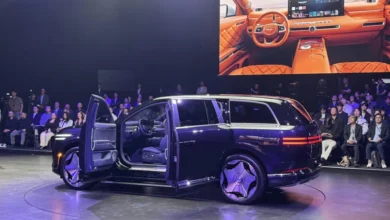
Nevertheless, corporate planners are actively exploring alternative pathways that bypass the heavy capital outlays of traditional factory ownership. The anticipated market traction of Honda’s upcoming next-generation battery-electric and hybrid vehicle line-up—anchored by the forward-looking 0 Series—could fundamentally change internal volume calculations over the remainder of the decade. If consumer demand for these advanced electrified platforms surges, Honda may achieve the necessary scale.
To bridge the gap without committing billions to a proprietary plant, industry insiders suggest Honda could pursue contract manufacturing or co-production agreements. By partnering with an established automaker that possesses underutilized manufacturing capacity within the European Union, Honda could contract out the assembly of its vehicles. This pragmatic approach would allow the brand to easily meet incoming "Made in EU" local assembly thresholds and content rules, securing eligibility for local subsidies while insulating the company from the immense financial risks of operating an independent European assembly line.
Broader Policy Inconsistencies and the Automaker Critique
Honda’s cautious posture reflects a wider, deeply entrenched frustration within the legacy automotive sector regarding the European Union’s broader regulatory framework. De Jaeger has been an outspoken critic of what he characterizes as a distinct lack of long-term policy consistency from the European Commission, particularly concerning the overarching agenda for automotive decarbonization. He argues that frequent shifts in regulatory targets, compliance timelines, and emissions penalties make long-term operational planning "extremely difficult" for legacy manufacturers who must commit capital decades in advance.
Furthermore, Honda has consistently lobbied Brussels for greater technological flexibility regarding powertrains, arguing against rigid, blanket electrification mandates that ignore regional infrastructure realities and consumer purchasing power. Even as policymakers have occasionally bowed to industry pressure to soften intermediate CO2 reduction targets, the regulatory focus has simply pivoted toward geography.
This policy pivot was underscored by high-level political shifts within the bloc, most notably when German Chancellor Friedrich Merz declared the strict internal combustion engine ban effectively history following a critical policy compromise brokered with France. While Brussels may be slightly loosening its grip on exact internal combustion versus electric powertrain mandates, it is simultaneously tightening its grip on the geographic provenance of those vehicles.
Wider Implications for Global Automakers in Europe
The evolution of EU industrial policy represents a profound paradigm shift, effectively moving the primary basis of automotive competition from cross-border tariffs to localized geography. Japanese legacy automakers that spent the early 2020s streamlining their operations and relying heavily on bilateral trade agreements to serve the European market from home now face the exact same localization pressures historically targeted at Chinese industrial interlopers.
For low-volume importers like Honda, Mazda, and Subaru, building bespoke factories in Europe is economically non-viable. Consequently, Honda’s pragmatic openness to shared plants and contract assembly signals a broader trend across the industry. Rather than returning to Europe with traditional, single-brand factories of their own, foreign automakers with modest market shares are likely to pivot toward strategic manufacturing alliances, contract assembly networks, and localized supply chain partnerships.
As the European Parliament and member states move closer to finalizing the Industrial Accelerator Act and its accompanying local-content rules, the strategic calculus for foreign automakers will only sharpen. The era of frictionless, import-driven automotive sales in Europe is rapidly drawing to a close. Whether Honda ultimately decides to anchor its future in European assembly halls through a strategic partnership or accepts lower margins to maintain pure import models will serve as a bellwether for how medium-volume global automakers navigate the new age of regional economic nationalism.
Related posts: