The 3 Best Fast Food Chicken Items We’ve Tried In 2026 — That Don’t Come From Chicken Chains

The fast-food landscape is fiercely competitive, with brands continuously innovating to capture market share in an increasingly saturated culinary sector. While dedicated poultry powerhouses like Chick-fil-A, Popeyes, and Raising Cane’s traditionally dominate the conversation regarding fried and grilled bird dishes, the year 2026 has brought a surprising twist to the market. Some of the most celebrated and critically lauded fast-food chicken items of the year have originated not from poultry-centric establishments, but from legacy chains historically renowned for entirely different proteins.
Prominent culinary publications and industry reviewers have turned their attention toward unexpected players—Taco Bell, Wendy’s, and Arby’s—as they successfully expanded their footprints into the poultry segment. These three brands, long defined by ground-beef tacos, classic square-patty hamburgers, and sliced roast beef sandwiches respectively, have demonstrated that traditional boundaries in fast-food menus are increasingly fluid. Ahead of nationwide rollouts throughout 2026, specialized testing panels evaluated these limited-time and permanent releases based on rigorous standards, including flavor profile, aromatic appeal, textural balance, and overall culinary execution.
The blurring of traditional menu lines reflects a broader, highly calculated economic and culinary strategy across the quick-service restaurant (QSR) industry. By leveraging existing supply chains to introduce high-margin poultry options, these heritage brands have successfully captured consumer interest at a time when menu fatigue poses a persistent challenge for major restaurant conglomerates.
Strategic Diversification: Why Beef-Centric Chains Are Pivoting to Poultry
The aggressive push into chicken by non-traditional chains in 2026 is no accident; it is the culmination of years of shifting consumer preferences and market analytics. For decades, the American fast-food market was sharply categorized: burger joints sold beef, taco stands sold Mexican-inspired ground meats, and roast beef specialists focused on deli-style slices. However, consumer demand for chicken has grown exponentially over the last ten years, driven by perceptions of chicken as a versatile protein that appeals to both health-conscious diners and indulgence-seekers alike.
Market research from the early 2020s consistently indicated that chicken outpaced beef in overall consumption growth within the QSR sector. Recognizing this, brands like Taco Bell, Wendy’s, and Arby’s began re-evaluating their kitchen capabilities. Rather than building entirely new operational workflows from scratch, these chains utilized existing frying equipment, staging stations, and global flavor profiles to introduce innovative chicken products.
Furthermore, the introduction of limited-time offers (LTOs) featuring chicken allows these corporations to test consumer appetite with minimal financial risk. If an item resonates, it can be scaled for nationwide deployment or kept in reserve as a high-performing seasonal rotation. The 2026 crop of chicken items represents the mature phase of this strategy, where experimental menu items have transitioned into sophisticated, highly polished culinary offerings.
Taco Bell’s Diablo Dusted Crispy Chicken Nuggets: A Masterclass in Cross-Category Flavor Integration
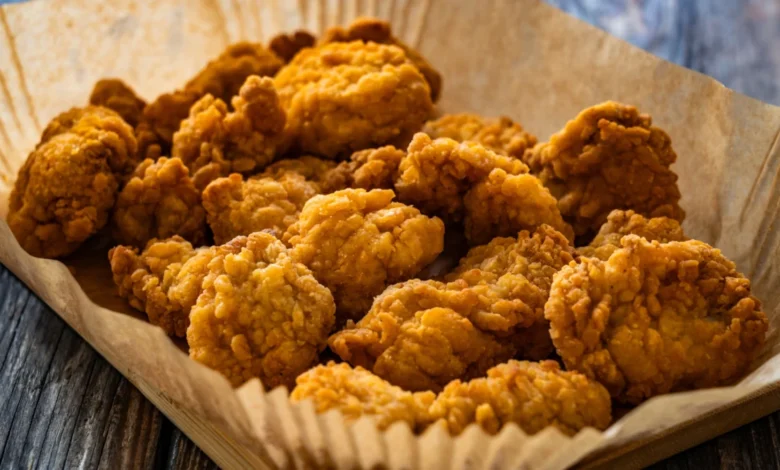
Among the most talked-about releases of early 2026 was Taco Bell’s introduction of the Diablo Dusted Crispy Chicken Nuggets. Known globally for its Tex-Mex-inspired menu centered around seasoned ground beef, shredded chicken, and steak, Taco Bell made a bold departure by introducing a dedicated nugget line infused with one of its most recognizable signature condiments.
Instead of serving the Diablo sauce in liquid packets for dipping—the traditional industry standard—Taco Bell’s culinary development team engineered a proprietary dehydration and seasoning process. They transformed the hot, tangy, and pepper-forward profile of their Diablo sauce into a fine, clinging powder that coated the exterior crags of the crispy breaded chicken.
When evaluated by review panels prior to its official rollout, the execution received high marks for structural integrity. The dichotomy between the steaming, moisture-rich poultry interior and the intensely crunchy outer breading created a satisfying textural contrast. Flavor analysts noted that the heat level of the Diablo dust was notably more assertive than typical mainstream fast-food spicy variants, pushing the boundaries of what mass-market consumers expect from a national Mexican-inspired chain.
To balance the elevated spice levels, the chain paired the launch with complementary beverage options, such as its cream-spiked Dirty Sips line, or traditional side pairings like Spicy Ranch dressing, which consumer forums and social media platforms quickly identified as an optimal flavor mitigant.
Despite the widespread enthusiasm, the item highlighted the operational challenges of scaling complex limited-time offerings. Consumer feedback across digital platforms such as Reddit revealed minor inconsistencies depending on individual franchise execution; while properly prepared batches were hailed among the best nuggets in the industry, variations in kitchen timing occasionally led to over-fried pieces. Because the Diablo Dusted Crispy Chicken Nuggets were released as a strictly limited-time offer, they have since rotated off active menus. However, industry analysts speculate that given Taco Bell’s historical penchant for reviving cult-favorite items—such as the iconic Mexican Pizza or cyclical Nacho Fries—the seasoned poultry offering may make a future return.
Wendy’s Chicken Tenders Ranch Wrap: Upgrading a Classic Through Textural Innovation
Wendy’s holds a revered place in the American fast-food pantheon for its fresh, never-frozen beef hamburgers and iconic Frosty desserts. However, the Dublin, Ohio-based corporation has steadily built a formidable reputation in the chicken segment through its premium breast meat tenders and wraps. In 2026, Wendy’s captured the attention of fast-food critics by releasing the Chicken Tenders Ranch Wrap, a deliberate evolution of its longstanding Grilled Chicken Ranch Wrap.
The mechanics of the upgrade were straightforward yet effective. By swapping the traditional grilled chicken strips for the brand’s signature crispy, breaded chicken tenders, Wendy’s fundamentally altered the physical and sensory profile of the wrap. The newly reformulated menu item wrapped the crispy tenders alongside shredded cheddar cheese, crisp romaine lettuce, and a generous application of Creamy Ranch sauce inside a soft flour tortilla.
Review panels testing the product emphasized the importance of textural variety in modern fast-food engineering. While the grilled chicken variant offered a softer, uniform bite, the introduction of the crispy tenders provided a distinct crunch that successfully anchored the entire flavor profile. The crispiness of the chicken and the freshness of the romaine lettuce provided a structural counterbalance to the rich, unctuous elements of the melted cheese and creamy ranch dressing.
Furthermore, reviewers noted that the physical footprint of the Chicken Tenders Ranch Wrap felt more substantial and fulfilling than its predecessor, satisfying consumer demand for higher-value portable meals.
An interesting operational byproduct of the Chicken Tenders Ranch Wrap’s eventual departure from active menus is the rise of informal "menu hacking" within the Wendy’s consumer base. Because Wendy’s maintains its core Chicken Tenders as a permanent menu fixture, knowledgeable customers have easily recreated the departed wrap by ordering standard tenders and requesting them inside the traditional Grilled Chicken Ranch Wrap format. This consumer adaptability underscores the strength and flexibility of Wendy’s foundational supply chain.
Arby’s Chicken Cheesesteaks: Expanding "We Have The Meats" Beyond Roast Beef
Since launching its memorable "We Have The Meats" advertising campaign in 2014, Arby’s has steadily diversified its protein portfolio to encompass everything from smokehouse brisket to wild-caught fish and turkey. However, the chain’s core identity remains inextricably linked to its iconic, thinly sliced roast beef sandwiches piled high on sesame seed buns.
In 2026, Arby’s significantly broadened that culinary promise with the introduction of its comprehensive line of Chicken Cheesesteaks. Sent to tasting panels in three distinct iterations—the flagship Chicken Cheesesteak, the vegetable-enhanced Deluxe upgrade, and the heat-forward Spicy Chicken Cheesesteak—the lineup showcased how a traditional sandwich concept could be successfully re-engineered using poultry.
The flagship sandwich featured generously portioned, juicy shredded chicken bound with melted cheese and sweet caramelized onions, served inside a toasted, seeded roll noted for its structural integrity and pleasant exterior crunch. The inclusion of the Deluxe Cheesesteak introduced shredded greens and fresh tomato slices, an addition that culinary reviewers initially viewed with skepticism, fearing it would dilute the savory nature of the cheesesteak. However, the fresh produce proved essential, providing a necessary acidic and textural diversion that cut through the dense, heavy profile of the melted cheese and poultry.
The Spicy Chicken Cheesesteak added a controlled, slowly building heat profile that enhanced rather than overwhelmed the underlying flavor of the meat. Food critics noted that while the spice level was restrained enough for mainstream palates, pairing the sandwich with a side of Arby’s proprietary ranch sauce elevated the overall tasting experience, creating a harmonious balance of spice and creaminess.
The enduring availability of Arby’s Chicken Cheesesteaks as of late 2026 highlights the success of this menu expansion. By maintaining high portion standards and utilizing high-quality bread products, Arby’s has successfully proven that a brand defined by beef can execute a complex, regionally inspired chicken sandwich with commercial and critical viability.
Broader Market Implications and Future Outlook
The success of these chicken items from non-traditional chains in 2026 signals a permanent shift in how fast-food conglomerates approach menu architecture. No longer constrained by historical brand identities, restaurants are increasingly defining themselves by their operational execution rather than a single flagship protein.
For consumers, this cross-pollination of culinary styles means greater variety and higher-quality options across the entire quick-service spectrum. As supply chains become more agile and consumer palates demand constant innovation, the boundaries separating burger chains, taco spots, and sandwich shops will continue to dissolve. Whether through the bold, chemically sophisticated spice dusting of Taco Bell, the textural upgrades seen at Wendy’s, or the hearty, protein-forward engineering of Arby’s, the fast-food industry has demonstrated that excellence in chicken is no longer the exclusive domain of the poultry specialist.