The Geopolitical Shift and the Future of Reserve Currencies in a Fragmented Global Order

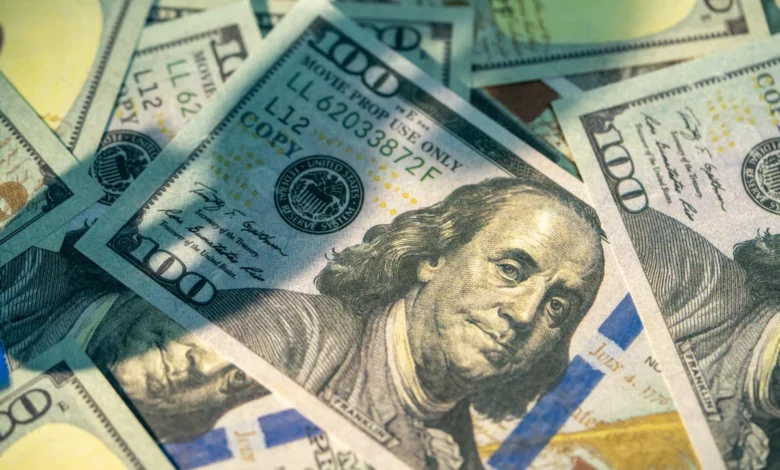
For over seven decades, the United States dollar has served as the bedrock of the global financial system, a position solidified by the 1944 Bretton Woods Agreement. As the world’s primary reserve currency, the greenback has facilitated international trade, anchored global bond markets, and served as the ultimate store of value. However, the past decade has signaled a profound transition. Through a series of aggressive trade policies, shifting geopolitical alignments in the Middle East, and the strategic deployment of the SWIFT international payment system as a tool of statecraft, the U.S. has prompted a global reassessment of the risks associated with dollar dependency.
As the international community grapples with this new reality, a critical question emerges: if the dollar’s hegemony wanes, which currencies are positioned to capture the resulting market share? While analysts often reflexively point to the rise of the Chinese renminbi, a more nuanced analysis suggests that the true beneficiaries of this pivot may be smaller, highly stable, and well-governed nations that maintain open capital markets and robust institutional frameworks.
A Decade of Strategic Realignment
The current skepticism toward dollar hegemony did not occur in a vacuum. It is the result of a deliberate, if contentious, shift in American foreign policy. The timeline of this transition is marked by several key inflection points.
Following the 2008 financial crisis, the U.S. began to lean more heavily on its financial infrastructure to enforce foreign policy objectives. This culminated in the widespread use of secondary sanctions against nations such as Iran and, most significantly, the exclusion of Russia from the SWIFT messaging system in 2022 following the invasion of Ukraine. While these actions were framed as necessary responses to geopolitical aggression, they inadvertently signaled to other nations that the "rails" of the global financial system—previously viewed as neutral—could be weaponized against any sovereign state that fell out of alignment with Washington.
Furthermore, the implementation of protectionist tariffs under successive administrations has fractured long-standing trade agreements. By prioritizing domestic industrial policy over the maintenance of an open global trading system, the U.S. has incentivized emerging economies to explore alternative settlement mechanisms, including bilateral currency swaps and gold reserves, to insulate themselves from potential future volatility.
The Rise of the "Safe Haven" Alternative
If the U.S. dollar is no longer perceived as a purely neutral utility, international capital will inevitably seek a substitute that offers the same perceived benefits—liquidity, transparency, and the rule of law—without the baggage of political weaponization. This is where small, advanced economies come into play.
Currencies such as the Australian dollar (AUD), the Canadian dollar (CAD), and the Swiss franc (CHF) have historically been viewed as commodity-linked or safe-haven currencies. However, their role is expanding. Investors are increasingly diversifying into these currencies not just for their yield potential, but because these nations possess the structural prerequisites of a reserve currency:
- Institutional Integrity: These nations maintain independent central banks and a judiciary that is insulated from the immediate whims of executive political power.
- Open Capital Markets: Unlike some larger, state-managed economies, these countries have fully floating exchange rates and deep derivative markets, allowing for the rapid entry and exit of institutional capital.
- Fiscal Responsibility: While no nation is immune to the global trend of rising debt, these countries generally maintain more manageable debt-to-GDP ratios compared to the U.S. and the European Union, making their sovereign debt more attractive to risk-averse central banks.
Technological Disruption: Stablecoins and CBDCs
The barrier to entry for smaller currencies has traditionally been the lack of "network effects." Large institutional players, such as pension funds and sovereign wealth funds, require deep liquidity to conduct multi-billion dollar trades. Small-country currencies have historically struggled to meet this threshold.
However, the rapid maturation of blockchain technology, specifically stablecoins and Central Bank Digital Currencies (CBDCs), is fundamentally altering this landscape. These technologies allow for the bundling of various small-country currencies into a single, diversified asset basket that can be settled near-instantaneously.
By leveraging smart contracts, a hedge fund or a central bank can now maintain exposure to a "basket" of smaller, stable currencies as if it were a single reserve asset. This technological layer mitigates the liquidity concerns that previously kept institutional capital tethered to the U.S. dollar, effectively creating a "synthetic" global currency that is decentralized by design.
The Strength of Neutrality
The primary paradox of the current era is that the lack of global political power possessed by smaller nations has become their greatest competitive advantage. Because a nation like Norway, Australia, or Singapore lacks the geopolitical footprint to enforce its will on the international stage, its currency is inherently "non-threatening."
International investors do not fear that a small, neutral nation will suddenly freeze their assets due to a dispute in a distant theater of war. This perceived neutrality is a critical differentiator. In the eyes of a global investor, the risk of a currency being "de-platformed" by a superpower outweighs the minor inconveniences of trading in a less liquid market. The weaponization of the dollar has essentially created a "neutrality premium" that smaller, stable nations are perfectly positioned to collect.
Data Trends and Market Evidence
The shift is already visible in the data, albeit in its early stages. According to the IMF’s Currency Composition of Official Foreign Exchange Reserves (COFER) reports, the percentage of global reserves held in currencies other than the "Big Four" (USD, EUR, JPY, GBP) has been steadily climbing.
Over the last decade, the allocation to the Australian and Canadian dollars has seen a measurable uptick. While these currencies still represent a single-digit percentage of total global reserves, the trajectory is significant. Concurrently, the volume of cross-border trade settled in non-dollar currencies has increased, particularly in the Asia-Pacific region, where the Australian dollar has become a preferred medium for resource trade.
Furthermore, the yield spread between U.S. 10-year Treasuries and the sovereign debt of these smaller nations has narrowed in recent years. This indicates that global markets are beginning to price in the fiscal risks of the U.S. while acknowledging the relative stability of smaller, well-governed counterparts.
Implications for the Global Order
It is essential to clarify that the U.S. dollar is not on the verge of collapse. It remains the most liquid, widely used, and trusted currency in the history of the modern world. Its deep integration into the global financial architecture ensures it will remain the primary reserve currency for the foreseeable future.
However, we are witnessing the end of the "unipolar financial era." The world is moving toward a multi-polar monetary system. In this environment, the U.S. dollar will continue to serve as the dominant currency for large-scale systemic transactions, while a secondary tier of smaller, high-quality currencies will gain traction for trade settlement, corporate treasury management, and reserve diversification.
For policy makers in Washington, the implication is clear: the more the U.S. utilizes its financial infrastructure as a tool of coercive diplomacy, the faster it will incentivize the development of alternative systems. By fragmenting the international order, the U.S. is not necessarily destroying the dollar’s value, but it is certainly reducing the global demand for it.
As we look toward the next decade, the currencies of well-governed, small nations will likely move from the periphery to the center of global portfolio strategies. The era of the "all-encompassing reserve currency" is fading, replaced by a more fragmented, technology-enabled, and neutral landscape where stability and the rule of law—not just sheer economic size—determine a currency’s standing in the world.