Leapmotor sales surge on meteoric growth in Western markets, while Subaru and Mitsubishi endure a collapse in China

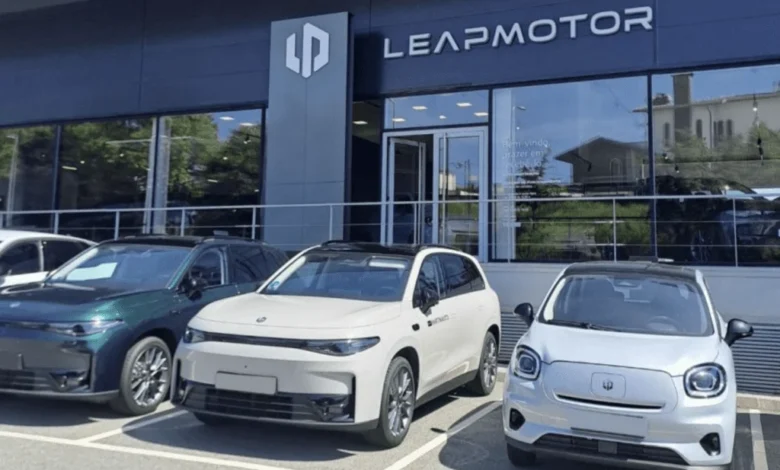
The global automotive landscape is undergoing a profound and rapid realignment, characterized by the meteoric rise of Chinese electric vehicle (EV) manufacturers and the parallel structural retreat of legacy Japanese brands. In a milestone development underscoring this paradigm shift, Chinese EV start-up Leapmotor officially outsold both Subaru and Mitsubishi Motors in global vehicle sales for the first time during the second quarter of 2026. Delivering a record-breaking 240,000 vehicles—representing an explosive 84% year-over-year increase—Leapmotor comfortably surpassed Subaru’s 230,000 units and Mitsubishi’s 170,000 units over the same three-month period.
This unprecedented sales volume highlights the extraordinary velocity of Leapmotor’s global expansion strategy. While the startup achieved remarkable gains, established market leaders faced stiff headwinds; industry giants Toyota and Volkswagen posted global volume declines of 4% (at 2.71 million units) and 9% (at 2.07 million units), respectively, during Q2 2026. The shifting fortunes of these automakers signal a broader transformation in consumer preference, manufacturing geography, and corporate partnerships within the international mobility sector.
European Expansion Powers Global Surge
Leapmotor’s ascent is increasingly fueled by robust demand across Western markets, particularly in Europe. During the second quarter, overseas markets accounted for approximately 20% of Leapmotor’s total global sales, marking a dramatic acceleration from just 6% during the same period in the previous year. Crucially, more than 80% of this international volume was concentrated specifically within European nations.
Italy has emerged as a particularly lucrative stronghold for the Chinese brand. Between January and August 2026, Leapmotor’s sales in Italy skyrocketed thirteenfold compared to the prior year, reaching 24,450 vehicles. This commercial surge allowed the newcomer to capture an impressive 27% share of the Italian EV market, significantly outpacing established EV pioneer Tesla, which held a 9% share over the same timeframe. Affordable pricing strategies—exemplified by the compact T03 retailing at approximately €15,900 ($18,300) in Italy—alongside the rapid consumer adoption of newer volume drivers like the A10 model, have cemented Leapmotor’s competitive edge in the entry-level and mid-tier segments.
The Stellantis Partnership: A Blueprint for Accelerated Distribution
A cornerstone of Leapmotor’s rapid international footprint is the strategic infrastructure provided by its joint venture with multinational automotive conglomerate Stellantis. Formed under a 51-49 ownership structure—with Stellantis holding the majority 51% stake and Leapmotor retaining 49%—Leapmotor International immediately bypassed the grueling, capital-intensive process of building a retail network from scratch.
Through this alliance, Leapmotor gained instantaneous access to more than 850 European points of sale. This ready-made distribution and service network provided the brand with an invaluable shortcut, allowing it to circumvent the years of groundwork and billions of dollars in expenditure that rival Chinese automakers, such as BYD and Nio, have had to invest independently. Furthermore, Stellantis holds a roughly 21% direct equity stake in Leapmotor’s parent company, tightly aligning the commercial incentives of both entities.
Strategic Manufacturing and Tariff Mitigation
Beyond distribution, the Stellantis-Leapmotor partnership has been architected to insulate commercial growth from the escalating trade barriers and tariff regimes targeting Chinese automotive imports in Western markets. By establishing local manufacturing within Europe, the joint venture effectively neutralizes the punitive import duties levied by the European Union on vehicles built in China.
Operational execution of this localized strategy is already well underway. Stellantis scheduled the commencement of Leapmotor B10 production at its Zaragoza plant in Spain for the second half of 2026. Looking further ahead, the conglomerate plans to transfer ownership of its Villaverde plant in Madrid to Leapmotor International to facilitate the production of a brand-new model beginning in the first half of 2028. Both manufacturing arrangements have been meticulously designed to comply with the European Union’s rigorous forthcoming "Made in Europe" local content mandates, shielding the brand from import levies and securing long-term cost stability.
Vertical Integration and In-House Engineering Advantages
Leapmotor’s competitive pricing power is further reinforced by its high degree of vertical integration. Unlike many automotive startups that rely heavily on outsourced tier-one suppliers, Leapmotor develops approximately 65% of its vehicle components entirely in-house.
This proprietary development ecosystem encompasses core technological pillars, including battery systems, electric drive units, and advanced electronic architecture. According to company disclosures, this manufacturing and design structure yields an estimated 10% per-vehicle cost advantage over competitors who depend on external supply chains. This structural margin buffer allows Leapmotor to aggressively price its vehicles in foreign markets while maintaining healthy financial performance.
Replicating this successful model of utilizing underutilized European manufacturing capacity with Chinese partners, Stellantis has initiated similar frameworks with other brands. A non-binding agreement between Stellantis and Dongfeng outlines plans to manufacture Dongfeng’s Voyah crossover at the Stellantis Rennes plant in France, absorbing roughly 40,000 units of spare annual capacity under a matching 51-49 joint venture model. Additionally, a revived Dongfeng-Peugeot-Citroën joint venture in China is slated to build new Peugeot and Jeep models out of a Wuhan plant starting in 2027, backed by a combined €1 billion investment, of which Stellantis is contributing a modest €130 million.
The Plight of Legacy Japanese Brands: Subaru and Mitsubishi in Retreat
While rising challengers secure their positions through agile partnerships and aggressive electrification, legacy brands are experiencing a painful reckoning. The steep decline in global sales rankings for automakers like Subaru and Mitsubishi is indicative of a profound structural retreat rather than a temporary cyclical downturn.
Subaru’s electrification strategy has faced severe turbulence. The company was forced to indefinitely delay four proprietary EV models, reverse the conversion of a planned dedicated electric vehicle factory back to internal combustion engine production, and absorb a staggering ¥57.8 billion ($363 million) impairment charge on its underperforming electrification assets. Concurrently, Mitsubishi has paused its independent proprietary EV development entirely. Both Japanese automakers now find themselves heavily reliant on external partnerships for electrification technology; for instance, Subaru’s Solterra EV utilizes a shared platform developed in conjunction with Toyota.
This technological lag has been compounded by a catastrophic collapse in the world’s largest automotive market: China. Both Subaru and Mitsubishi have seen their sales in China virtually evaporate, with Subaru’s monthly sales volumes in the country having dwindled to an estimated 100 units. Their simultaneous retreat from traditional strongholds in Southeast Asia and near-total irrelevance in the Chinese market illustrates the severe vulnerabilities facing manufacturers that delayed or abandoned dedicated EV development just as agile, vertically integrated competitors seized the market.
Chronology of Market Shifts (2024–2026)
- Late 2023 – Early 2024: Stellantis announces its strategic investment in Leapmotor, acquiring a 21% stake in the parent company and establishing the Leapmotor International joint venture to handle overseas exports and distribution.
- Throughout 2025: European consumer adoption of Chinese-backed affordable EVs accelerates amid tightening regulatory scrutiny and impending EU tariffs on Chinese-built electric vehicles.
- January – August 2026: Leapmotor sales in key European markets surge; in Italy alone, sales jump thirteenfold to 24,450 units, capturing 27% of the local EV market.
- Second Quarter 2026: Leapmotor achieves a historic global sales milestone by delivering 240,000 vehicles, officially outselling both Subaru (230,000 units) and Mitsubishi (170,000 units) globally for the first time. Market leaders Toyota and Volkswagen report volume declines of 4% and 9%, respectively.
- Second Half 2026: Stellantis initiates local production of the Leapmotor B10 at its Zaragoza plant in Spain to bypass EU import tariffs and comply with local content requirements.
Broader Industry Implications and Future Outlook
The overtaking of established Japanese brands by a Chinese EV startup marks a watershed moment for the global automotive industry. It demonstrates that traditional brand equity and legacy manufacturing networks are no longer sufficient shields against well-capitalized competitors possessing superior cost structures, advanced software integration, and localized supply chains.
Despite these unprecedented achievements, Leapmotor faces formidable challenges on the horizon. Achieving the company’s ambitious global sales target of 1 million units for the full year 2026 remains an uphill battle. At the midpoint of the year, Leapmotor has secured approximately 35.6% to 45.8% of its annual volume goal, leaving a substantial gap to close in the final two quarters. Furthermore, the brand’s projected overseas target of 350,000 to 400,000 units for 2027 remains heavily contingent upon European market stability, regulatory continuity, and consumer demand remaining resilient in the face of ongoing economic volatility.
As the automotive sector looks toward the remainder of the decade, the blueprint established by the Leapmotor-Stellantis alliance—combining Chinese EV manufacturing prowess with European industrial footprint and regulatory insulation—may well serve as the defining survival mechanism for traditional automakers and new market entrants alike.