New MIT Study Explores Improving Autonomous Driving Tech By Letting The Car Tell You What It’s Doing And Why

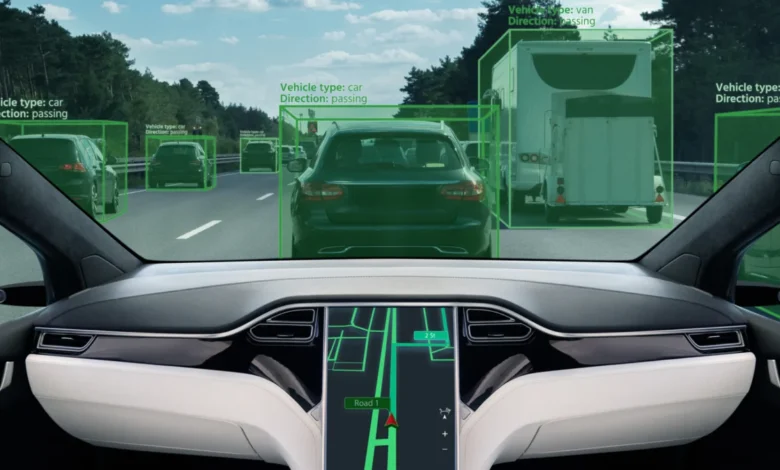
As the automotive industry pushes toward a future dominated by autonomous vehicles (AVs), a significant barrier to widespread adoption remains the "black box" nature of artificial intelligence. Consumers and regulators alike are often left in the dark regarding why an autonomous system makes specific split-second decisions. A new collaborative study between researchers at the Massachusetts Institute of Technology (MIT) and the autonomous technology firm Motional, published in the journal Nature, proposes a potential solution: a "talking" car interface that provides real-time, human-understandable explanations for AI-driven maneuvers.
This development arrives at a critical juncture in U.S. transportation policy. The current administration has signaled a pivot toward rapid deregulation, with U.S. Secretary of Transportation Sean Duffy spearheading initiatives to remove traditional hardware requirements—such as manual brake pedals and emergency steering columns—from AV designs. While proponents argue this accelerates innovation, safety advocates remain concerned about the lack of human-in-the-loop safeguards. The MIT study offers a technical middle ground, suggesting that if we cannot rely on mechanical overrides, we must instead prioritize "transparency-in-the-loop" systems.
The Mechanism of Clarity: The Concept-Wrapper Network
At the core of the MIT-Motional research is a novel architecture dubbed the "Concept-Wrapper Network," or CW-Net. The fundamental challenge of modern deep-learning models in vehicles is that they process vast amounts of sensor data—Lidar, radar, and high-definition cameras—to generate navigation outputs. However, these models do not inherently "reason" in a way that humans understand. They function through probabilistic weights that are opaque to the human driver.
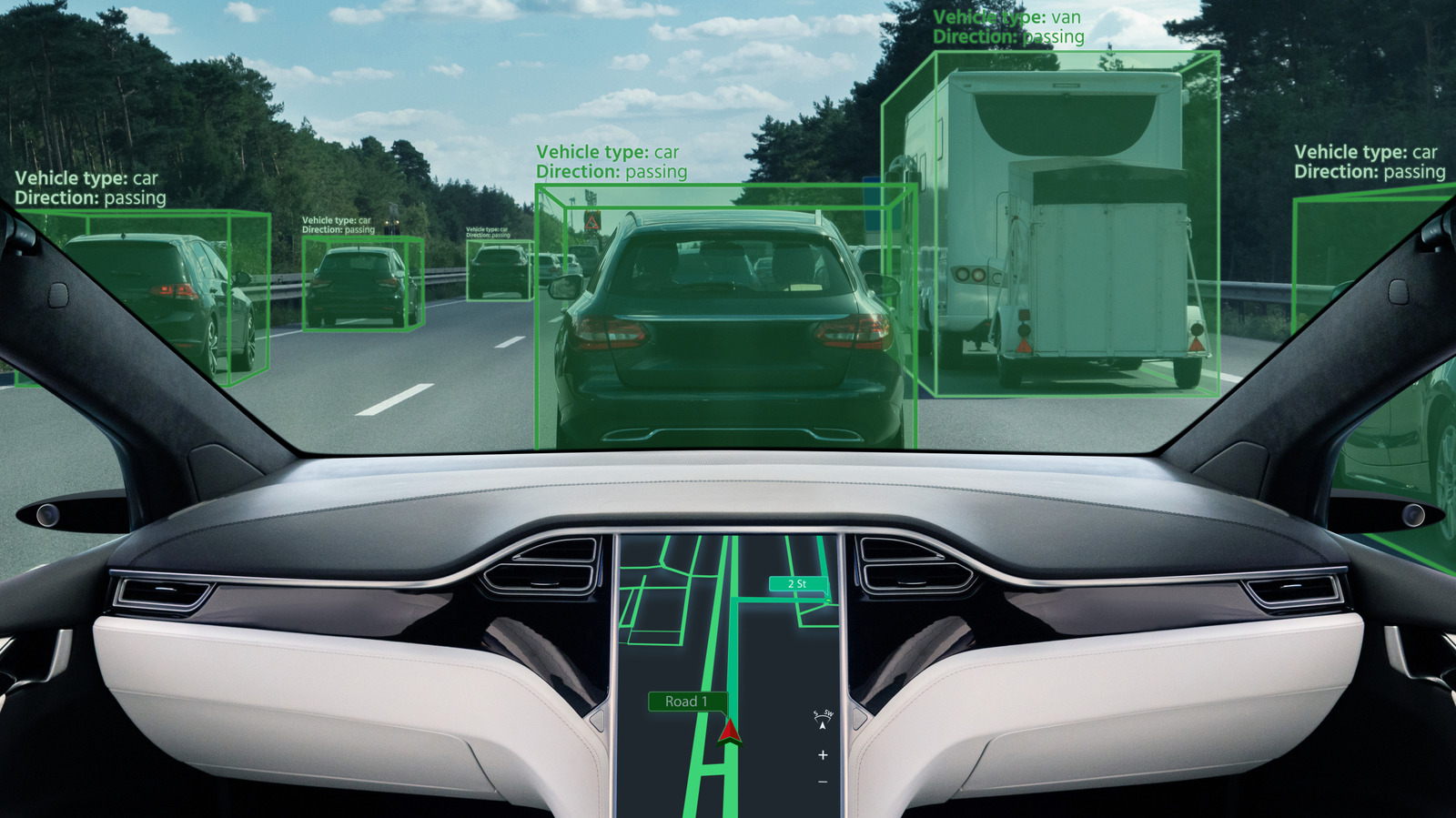
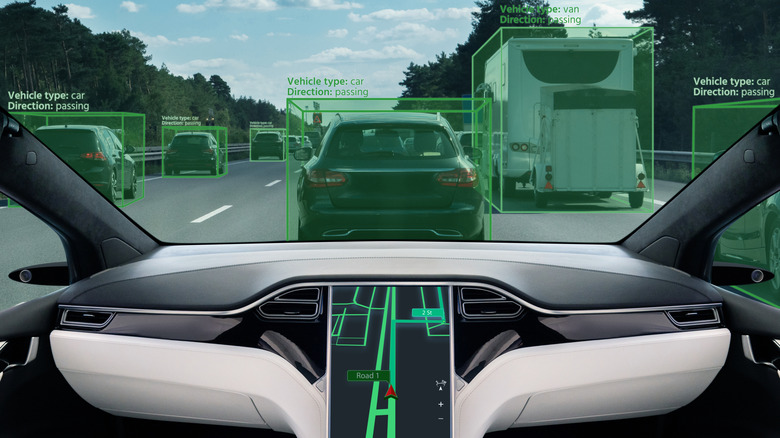
The CW-Net acts as an interpretive layer. Researchers trained this network on a massive dataset comprising 130 million annotated driving scenes. By labeling specific environmental concepts—such as the difference between a pedestrian on a sidewalk, a cyclist in a bike lane, or a vehicle following too closely—the team taught the AI to map its raw numerical processing into semantic categories. When the vehicle decides to brake, the CW-Net retrieves the specific concept that triggered the action, such as "approaching a stopped vehicle" or "detecting an obstruction," and communicates that rationale to the occupant.
Real-World Testing and Performance Analysis
During controlled, real-world testing, the efficacy of this system became apparent through its ability to highlight AI blind spots. In one notable instance, a test vehicle engaged its brakes abruptly. While the human occupant assumed the car was reacting to a traffic cone in the road, the internal interface displayed that it had identified a "stopped vehicle" ahead. This discrepancy allowed engineers to identify that the AI was misclassifying a stationary object, providing a clear path for software refinement.
Beyond the developmental benefits, this transparency has profound implications for user trust. Studies have shown that "automation surprise"—where a vehicle performs an unexpected action—is a leading cause of driver anxiety and, in some cases, dangerous manual overcorrections. By providing a running commentary, the system informs the passenger of the vehicle’s intent, potentially reducing the cognitive load on human supervisors in Level 2 and Level 3 autonomous systems, such as GM’s Super Cruise or Tesla’s Full Self-Driving (FSD).
A Chronology of Autonomous Integration
The quest for transparent AI is a direct response to a series of high-profile failures that have marred the reputation of autonomous technology over the last five years.
- 2019-2020: The industry focused heavily on "miles driven" metrics, emphasizing pure data collection over human-machine interaction.
- 2021: A series of incidents involving Waymo vehicles blocking first responders and emergency routes drew intense scrutiny from the National Highway Traffic Safety Administration (NHTSA).
- 2022-2023: Multiple reports of Tesla vehicles operating on driver-assist software being involved in collisions with emergency vehicles and motorcyclists highlighted the perils of "automation bias," where drivers become over-reliant on the system.
- 2024: The introduction of the federal AV Framework signaled a regulatory shift toward permitting vehicles without traditional controls, heightening the urgency for internal diagnostics and communication systems.
Broader Industry Efforts and Inter-Vehicle Communication
The MIT-Motional study is part of a larger ecosystem of research aimed at making roads safer through communication. While the CW-Net focuses on the interaction between the car and its occupants, other institutions are focusing on Vehicle-to-Everything (V2X) communication.
At New York University’s Tandon School of Engineering, researchers are investigating ways for vehicles to share environmental data across a network. This would allow a vehicle that has never encountered a specific road hazard—such as a localized flooding event in a city block—to "learn" from a vehicle that passed through that area moments earlier. Professor Yong Liu, who oversees this research, emphasizes that "the collective intelligence of the fleet is what will ultimately solve the long-tail problems of edge-case driving."
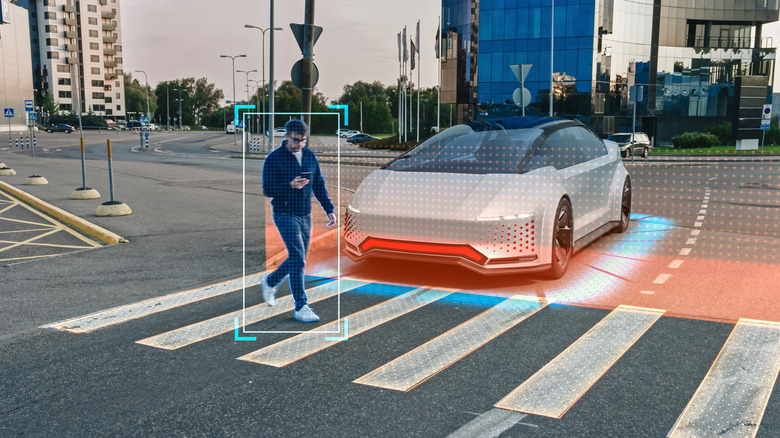
Similarly, the Mobility Lab at UCLA is developing protocols to eliminate human and machine blind spots. By utilizing sensors from multiple vehicles, a car can "see" around an obstacle, such as a large delivery truck or a tree, to identify a pedestrian at an intersection before the car’s own sensors have a clear line of sight.
Implications for Policy and Safety Regulations
The integration of communicative AI poses a challenge for federal regulators. Currently, there are no mandates requiring vehicles to explain their actions to occupants. However, as the industry moves toward removing manual controls, the legal and ethical liability of an "unexplained" crash increases significantly.
If a vehicle is involved in an incident, the availability of a "black box" that recorded not just the sensor data, but the reasoning behind the vehicle’s decision-making process, could become the industry standard for post-incident analysis. From an insurance perspective, this data is invaluable. It shifts the investigation from "what did the sensors see?" to "how did the software interpret the environment?"
The Path Forward
Despite the technological promise, significant hurdles remain. Integrating CW-Net or similar interpretive layers requires significant computational power, which must be balanced against the energy consumption constraints of electric autonomous fleets. Furthermore, there is a risk of "information overload." If a car describes every micro-adjustment it makes, the driver may become desensitized to the alerts, leading to a new form of distraction.
The researchers at MIT acknowledge these challenges, noting that the system must be tuned to provide "relevant" information rather than constant, noisy feedback. The goal is to strike a balance where the system is transparent enough to foster trust and facilitate safety, but unobtrusive enough to allow for a comfortable ride.
As the Department of Transportation continues its deregulatory path, the work of academic institutions like MIT and NYU provides a necessary check on the industry. It suggests that if the government is going to allow the removal of physical brakes, the burden of safety must be shifted to superior cognitive transparency. While the dream of fully autonomous, hands-free travel remains on the horizon, the ability for a car to simply say "I am stopping because I see a cyclist" may be the most important safety feature developed in the last decade. Whether this research will be adopted by major manufacturers or sidelined in favor of rapid deployment remains an open question, but the technological foundation for a more communicative, and therefore more predictable, autonomous future is clearly being laid.
Related posts: