Hyundai Motor Group Bets Big on Autonomous Driving with the ‘Data Flywheel’ Strategy

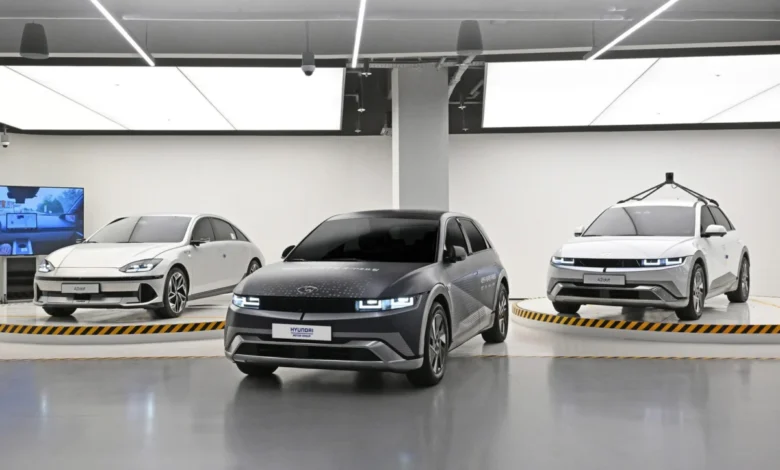
The automotive industry is undergoing a profound paradigm shift, transitioning from mechanical engineering excellence to software-defined mobility. In this high-stakes race toward full vehicle autonomy, Hyundai Motor Group (HMG) has formally entered the arena with the unveiling of its comprehensive "Data Flywheel" autonomous driving development system. Announced on September 14, the strategy outlines a closed-loop system designed to capture, process, and redeploy real-world driving data at an industrial scale. However, as industry analysts note, building a superior data engine is only half the battle; the true test lies in whether Hyundai can spin its flywheel fast enough to close the technological gap with entrenched rivals before they achieve an unassailable scale advantage.
At the core of Hyundai’s announcement is a sophisticated architecture that channels data collected from road-going vehicles directly into artificial intelligence (AI) model training and safety validation. Once refined, these improved models are pushed back out to the global fleet, generating a continuous loop of iterative learning. This ambitious undertaking underpins a dual-track production strategy aimed at securing market share across multiple segments of autonomous capability over the coming years.
The Dual-Track Production Strategy and Timeline
Hyundai’s dual-track approach reflects a pragmatic balancing act between immediate commercial needs and long-term technological independence. By running two concurrent development programmes, the automaker aims to secure rapid time-to-market using established external partnerships while its internal resources mature.
The first track relies on an Nvidia-based architecture targeting advanced SAE Level 2+ capability in the first half of 2028, followed by a more robust Level 2++ capability in the second half of that same year. This track provides Hyundai with immediate access to cutting-edge silicon and proven autonomous driving software stacks, ensuring it does not fall drastically behind competitors currently fielding advanced driver-assistance systems (ADAS).
The second track focuses on Atria AI, Hyundai’s proprietary end-to-end system developed in close collaboration with its specialized software unit, 42dot. The Atria AI program is targeted to reach equivalent Level 2++ capability in the second half of 2029, lagging roughly one year behind the Nvidia-powered timeline.
Currently, the exact trajectory of these two programmes remains open-ended, and it is unclear whether Hyundai expects them to eventually merge into a single unified stack or continue running parallel indefinitely. Nevertheless, the dual-track strategy offers immediate operational benefits. Beyond accelerating time-to-market, it facilitates massive data scaling. Telemetry and edge-case data harvested from the larger Nvidia-powered fleet can be systematically ingested into the Atria AI stack, turbocharging the proprietary system’s training cycle despite its delayed deployment.
Industrial-Scale Data Harvesting and Infrastructure
One of Hyundai’s greatest competitive assets lies in its sheer manufacturing and commercial footprint. Together with its sister company Kia, Hyundai sells more than seven million vehicles annually across 190 countries. This sprawling global fleet represents an enormous potential pool for data collection, though the company currently relies on a targeted fleet of approximately 40 dedicated data-collection vehicles running continuously to feed its pipelines.
Rather than processing routine, uneventful driving data in bulk—which would incur astronomical compute and storage costs—Hyundai’s pipeline relies heavily on "hard example" mining. This technique automatically flags challenging and unpredictable scenarios, such as complex weather phenomena, sudden construction zones, or intricate lane-changing maneuvers, routing them for prioritized training.
To process this staggering influx of driving telemetry, Hyundai is investing heavily in underlying computational infrastructure. The crown jewel of this effort is the newly established Saemangeum AI Data Center. Spanning a massive 100-megawatt capacity, the facility is purpose-built to house more than 50,000 graphics processing units (GPUs) dedicated entirely to parallel model training and continuous simulation. By treating autonomous driving as an industrial compute problem of unprecedented proportions, Hyundai is signaling that software prowess must be matched by brute-force hardware capabilities—a domain where few legacy automakers are equipped to compete at scale.
Advanced Engineering Techniques: From 3D Gaussian Splatting to Follow-the-Sun Development
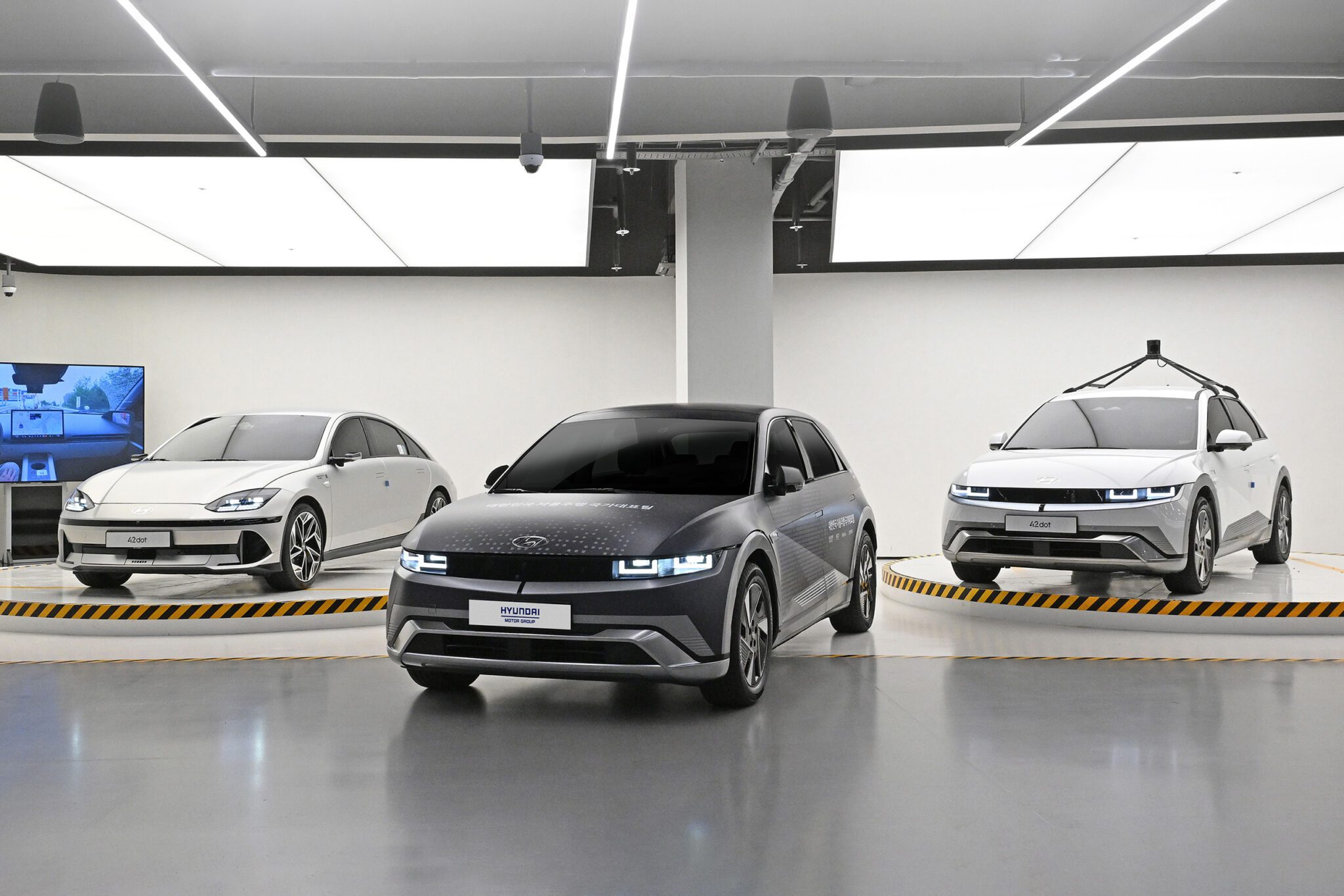
To maximize the efficiency of its data pipeline, Hyundai has integrated several cutting-edge engineering and operational methodologies. Among the most innovative is virtual validation, which utilizes 3D Gaussian Splatting to reconstruct real-world driving data into high-fidelity, three-dimensional digital environments. This allows engineering teams to recreate rare or hazardous scenarios—such as sudden pedestrian jaywalking in blinding rain—that would be too dangerous or impractical to test physically on public roads. Furthermore, virtual validation serves as a rigorous testing gate to confirm that newly trained AI models do not suffer from catastrophic forgetting or performance degradation.
Operationally, Hyundai has adopted a "Follow-the-Sun" development model. By seamlessly connecting engineering teams across South Korea and the United States, the company has established a continuous 24-hour iteration cycle. As the workday ends in Asia, development tasks are handed over to North American teams, ensuring that model training, debugging, and simulation run uninterrupted around the clock.
Cohesion across the sprawling conglomerate is maintained through the Data Union framework. This standardized architecture unifies sensor configurations and data structures across Hyundai, Kia, 42dot, and Motional (Hyundai’s autonomous driving joint venture). Consequently, data generated by a vehicle under one brand name can be universally leveraged to train safety and perception models utilized across the entire corporate ecosystem.
Vision-Language-Action Models and Upcoming Robotaxi Pilots
Looking beyond traditional camera-to-control mapping, 42dot is pioneering the development of Vision-Language-Action (VLA) models. While conventional end-to-end models translate raw sensor inputs directly into steering and braking commands like a black box, VLA models layer advanced language-based situational reasoning on top of standard architectures.
During preliminary testing, 42dot’s VLA system has successfully generated real-time, natural-language explanations for its own driving maneuvers. This level of explainability could prove transformative for regulatory compliance and insurance auditing, offering unprecedented transparency into autonomous decision-making. However, this technology remains unproven at commercial scale. VLA validation is currently confined to simulation environments, with initial on-road testing scheduled to commence between late 2026 and early 2027.
Concurrently, Hyundai is preparing to deploy a Level 4 robotaxi pilot utilizing Atria AI-equipped vehicles in Gwangju before the end of 2026. While this pilot showcases the advanced readiness of Hyundai’s higher-tier autonomy, the company is already well-acquainted with the commercial robotaxi landscape through an existing partnership with Waymo.
Hyundai’s Ioniq 5 electric crossover serves as one of the primary hardware platforms for Waymo’s commercial autonomous fleet, alongside the Jaguar I-Pace and the Zeekr "Ojai" minivan. This arrangement yields dual dividends: it generates reliable manufacturing revenue for Hyundai while providing invaluable, real-world operational exposure years ahead of its own in-house commercial launch. Effectively, the partnership allows Hyundai to observe the operational hurdles, regulatory friction, and maintenance realities of autonomous fleet deployment from a front-row seat without bearing the full commercial risk.
Competitive Landscape and Industry Implications
Despite these strategic advantages, Hyundai faces significant headwinds. The roughly one-year gap between the rollout of its Nvidia-based vehicles and its proprietary Atria AI systems leaves a narrow margin for error. The global autonomous driving market is intensely competitive, with formidable players such as Tesla’s Full Self-Driving (FSD) suite, Huawei’s ADS, and Mobileye already accumulating massive libraries of supervised end-to-end driving data and scaling their operations rapidly.
In the fast-moving world of autonomous software, a data flywheel only succeeds in closing a technology gap if it reaches critical velocity before competitors achieve an unassailable scale advantage. If rival fleets are logging billions of miles and refining their models at a vastly superior rate, late-arriving systems risk finding the market permanently consolidated around established leaders.
Furthermore, legacy automakers have historically struggled with complex internal software transitions. Volkswagen’s well-documented struggles with its Cariad software unit serve as a cautionary tale of the friction that can occur when traditional manufacturing giants attempt to transform into agile software enterprises. Hyundai’s aggressive one-year timeline leaves little room to absorb internal bureaucratic delays, software integration hiccups, or supply chain disruptions.
As Hyundai presses forward with its Saemangeum data center, its dual-track rollout, and its upcoming Gwangju pilot, the automotive world will be watching closely. The success of the Data Flywheel will ultimately determine whether Hyundai can successfully bridge the divide between legacy industrial manufacturing and the software-defined future of mobility, securing its place among the elite architects of autonomous transportation.
Related posts: