Nvidia CEO Jensen Huang Takes Impromptu Phone Call From President Donald Trump Onstage at All-In Summit

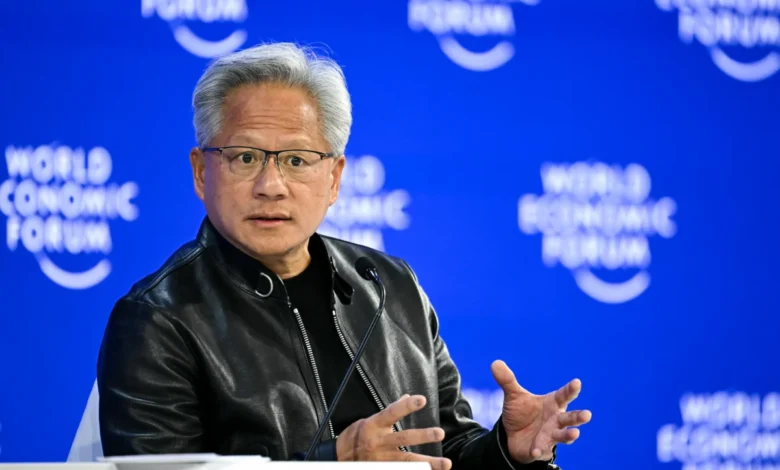
The intersection of artificial intelligence, high-stakes geopolitics, and executive showmanship produced a striking moment in Los Angeles when Nvidia Chief Executive Officer Jensen Huang accepted an unscripted phone call from President Donald Trump directly from the stage. The event, which took place during the morning session of the All-In Summit, immediately sent ripples through the tech and political spheres. Huang, whose semiconductor empire has become the foundational infrastructure layer for the global generative AI boom, casually integrated the commander-in-chief into a live conference panel, offering attendees an unfiltered glimpse into the high-level alignments shaping American technology policy.
The unexpected call occurred while Huang was seated alongside the prominent venture capitalists and podcasters who host the All-In podcast, a group colloquially known as the "besties." The panel featured tech investors Chamath Palihapitiya and Jason Calacanis, alongside prominent administration figures including White House advisers David Friedberg and David Sacks. Rather than screening the call or letting it route to voicemail, Huang opted to bring the president directly into the conversation, requesting stagehands to provide an auxiliary microphone so the audience could hear the exchange.
The resulting public display underscored the increasingly tight-knit relationship between Silicon Valley’s dominant hardware manufacturer and the highest levels of the federal government, while simultaneously highlighting the widening ideological rifts within the tech industry regarding the future governance of artificial intelligence.
The AI Governance Debate and Strategic Alignments
Prior to the phone interruption, Huang and the All-In hosts were engaged in a substantive discussion concerning a recent policy intervention by Anthropic CEO Dario Amodei. Earlier, Amodei had published a widely circulated essay advocating for a deliberate slowdown in the pace at which frontier AI capabilities are advanced, citing safety and security concerns. This stance has garnered public support from other industry titans, notably SpaceX and Tesla CEO Elon Musk as well as OpenAI CEO Sam Altman, both of whom have similarly expressed caution regarding unbridled advancement speed.
Huang’s perspective, however, has sharply diverged from this consensus of caution. As the architect of the hardware fueling the global data center buildout, Huang has consistently advocated for rapid, uninhibited scaling.
When President Trump joined the conversation via speakerphone, he explicitly aligned himself with Huang’s growth-oriented philosophy. Addressing the calls for deceleration, Trump dismissed the precautionary approach as a strategic vulnerability.
"They’re just playing right in the hands of a lot of people that don’t want to see it happen," Trump told the audience over the speakerphone, pointing to political actors and foreign competitors. "That could be political people. It could also be China. And we’re not going to let that happen. It’s a hoax."
Huang readily embraced the framing, replying, "You’re right. We’re not going to let that happen, sir," to sustained applause from the summit attendees. Trump doubled down on his endorsement of the industry’s rapid trajectory, adding that while development must be executed prudently, the administration has no intention of halting the sector’s momentum. "So I’m with you all the way," Trump said. "I didn’t even know how you felt about it. I just hoped you felt the same way as me. We’re going to lead."
Public Sentiment and the Infrastructure Backlash
While Washington policy circles and Silicon Valley boardrooms grapple with grand strategy and geopolitical competition, a parallel crisis is unfolding at the local level across the United States. The aggressive expansion of AI infrastructure—specifically the massive power-hungry data centers required to train and run frontier models—has triggered intense public pushback.
Figures within the administration and tech sector, such as Y Combinator CEO Garry Tan, have frequently characterized local opposition to data center construction as part of an orchestrated international campaign designed to stifle American economic and technological dominance. However, empirical sociological data suggests the grassroots resistance is rooted in tangible, localized grievances rather than foreign subversion.
Recent polling data from Gallup illustrates a profound skepticism among the American public regarding data center development. According to the findings, roughly seven in 10 Americans oppose the construction of large-scale data centers in their immediate geographic areas. When probed for the specific drivers of this opposition, over 50 percent of respondents pointed directly to the strain these facilities place on environmental resources, particularly local water supplies and municipal power grids. Furthermore, approximately 20 percent of polled citizens voiced deep concerns over inflationary pressures on the local cost of living and a general degradation of their day-to-day quality of life.
This tension between national ambition and local friction has created a complex regulatory environment. State-level authorities, such as those in Massachusetts and Virginia, have increasingly moved to introduce stringent clean power regulations and environmental assessments for incoming facilities, threatening to bottleneck the very physical expansion that executives like Huang deem vital to maintaining global technological supremacy.
Chronology of Events at the All-In Summit
The unfolding of events at the Los Angeles conference followed a rapid sequence that left media observers and public relations handlers scrambling to process the implications of the unscripted presidential broadcast:
- Morning Panel Commencement: Jensen Huang takes the stage at the All-In Summit alongside hosts Chamath Palihapitiya, Jason Calacanis, David Friedberg, and David Sacks to discuss macroeconomic trends and the state of artificial intelligence.
- Discourse on Scaling: The conversation turns to Dario Amodei’s recent proposal to slow down the development of frontier AI capabilities, contrasting Anthropic’s safety-first posture with the aggressive growth models of Nvidia and other hardware providers.
- The Incoming Call: Mid-discussion, Huang’s mobile phone rings. Recognizing the caller ID, he decides against sending the call to voicemail.
- Bringing the President Live: Huang informs the audience, "I’m onstage with the besties," and signals for an additional microphone to broadcast the call over the venue’s public address system.
- The Presidential Critique: President Trump lamboons the concept of slowing down AI development, framing caution as a geopolitical trap set by foreign adversaries like China and domestic political opponents.
- Audience Reaction and Endorsement: Huang affirms the president’s stance, eliciting robust applause from the conference attendees before concluding the impromptu dialogue.
Implications for the Semiconductor Industry and National Policy
The public alignment between Nvidia’s leadership and the executive branch highlights the degree to which semiconductors have transformed from traditional commercial commodities into vital instruments of statecraft. As the primary supplier of graphics processing units (GPUs) essential for deep learning, Nvidia sits at the absolute center of the global technology ecosystem.
By publicly cementing a partnership focused on unimpeded acceleration, the administration and industry leaders are signaling a clear intent to prioritize national dominance over domestic environmental or infrastructural friction. This approach carries both immense potential rewards and significant risks. On one hand, maintaining an aggressive pace ensures that the United States retains its competitive edge over strategic rivals, preventing technological displacement in the critical domains of national security and economic productivity.
On the other hand, bypassing or overriding local environmental concerns risks deepening the populist backlash against big technology. If communities feel their access to reliable power and clean water is being compromised to fuel server farms, the political cost of data center expansion could escalate significantly, translating into legislative hurdles that no executive order or CEO endorsement can entirely bypass.
As the deployment of artificial intelligence continues to accelerate, the tension between macroeconomic imperatives and local realities will likely remain a defining challenge of the current technological era. For Jensen Huang and Nvidia, the path forward requires navigating not only the intricate laws of physics and semiconductor manufacturing but also the increasingly volatile currents of domestic public opinion and international diplomacy.