California Grapples with Escalating Mail-In Ballot Rejections, Raising Concerns Over Electoral Accessibility and Efficiency

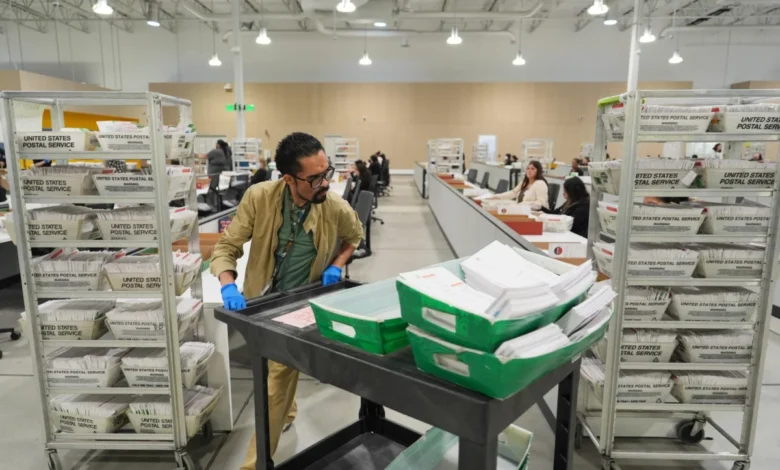
Nearly 150,000 California voters had their mail-in ballots rejected for the state’s June primary, marking a significant spike from recent elections and highlighting a persistent challenge in the Golden State’s ambitious efforts to streamline voting and boost participation. This surge in uncounted ballots occurs despite California’s pioneering initiatives aimed at making voting easier, including the mailing of ballots to every registered voter and a generous seven-day post-Election Day window for ballot receipt, provided they are postmarked by Election Day itself. The paradox underscores a complex interplay of voter behavior, logistical hurdles, and evolving postal service policies that continue to shape the integrity and perception of California’s electoral process.
California’s Ambitious Electoral Landscape and Its Challenges
California has long been at the forefront of expanding voter access, implementing reforms designed to maximize participation in its vast and diverse population. A cornerstone of these reforms is the universal mail-in ballot system, where every registered voter automatically receives a ballot. This approach, widely adopted during the COVID-19 pandemic, was intended to remove barriers to voting and increase turnout. Furthermore, the state allows ballots postmarked by Election Day to be counted if they arrive up to seven days later, a policy far more lenient than many other states. These measures reflect a deep-seated commitment to inclusive democracy, yet their implementation has not been without complications.
One of the most frequently cited criticisms of California’s election administration is its "ponderously slow vote counts." Unlike states such as Florida or Texas, which typically finalize results within days, California’s vote tabulation can extend for weeks, sometimes even longer. This protracted process is a direct consequence of the very reforms designed to boost turnout, particularly the extended period for mail-in ballot receipt and the sheer volume of ballots processed. While intended to ensure every eligible vote is counted, the lengthy process often fuels public skepticism and can leave races undecided for extended periods, impacting political discourse and voter confidence. Despite these extensive efforts to ease voting, statistics on overall voter turnout have shown only modest improvements, suggesting that while accessibility has increased, other factors continue to influence participation rates.
A Surge in Rejected Ballots: The Numbers Tell a Story
The data compiled by the California Secretary of State’s office reveals a concerning trend in ballot rejections. In the June primary, a total of 148,241 mail ballots were rejected, representing a rejection rate of 1.73% of all mail ballots cast. This figure marks a notable increase compared to previous primary elections. For context, the 2024 primary saw 108,982 mail ballots rejected, a rate of 1.56%. In 2022, 105,818 mail ballots were voided, with a similar rejection rate to 2024. The consistent rise in raw numbers, even accounting for potential variations in turnout, indicates a systemic issue that warrants closer examination.
Delving deeper into the reasons for rejection, "lateness" emerged as the overwhelming primary driver. A staggering 93,479 ballots in the June primary were disqualified due to arriving too late or, more specifically, being postmarked too late. This number represents a significant escalation from approximately 70,000 late rejections in the 2022 primary and about 76,000 in the 2024 primary. While turnout figures in those earlier elections might have been comparatively smaller, the scale of the increase in late rejections for the June primary is substantial and points to a growing problem.
The nuance here, as emphasized by voting experts, is crucial: the issue often isn’t ballots physically arriving after the seven-day grace period, but rather ballots failing to receive an Election Day postmark. This distinction places a spotlight on the operational procedures of the U.S. Postal Service (USPS) and their potential impact on election administration.
The Primary Culprit: Late Postmarks and USPS Changes
The central hypothesis linking the rise in late rejections to external factors points directly to recent changes in USPS policies and operations. Kim Alexander, president of the nonpartisan California Voter Foundation, articulated this concern clearly, stating, "Ballots rejected due to lateness are caused primarily to being postmarked too late to count, not because they arrived too late to count." This distinction is critical because it shifts the focus from voter procrastination to the logistical challenges of mail processing.
Recent procedural adjustments within the USPS have drawn scrutiny from lawmakers and election officials alike. In January, a bipartisan group of U.S. senators, predominantly Democrats, expressed alarm in a letter to the USPS regarding mail-processing changes. Their concern stemmed from updated agency policy suggesting that postmarks might no longer reflect the initial day mail was received, but rather the day it was handled in one of its processing centers. Compounding this, the USPS has undertaken consolidations of processing centers, often locating them further away from certain communities. This geographical shift, combined with altered postmarking protocols, could introduce additional delays in the application of official postmarks, making it challenging for ballots mailed close to Election Day to meet the postmark deadline.
The implications of these USPS changes extend beyond California. In April, Wisconsin Democrats, including U.S. Sen. Tammy Baldwin and Gov. Tony Evers, publicly called on the Postal Service to address delays that led to hundreds of ballots arriving after Election Day in their state’s primary. This national pattern underscores a broader systemic vulnerability concerning mail-in voting integrity and efficiency across the country. Recognizing this looming issue, California election officials proactively urged voters earlier this year to submit their mail ballots well in advance, explicitly warning that potential USPS changes could lead to slower mail service and jeopardize ballot eligibility.
Geographically, the impact of these issues was not uniform across California. Data from the June primary showed significant disparities in rejection rates. Tulare County, located in the agriculture-rich Central Valley, recorded the highest mail ballot rejection rate at 3.52%. It was closely followed by Alpine County, a sparsely populated region south of Lake Tahoe, and Merced County, also in the Central Valley, both of which registered a 3.36% rejection rate. These localized spikes suggest that factors such as rural mail service, voter demographics, and access to alternative ballot drop-off methods might exacerbate the statewide problem of late-arriving or late-postmarked ballots.
Beyond Lateness: Other Reasons for Disqualification
While lateness accounted for the vast majority of rejected ballots, other significant factors contributed to the total count of disqualified votes. Signature verification remains a critical step in ensuring ballot security and preventing fraud. In the June primary, nearly 44,000 ballots were set aside because the voter’s signature on the return envelope did not match the signature on file with county election officials. This process, while vital, can be a source of frustration for voters, especially those whose signatures may change over time due to age, injury, or other reasons. California, like many states, offers a "curing" process, allowing voters to rectify signature discrepancies, but not all voters successfully complete this step.
A related issue saw over 8,300 ballots rejected due to the complete absence of a signature on the returned ballot envelope. This often points to simple oversight or a lack of understanding of the ballot return instructions. Furthermore, some rejections stemmed from voters having already cast a ballot (743 cases), indicating attempts at duplicate voting or confusion regarding multiple ballots received. Other, less frequent reasons included ballots missing from the return envelope or, in rare instances, multiple ballots being returned in a single envelope. These varied reasons underscore the need for clear voter education and robust administrative processes to minimize errors and ensure legitimate votes are counted. The available data, however, did not provide a breakdown of these uncounted ballots by party registration, leaving open questions about any potential partisan impact.
Expert Perspectives and Official Concerns
The growing number of rejected ballots, particularly those due to lateness, has spurred calls for deeper investigation and policy adjustments. Mindy Romero, director of the Center for Inclusive Democracy, a nonpartisan research group, remarked that the trend "does really demand the question why this is happening." This sentiment is echoed by election integrity advocates who seek to balance secure elections with maximum voter participation.
The concerns about USPS procedures are not new. The agency has been undergoing significant structural and operational changes under Postmaster General Louis DeJoy, aimed at improving efficiency and financial solvency. However, these changes, including facility consolidations and revised mail delivery standards, have frequently been criticized for potentially slowing down mail service, especially during critical periods like elections. The bipartisan letter from senators in January highlighted these fears, particularly in an election year that will determine control of Congress, emphasizing the potential for these changes to disenfranchise voters.
The legal landscape surrounding mail-in voting has also seen recent activity. While not directly related to the California rejections, a federal judge in June halted President Donald Trump’s executive order that sought to create a federal voter list and limit who could receive a mail ballot. This ruling underscores the ongoing national debate and legal battles over voting methods, further emphasizing the sensitivity and scrutiny surrounding election administration practices.
The Broader Political and Procedural Implications
The challenges in California’s electoral process carry significant political and procedural implications, extending beyond the state’s borders. California’s reputation for slow vote counts has frequently been weaponized in national political discourse. Following the June primary, former President Donald Trump capitalized on this, renewing his long-standing criticisms of the state’s elections and alleging irregularities. His administration’s Department of Justice even launched an investigation into Los Angeles County’s elections, further fueling narratives of electoral malfeasance. While there has been no indication of widespread problems or systemic fraud in mail voting, these criticisms contribute to a climate of mistrust, particularly in a highly polarized political environment.
Despite the political rhetoric, mail voting has demonstrably gained popularity across the political spectrum. A report by the Brookings Institution published in 2025 reinforced the security of this method, finding that the incidence of mail voting fraud was minuscule—approximately four cases per 10 million mail ballots. This data suggests that while operational challenges exist, the fundamental integrity of mail-in voting is robust. The issue in California, therefore, appears to be one of logistical execution and voter education rather than widespread fraudulent activity.
The challenge for California and other states is to refine the processes to ensure that accessibility does not inadvertently lead to a higher number of rejected ballots. This involves not only addressing the USPS postmarking issue but also enhancing voter education campaigns, simplifying ballot instructions, and potentially expanding ballot curing options. The current situation demands a collaborative effort between state election officials, the USPS, and voter advocacy groups to identify and implement solutions that safeguard the franchise for every eligible voter.
Safeguarding the Franchise: Looking Ahead
The rising number of rejected mail-in ballots in California serves as a critical call to action for election administrators, policymakers, and the U.S. Postal Service. While California has pioneered efforts to make voting more accessible, the current trends suggest that these efforts must be continually evaluated and refined to ensure their intended impact. The focus must shift from simply enabling voters to cast ballots to ensuring those ballots are successfully counted.
Looking ahead, several avenues for improvement are evident. Firstly, sustained dialogue and collaboration between state election officials and the USPS are paramount to address the postmarking issue. This might involve clear agreements on ballot handling protocols, dedicated mail processing for election materials, or even exploring alternative methods for verifying timely submission that are less reliant on manual postmarks. Secondly, voter education needs to be intensified and made more explicit, particularly regarding the importance of mailing ballots well in advance of Election Day and understanding signature requirements. Public awareness campaigns could leverage various media channels to reach diverse communities, especially those in areas with historically higher rejection rates.
Thirdly, the state could explore enhancing its ballot curing processes, making it easier and more intuitive for voters to rectify issues like mismatched or missing signatures. This might involve more proactive outreach to voters whose ballots are flagged for rejection, providing clearer instructions and more accessible methods for resolution. Finally, a thorough, data-driven analysis of county-specific rejection rates could uncover localized issues—such as limited access to ballot drop boxes, disparities in postal service, or language barriers—that require tailored interventions.
The goal remains to strike a delicate balance: maintaining the accessibility and convenience of mail-in voting while ensuring every eligible ballot is counted accurately and efficiently. The lessons from California’s June primary are not just for the Golden State but resonate across the nation, highlighting the ongoing imperative to strengthen democratic processes and foster voter confidence in an evolving electoral landscape.