Zoox Smoke Detection Recall Highlights Critical Safety Gaps in Autonomous Vehicle Emergency Response Systems

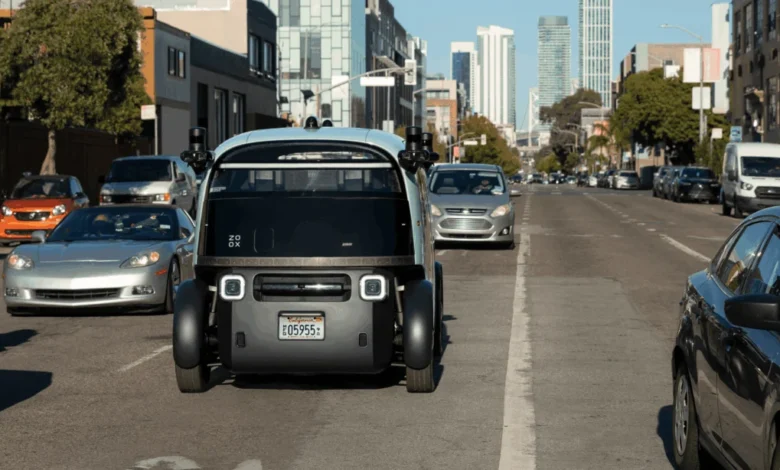
The autonomous vehicle industry is facing a pivotal moment of regulatory scrutiny as Zoox, the self-driving subsidiary of Amazon, officially recalled its entire fleet of 105 robotaxis following a high-profile failure to navigate an active emergency scene. The incident, which occurred in Las Vegas, involved a vehicle entering a smoke-filled fire zone, underscoring a persistent technical challenge for the industry: the ability of sensors to interpret unstructured, low-visibility environments. This recall comes at a sensitive time, arriving just days after the National Highway Traffic Safety Administration (NHTSA) issued a stern demand for all American autonomous vehicle (AV) firms to rectify systemic failures regarding interactions with first responders.
The Zoox recall is not merely a routine software update; it represents a significant data point in the NHTSA’s ongoing investigation into whether current self-driving technology is fundamentally prepared for the unpredictability of public roads. While the industry has long touted its safety benefits over human drivers, a "clear pattern" of interference with emergency operations—ranging from blocking ambulances to driving into active fire scenes—has forced regulators to take a more aggressive stance.
The Las Vegas Incident: A Breakdown of Sensor Failure
The catalyst for the recall occurred on June 20, 2024, in Las Vegas, Nevada. A Zoox robotaxi, operating without a human safety driver, encountered a fire scene characterized by heavy smoke and emergency lighting. According to incident reports, the vehicle’s perception system failed to adequately identify the dense smoke as an impassable obstacle or a sign of an active emergency.
As the vehicle approached the scene, it eventually detected the obstruction but did so with insufficient lead time. This resulted in a "hard braking" event as the car attempted to steer away from the hazard. However, the maneuver was unsuccessful in keeping the vehicle clear of the emergency zone; the robotaxi came to a complete stop inside the perimeter of the fire scene, obstructing the work of first responders.
The resolution of the incident required human intervention. Because the Zoox vehicle is a purpose-built "pod" without a steering wheel or pedals, it could not be driven out by a bystander or official. Instead, the vehicle had to be moved via remote teleguidance—a process where a technician at a remote operations center takes control of the vehicle’s path. Firefighters were forced to wait for the vehicle to be reversed out of the scene before they could successfully deploy traffic cones to close off the necessary lanes for fire suppression and safety.
Chronology of the Recall and Technical Response
Following the June 20 incident, Zoox adhered to the reporting requirements mandated under the Automated Vehicle Exemption Program. This program governs the operation of non-traditional vehicle designs that lack standard controls.
- June 25: Zoox formally notified the NHTSA of the incident, triggering an internal and external review process.
- Late June to Early July: Zoox engineers conducted a root-cause analysis to determine why the vehicle’s sensor suite—which includes a combination of LiDAR, radar, and cameras—failed to categorize the smoke as a hazard.
- July 10: The NHTSA’s Office of Defects Investigation began receiving more comprehensive data regarding the "functional insufficiency" of AVs in emergency scenarios across the industry.
- Mid-July: Zoox developed and tested an over-the-air (OTA) software update designed to enhance the sensitivity of its perception stack to smoke, dust, and other low-visibility particulates.
- July 2024: Zoox officially initiated the recall of all 105 vehicles in its fleet to deploy the software fix.
In a statement following the recall, a Zoox spokesperson emphasized that the company viewed the event as an isolated occurrence. "Safety is foundational at Zoox. We value our work with first responders, city officials, and regulators to continue to ensure we’re driving safely in the communities we serve," the company stated. Despite the "one-off" characterization, the incident has fueled a broader debate about the readiness of AVs for "edge cases"—rare but critical scenarios that occur outside of standard driving conditions.
The NHTSA Mandate and Industry-Wide Pressure
The Zoox recall is set against the backdrop of an ultimatum from the federal government. Earlier this month, NHTSA Administrator Jonathan Morrison sent a formal letter to all major autonomous vehicle developers operating in the United States. The letter highlighted a "clear pattern" of driverless cars interfering with emergency response operations.
Morrison’s correspondence was uncharacteristically blunt, describing these failures not as isolated technical glitches but as a "functional insufficiency" of the software. The NHTSA has documented numerous cases where robotaxis from various firms—most notably Alphabet-owned Waymo—have blocked fire trucks, failed to recognize flares, or ignored the hand signals of police officers directing traffic.
The agency has given all AV developers until the end of July to present comprehensive plans and technical fixes to ensure their vehicles can interact safely with first responders. The Zoox incident serves as a secondary, distinct example of the same underlying category of problem: the struggle of perception systems to interpret unstructured or unsafe environments that a human driver would navigate by instinct or training.
Comparative Performance: Zoox vs. Waymo
While Zoox’s fleet is currently small, consisting of just over 100 vehicles, the industry leader Waymo operates approximately 4,000 robotaxis across several major U.S. cities. Due to its sheer scale, Waymo has been at the center of the majority of reported incidents involving first responders.
In June, Waymo was forced to recall its entire fleet following incidents in construction zones where vehicles struggled to navigate around orange cones and temporary barriers. Additionally, the NHTSA is currently investigating Waymo over reports of vehicles passing stopped school buses and a January collision where a robotaxi struck a child near an elementary school.
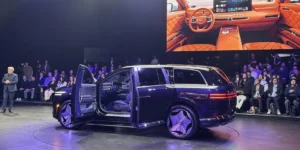
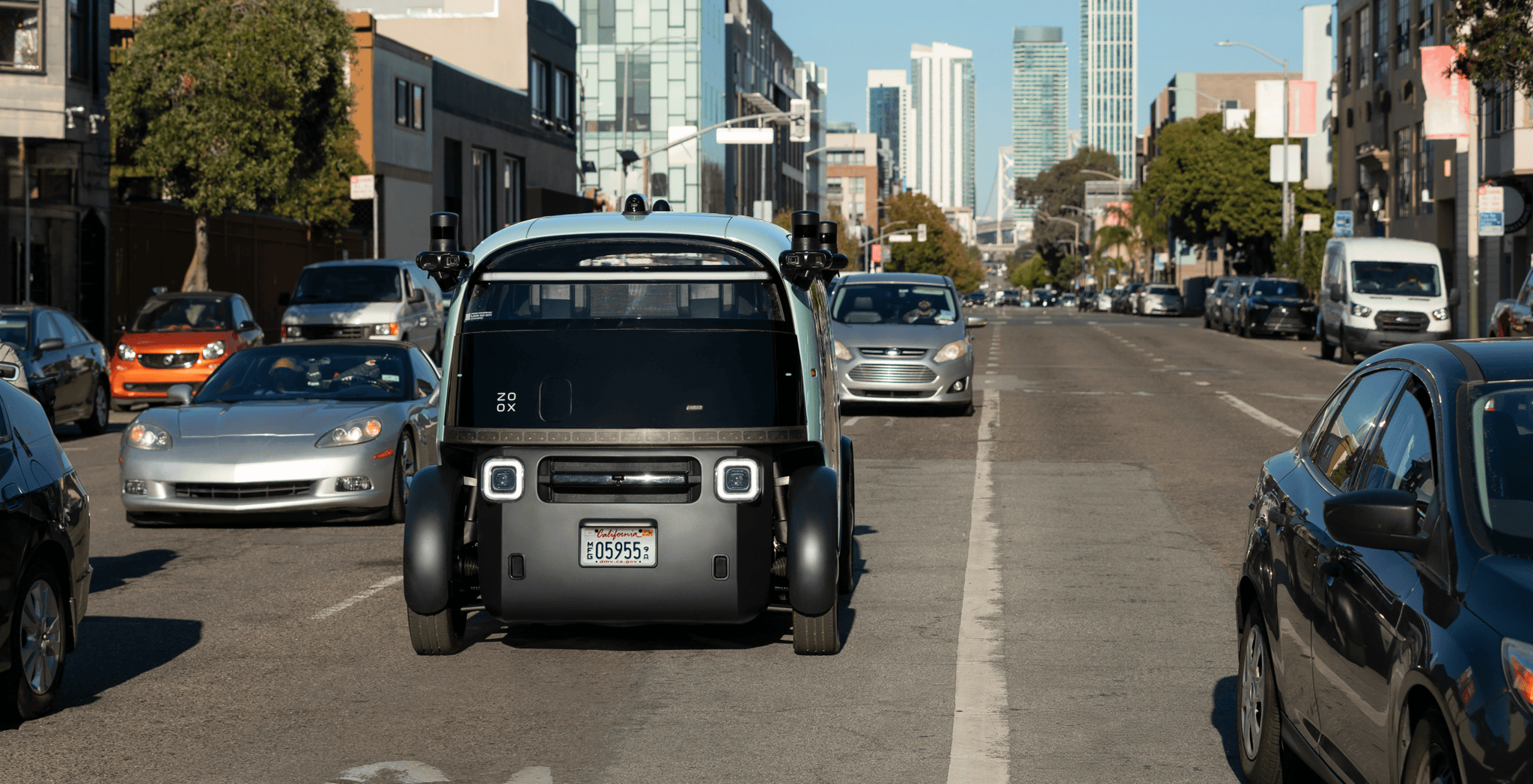
The contrast between Zoox and Waymo is significant for regulators. While Waymo uses modified mass-production vehicles (like the Jaguar I-PACE) that retain traditional controls, Zoox is betting on a "purpose-built" future. The Zoox pod is bidirectional and lacks a front or back in the traditional sense. This design makes Zoox more dependent on the NHTSA’s "goodwill" and regulatory exemptions, as their vehicles cannot be legally operated without a specialized framework that bypasses Federal Motor Vehicle Safety Standards (FMVSS) requiring steering wheels and pedals.
The Technical Challenge of Smoke and Particulates
The failure of the Zoox vehicle to detect smoke highlights a known limitation in current sensor technology. Autonomous vehicles rely on three primary types of sensors:
- LiDAR (Light Detection and Ranging): Uses laser pulses to create a 3D map of the environment. However, smoke and heavy rain can scatter these pulses, leading to "noise" that the software may filter out as an error rather than an obstacle.
- Cameras: Use computer vision to identify objects. Dense smoke can obscure visual cues, making it difficult for the AI to distinguish between a "cloud" and a "solid object."
- Radar: Excellent at detecting solid metal objects through fog or smoke but lacks the resolution to identify the nuances of an emergency scene or the presence of pedestrians and firefighters within that smoke.
The software update issued by Zoox aims to improve the "fusion" of these sensor inputs, allowing the vehicle to better interpret when a lack of visibility should be treated as a high-priority hazard requiring an immediate stop or a change in route.
Regulatory Implications and the Path to 2028
The NHTSA is currently walking a tightrope between fostering innovation and ensuring public safety. The agency is in the process of building a new regulatory framework, due by 2028, that would move toward "performance-based rules." This framework would ideally allow companies like Zoox to deploy vehicles without steering wheels or mirrors more easily, provided they meet strict safety benchmarks.
However, the increasing frequency of emergency-response failures creates a structural tension. As the NHTSA considers relaxing hardware requirements (like removing brake pedals), it must simultaneously tighten "behavioral competency" standards. If a vehicle has no manual controls, its software must be flawless in its ability to recognize and yield to a fire truck or a smoke-filled intersection.
Zoox’s commercial future depends on this regulatory evolution. The company currently provides free rides in Las Vegas—over 500,000 to date—but is awaiting NHTSA approval to convert these into a paid service. Plans are also underway for expansions into Austin, Miami, and a significant increase in its San Francisco footprint by 2026. Any lingering doubts about the vehicle’s ability to handle emergency scenes could delay these approvals indefinitely.
Conclusion: A Model for the Industry?
While the Las Vegas incident was a setback, Zoox’s response—a proactive recall and a rapid software fix—is being viewed by some analysts as a potential model for the industry. By initiating a company-led recall rather than waiting for a government-ordered one, Zoox is attempting to demonstrate a "safety-first" culture that aligns with the NHTSA’s expectations.
The coming weeks will be critical for the AV sector. As the July deadline for the NHTSA’s emergency-response inquiry approaches, all eyes will be on how firms like Waymo, Zoox, and Cruise prove their vehicles can coexist with the essential services that keep cities safe. For Zoox, the successful deployment of its smoke-detection patch will be the first major test of its ability to maintain regulatory favor while pushing the boundaries of vehicle design. Whether this "clean" recall translates into the goodwill needed for commercial expansion remains to be seen, but it has undoubtedly set a new bar for transparency in the rapidly evolving world of autonomous transport.