Unlocking the Mathematical Universe: Inside the Decades-Long Quest to Prove the Langlands Program

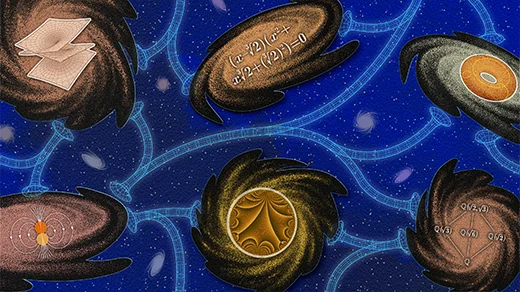
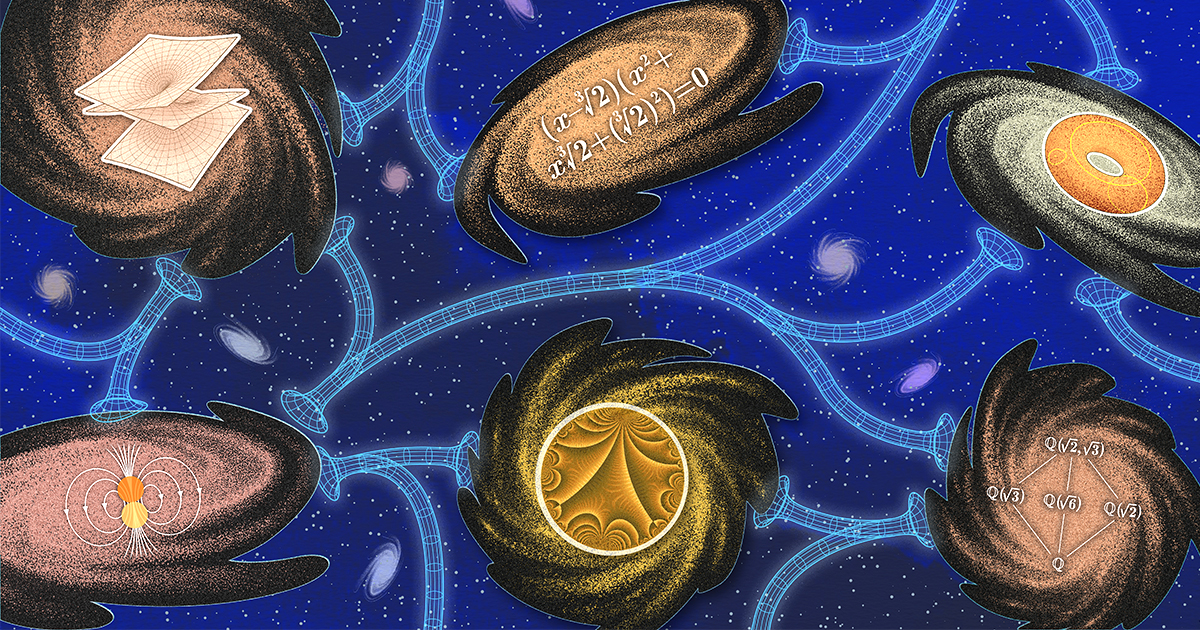
The mathematical universe has expanded organically over centuries, growing into a sprawling, heterogeneous landscape where different domains—such as number theory, geometry, and harmonic analysis—operate with their own specialized objects, methodologies, and fundamental questions. Because these fields developed in relative isolation, discovering direct, structural connections between them is often compared to finding wormholes linking distant, uncharted galaxies. These mathematical wormholes are formally known as the Langlands correspondences, and the monumental, decades-long effort by hundreds of researchers to map, extend, and exploit them is collectively called the Langlands program. Often celebrated as a "grand unified theory of mathematics," this sprawling project hints at a profound, underlying unity governing all mathematical truths. Yet, its sheer complexity and abstract nature mean that even among professional mathematicians, interpretations of its true scope vary widely.
Origins and Conceptual Framework of the Langlands Program
The ambitious intellectual architecture of the Langlands program was first proposed in 1967 by Canadian mathematician Robert Langlands. Then working at Yale University and now occupying Albert Einstein’s former office at the Institute for Advanced Study in Princeton, New Jersey, a young Langlands penned a visionary, handwritten letter to the prominent French mathematician André Weil. In this correspondence, Langlands outlined unexpected, deep-seated connections bridging two historically separate realms of mathematics: number theory, which deals with the properties and relationships of integers and equations, and harmonic analysis, the study of continuous signals, waves, and frequencies.
To grasp the nature of the original Langlands correspondence, one must begin with the set of rational numbers, denoted as $mathbbQ$, which encompasses all numbers expressible as simple fractions. These form a foundational "number field" because standard arithmetic operations—addition, subtraction, multiplication, and division (excluding division by zero)—yield results that remain strictly within the set. However, introducing polynomial equations alters this dynamic entirely. For instance, the simple quadratic equation $x^2 – 2 = 0$ features rational coefficients, yet its solutions are irrational numbers: $x = sqrt2$ and $x = -sqrt2$.
Mathematicians can extend the rational number field by appending these irrational solutions to form a new field, $mathbbQ(sqrt2)$, which spans a two-dimensional plane. Crucially, this extended field possesses a "symmetry"—an algebraic transformation that preserves all its structural elements. Specifically, substituting every instance of $sqrt2$ with $-sqrt2$ leaves the mathematical system intact. The collection of such structural symmetries forms what is known as the Galois group of the equation, named after the pioneering 19th-century French mathematician Évariste Galois. Galois demonstrated that these symmetry groups contain critical diagnostic data about polynomial equations and their underlying solutions.
For the quadratic equation $x^2 – 2 = 0$, the Galois group consists of just two operations: the reflection symmetry swapping $sqrt2$ and $-sqrt2$, and an identity operation. This group is "abelian," meaning the order in which its symmetries are executed does not affect the resulting field orientation. However, introducing a slightly more complex cubic equation, such as $x^3 – 2 = 0$, yields a "non-abelian" Galois group designated as $S_3$. Possessing six distinct symmetries that mirror the rotations and reflections of an equilateral triangle, $S_3$ is sensitive to the sequence in which transformations are applied. The core premise of the Langlands program dictates that the Galois representations of such symmetry groups generate precise sequences of data that dictate the structural form of entirely disparate mathematical entities.
Bridging Number Theory and Harmonic Analysis
Crossing the conceptual wormhole from algebra into harmonic analysis reveals an entirely different mathematical universe, populated by objects such as modular forms. First studied intensively during the 19th century, modular forms are specialized functions that exhibit automorphic symmetry, meaning their inputs can be shifted or transformed by specific parameters without altering the resulting output. These complex functions can be decomposed into infinite sums of simpler oscillating components, functioning much like sound waves or beams of light broken down into pure constituent frequencies.
The profound bridge constructed by the Langlands program links the discrete, algebraic world of Galois representations directly to the continuous, wave-like domain of modular and automorphic forms. For example, the coefficients appearing before prime-numbered powers in specific modular expansions directly correspond to the traces of matrices within the Galois representations of equations like $x^3 – 2 = 0$. When evaluating these equations using modular arithmetic—a cyclic mathematical framework akin to a 12-hour clock—the behavior of the roots modulo various prime numbers dictates the exact numerical coefficients of the modular form. This intricate alignment demonstrates that algebraic symmetries operating in the abstract galaxy of number theory effectively paint the structural patterns of harmonic functions.

Historical Milestones and Modern Breakthroughs
Over the decades, the pursuit of Langlands correspondences has driven profound breakthroughs across multiple mathematical disciplines. One of the most famous triumphs occurred in 1994, when British mathematician Andrew Wiles utilized a Langlands-type relationship to prove Fermat’s Last Theorem. Posed in 1637 by Pierre de Fermat, the theorem states that there are no three positive integers $a$, $b$, and $c$ that satisfy the equation $a^n + b^n = c^n$ for any integer value of $n$ greater than 2.
Wiles successfully resolved the 357-year-old puzzle by proving a special case of the Langlands program known as the Taniyama-Shimura-Weil conjecture. This conjecture established that every elliptic curve defined over the rational numbers corresponds uniquely to a modular form. By proving this equivalence for a broad class of curves, Wiles ruled out the existence of any hypothetical counterexamples to Fermat’s theorem, securing one of the greatest achievements in modern mathematical history.
The scope of the program expanded further through historical insights such as those outlined by André Weil in a 1940 letter to his sister, the philosopher Simone Weil. André Weil conceptualized a mathematical "Rosetta stone" comprising three parallel columns: number theory, curves over finite fields, and the geometry of smooth 2D surfaces known as Riemann surfaces. Today, it is recognized that each of these columns features its own distinct family of Langlands correspondences.
Progress within these domains continues at a rapid pace. In 2024, a collaborative group of international mathematicians published a series of foundational papers totaling more than 800 pages, which formally settled a major conjecture within the geometric Langlands program. Experts note that validating these correspondences provides an invaluable bridge for research. As mathematician Jessica Fintzen of the University of Bonn observes, establishing these links allows researchers to deduce complex truths in one mathematical world by leveraging proven results and methodologies from another.

Implications and the Search for Underlying Unity
Despite its immense utility, the ultimate philosophical meaning behind the Langlands program remains elusive. Many leading researchers view the correspondences not as isolated mathematical coincidences, but as reflections of a deeper, unified structure that has yet to be fully uncovered.
David Ben-Zvi of the University of Texas at Austin characterizes the Langlands program as a non-abelian generalization of Fourier analysis—one of the most ubiquitous and powerful tools in modern mathematics and physics. Just as Joseph Fourier demonstrated in 1807 that arbitrary signals can be decomposed into foundational sine waves with abelian symmetries, the Langlands program extends this principle to non-abelian symmetries where coefficients are governed by matrices and Galois representations.
Compelling clues regarding the physical origins of these mathematical dualities emerged in the 2000s, when theoretical physicists Anton Kapustin and Edward Witten demonstrated that the geometric Langlands correspondence is a direct mathematical consequence of electric-magnetic duality in quantum field theory. By studying specific models of four-dimensional space-time, Kapustin and Witten showed that swapping electric and magnetic fields corresponds precisely to traversing between opposing sides of the geometric Langlands framework. This physical insight suggests that disparate mathematical domains may simply be dual projections of a single, highly integrated underlying reality.
Comparing these abstract relationships to the multiple shadows cast by a physical object, UC Berkeley mathematician Edward Frenkel emphasizes that the excitement surrounding the Langlands program stems from its promise of uncovering foundational principles yet unknown to science. As mathematicians continue to map these intricate bridges across the mathematical universe, the overarching quest remains clear: to move beyond observing mere reflections and finally behold the true source of mathematical unity.