The Rapid Expansion of Erewhon Market Approaches a Federal Regulatory Threshold That Could Reshape Its Culinary Brand Identity

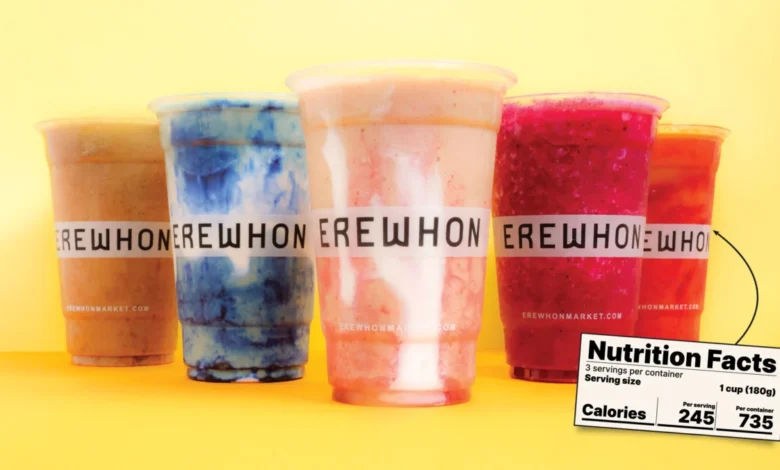
The recent inauguration of an Erewhon Market location in Thousand Oaks marks a significant milestone in the trajectory of the Southern California-based grocer, bringing the company’s total footprint to 16 stores. While the expansion serves as a victory for Ventura County residents eager to access the brand’s high-end organic offerings without traversing county lines, it also brings the company to the precipice of a significant regulatory shift. With two additional locations slated for debut in 2027—specifically in downtown Los Angeles and Costa Mesa—and a third site reportedly in development, the chain is rapidly approaching a 20-location threshold that will fundamentally alter its operational requirements.
The Federal Menu Labeling Mandate
At the heart of this transition is the Patient Protection and Affordable Care Act of 2010, which included specific provisions under Section 4205 requiring food-service establishments with 20 or more locations to disclose caloric information for standard menu items. This federal mandate is designed to provide consumers with greater transparency regarding the nutritional content of "restaurant-type" food. For a brand like Erewhon, which has cultivated an image centered on wellness, exclusivity, and premium organic ingredients, the mandatory public display of caloric data represents a major departure from its current aesthetic-focused marketing.
For many consumers, the appeal of Erewhon lies in the perceived health benefits and artisanal quality of its prepared foods. However, the intersection of luxury branding and federal transparency laws creates a unique challenge. While the brand emphasizes non-GMO, organic, and nutrient-dense ingredients, the calorie density of its popular menu items—such as its signature breakfast burritos and gourmet chicken tenders—is often comparable to, or higher than, traditional fast-casual fare. The impending requirement to post calorie counts on menu boards and ordering kiosks could potentially demystify the brand’s offerings in ways that current marketing strategies do not.
A Chronology of Growth: From Boutique to Powerhouse
Erewhon’s history dates back to 1966, when Aveline and Michio Kushi founded the original store in Boston, rooted in the macrobiotic philosophy. The brand’s evolution in Southern California, however, has been marked by a shift toward high-end retail, spearheaded by Tony and Josephine Antoci, who acquired the chain in 2011.
For much of its early history in Los Angeles, Erewhon functioned as a niche destination for health-conscious shoppers. It was not until the late 2010s that the store began its aggressive transformation into a cultural phenomenon. The store’s pivot toward celebrity-endorsed smoothies and high-profile social media visibility catalyzed a period of rapid scaling. Between 2011 and 2024, the company transitioned from a handful of local markets to a regional retail juggernaut. The planned 2027 expansion into downtown Los Angeles and Costa Mesa reflects a strategic push into high-density, high-income urban corridors, ensuring the brand remains at the center of the Southern California retail ecosystem.
Nutritional Transparency and Consumer Behavior
The transition to mandatory calorie disclosure is not merely a bureaucratic hurdle; it is a potential disruptor of consumer psychology. In the context of "lifestyle" grocery stores, the act of purchasing a $21 smoothie or a premium prepared meal is often framed as an investment in personal health. When those same items are subjected to the stark, black-and-white labeling of federal nutritional guidelines, the "health halo" surrounding certain products may be compromised.
For instance, the Hailey Bieber Strawberry Glaze Skin Smoothie, which has become a hallmark of the brand’s influencer-driven marketing, contains ingredients such as maple syrup, avocado, and collagen. While these components are often marketed as wellness-focused, their caloric concentration is significant. Providing explicit data on such items could trigger a shift in consumer perception, particularly among the brand’s core demographic, which frequently prioritizes macronutrient tracking and clean eating.
Analysts suggest that when restaurants or food retailers are forced to post calorie counts, there is often a two-fold reaction: a subset of the customer base chooses lower-calorie options, while another segment experiences a shift in brand loyalty as the "experience" of the luxury product is punctured by the clinical reality of its nutritional profile.
The Operational and Financial Implications
Operating 20 or more locations imposes not only nutritional labeling requirements but also greater scrutiny regarding supply chain consistency. As Erewhon scales, maintaining the perceived quality of its "organic, non-GMO, and sustainable" sourcing across 19 or more locations becomes an increasingly complex logistical task. The brand’s premium price points are predicated on the scarcity and quality of its ingredients, such as coconut cream and specialty avocado oils.
Furthermore, the brand’s silence regarding these upcoming regulatory requirements suggests a strategy of maintaining the status quo for as long as possible. Despite multiple inquiries, the company has declined to comment on how it intends to integrate the federal labeling mandates into its store design or whether it plans to reformulate any menu items to align with the nutritional profiles expected by its health-conscious clientele.
Broader Impact on the Retail Landscape
The case of Erewhon highlights a broader trend in the American retail sector: the "mainstreaming" of luxury wellness. As brands move from small-batch, boutique operations to regional chains, they inevitably collide with the regulatory frameworks designed for mass-market corporations.
The impending arrival of the 20-store mark serves as a critical inflection point for the company. It must decide whether to embrace transparency as a part of its brand identity—perhaps by leaning into the "real food" transparency movement—or to treat the labels as a necessary, albeit unwelcome, component of its expansion.
Ultimately, the growth of the chain into the 20-location tier will be a case study in brand resilience. If Erewhon can successfully navigate the transition, it will prove that its customer base is loyal to the lifestyle the brand represents, regardless of the nutritional data presented on its menu boards. If, however, the public disclosure of calorie counts leads to a decrease in the "aspirational" nature of the product, the brand may face a cooling of its long-standing love affair with the Southern California consumer.
As of September 2024, the grocery landscape in Los Angeles continues to evolve, with Erewhon remaining a centerpiece of the conversation. Whether the looming federal regulations will act as a brake on the brand’s momentum or merely as a footnote in its expansion remains to be seen. What is clear, however, is that the era of "mystique" for the luxury grocer is drawing to a close, as the cold, hard numbers of federal compliance prepare to take their place on the menu.
In addition to the operational changes, the market is also observing shifts in how "hotspot" locations—both in retail and dining—are being managed. Recent reports have indicated a trend toward private equity and high-net-worth individual investment in these spaces, further complicating the ownership structures of the venues that define modern Hollywood culture. As the retail sector matures, the integration of public policy and private profit will continue to be a defining characteristic of the grocery industry, particularly for those brands operating at the intersection of lifestyle and essential services. The coming years will serve as a bellwether for whether the luxury retail sector can maintain its cachet under the magnifying glass of federal regulation.