‘My Sad Dead’ Review: An Urban Community Gets the Haunting It Deserves in Pablo Larraín’s Superb Modern Gothic

The Narrative Framework and Character Dynamics
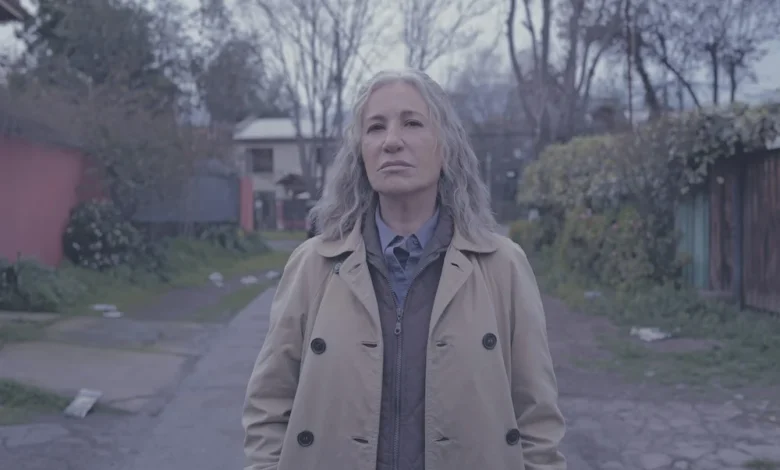
The story centers on Ema, portrayed by Mercedes Morán with a blend of stoic resilience and world-weary skepticism. A retired physician whose career was truncated by a controversial decision regarding COVID-19 treatment protocols—a classic "trolley problem" dilemma—Ema finds herself tethered to the Piedrabuena neighborhood. She has returned to her family’s home to care for her mother during the final, agonizing stages of a terminal illness.
The film’s inciting incident occurs at the deathbed of Ema’s mother, where, upon expiration, the woman’s spirit manifests as a semi-opaque facsimile. This establishes the film’s central conceit: the boundary between the living and the dead is not only porous but visually indistinguishable. Larraín, working with cinematographer Sergio Armstrong, utilizes a desaturated, pinkish-gray color palette that renders the living and the deceased with the same mortuary pallor, emphasizing the stagnation inherent in the environment.
Chronology of Production and Structural Evolution
The journey of My Sad Dead from a serialized television format to a cohesive cinematic epic mirrors the film’s own theme of transformation. Originally commissioned as a high-budget limited series, the production underwent a significant structural shift during post-production. The decision to condense the narrative into a three-hour feature film was not merely an exercise in editing but a fundamental re-imagining of the story’s pacing and atmospheric density.
- Development Phase: Conceived during the global pandemic, the script was developed by Larraín, Anastasia Ayazi, and Guillermo Calderón, drawing heavily from the dark, gothic literary sensibilities of Argentine writer Mariana Enriquez.
- Production: Filming took place on location in the Piedrabuena housing project, a Brutalist landmark characterized by its octagonal clusters and central water tower.
- Post-Production: Following the decision to re-cut the footage, the editing team focused on maintaining the "Dekalog"-esque structure of interconnected vignettes, ensuring that the film retained its subtextual richness despite the loss of serialized screen time.
- Festival Premiere: The finished 186-minute cut made its debut at the San Sebastián International Film Festival, where it was lauded for its formal audacity and emotional complexity.
Sociological Analysis: The Brutalist Impact
Beyond the supernatural narrative, My Sad Dead functions as a sociological case study on hostile urban architecture. The Piedrabuena neighborhood serves as a physical manifestation of social exclusion. In the film, the brutalist structures act as a quarantine mechanism, isolating residents from the broader social fabric of Buenos Aires.
The film explicitly critiques the failure of these environments to foster community. Meetings at the local recreation center frequently descend into xenophobic rhetoric and calls for vigilantism, reflecting a breakdown in civil society. The narrative suggests that the physical environment of the project—heavy with concrete and stifling in its geometry—is mirrored by the internal state of its residents, whose collective "rage," as the lyrics of the closing song suggest, weighs heavier than the buildings they inhabit.
The Supernatural as a Mirror for Social Trauma
The spectral figures in the film are not traditional horror tropes; they are manifestations of unresolved trauma and systemic neglect. Unlike the polished ghosts of Western cinema, these spirits are often disoriented, trapped in loops of their own violent ends. Whether it is the victim of a gang-related shooting or an employee who succumbed to a preventable medical crisis due to financial necessity, their presence highlights the specific failures of the social safety net.
The introduction of Ema’s niece, Julia, portrayed by Carolina Álvarez, adds a layer of transgressive complexity. Julia’s ability to "commune" with the spirits through intimate, non-corporeal acts serves as a rejection of traditional mourning. It suggests a desperate, albeit grotesque, attempt to find connection in a world where the living are increasingly alienated from one another.
Industry Perspectives and Critical Reception
The film’s transition from a streaming-exclusive miniseries to a theatrical event has sparked a broader industry conversation regarding the fluidity of media formats. Critics have noted that the film’s success proves that "cinematic storytelling has little to do with the size of the screen." By eschewing the tropes of the supernatural procedural—Ema does not solve crimes or seek justice—Larraín avoids the common pitfalls of the genre.
"The film is entirely cinematic, every scene loaded with texture and subtext," notes an early production review. The comparison to Krzysztof Kieślowski’s Dekalog is particularly apt, as both works utilize a confined geographic location to explore universal moral and existential dilemmas. The collaboration with Mariana Enriquez has been widely cited as the anchor for the film’s tone, grounding the surreal elements in a deeply rooted sense of local, Argentine gothic tradition.
Broader Implications and Thematic Synthesis
My Sad Dead ultimately serves as an affirmation of life through the lens of profound sorrow. The film’s ability to juxtapose the visceral, often disgusting reality of physical decay with a strange, dark humor provides a unique viewing experience that oscillates between despair and catharsis.
The contamination of the water supply—a plot point that forces the entire community to confront the voices of the dead—serves as the final, necessary catalyst for the story. It strips away the denial of the living, compelling them to acknowledge the history of violence and neglect that defines their reality.
As a piece of political art, the film does not offer solutions; it offers a mirror. It asks whether society can continue to function when it effectively "quarantines" its most vulnerable members, both in life and in memory. The film concludes on an ambiguous note, suggesting that while the cycle of trauma is difficult to break, the act of witnessing—of simply hearing the screams that were previously ignored—is the first, vital step toward reclaiming a sense of shared humanity. Through its complex, layered narrative, My Sad Dead solidifies Larraín’s position as one of the most vital directors working in contemporary global cinema, proving that even in the most concrete-heavy, hopeless spaces, there is room for a "hopeful little heart" to beat.