The Hidden Architecture of the Human Heart and the Discovery of the Left Atrial Septal Pouch

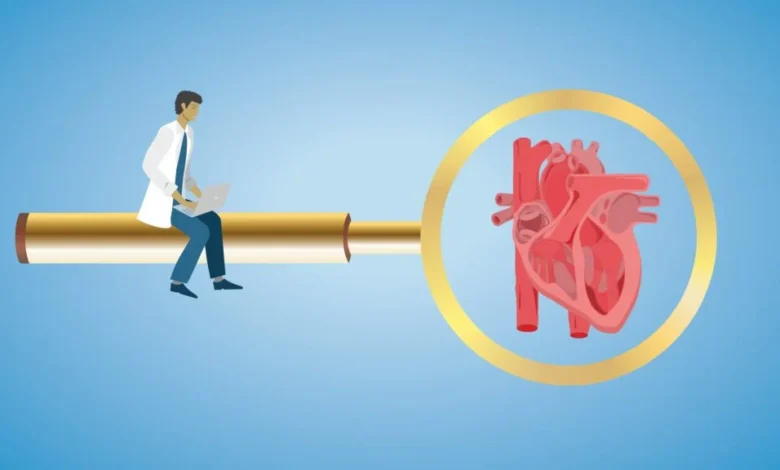
For more than a century, the medical community has operated under the collective assumption that the anatomy of the human heart was a settled chapter in scientific history. Since the foundational work of anatomists like Andreas Vesalius and Henry Gray, students and surgeons alike have approached the organ as a map already fully charted. In the modern era, the vanguard of medical advancement has shifted decisively toward genomics, artificial intelligence, and molecular diagnostics. However, the discovery of a common, yet previously unrecognized, structural anomaly within the atrial septum suggests that the most profound insights may not always reside in the digital or the microscopic, but rather in the physical architecture that has been staring back at us for generations.
The catalyst for this shift in perspective began in 2004 at the Jesse E. Edwards Registry of Cardiac Disease in St. Paul, Minnesota. It was there that Dr. Subramaniam C. Krishnan, a cardiac electrophysiologist, began an exhaustive study of preserved human hearts. The registry, founded by the late pathologist Jesse E. Edwards, served as a repository for thousands of cardiac specimens. Edwards maintained a philosophy that the human heart was a dynamic source of discovery, arguing that today’s "normal" specimen could eventually become the subject of tomorrow’s urgent clinical inquiry.
A Hidden Structure Revealed
During a systematic review of the registry’s collection, Dr. Krishnan identified a recurring, anomalous configuration in the atrial septum: a small, pouch-like opening extending 8 to 11 millimeters into the left atrium. This structure, which had eluded formal classification for decades, was not a result of disease or injury but a consistent anatomical variant.
In 2010, Dr. Krishnan and his colleagues published the first formal description of the structure, which came to be known as the left atrial septal pouch (LASP). The finding was striking not because it required advanced imaging technology, but because it was found in approximately one-third of the adult human population. The discovery underscored a significant blind spot in modern medicine: the tendency to prioritize high-tech innovation over the foundational practice of gross anatomical observation. The LASP had been hidden in plain sight, obscured by the medical community’s assumption that there was nothing left to discover within the standard cardiac blueprint.
Chronology of the LASP Discovery and Clinical Integration
- 2004: Dr. Subramaniam C. Krishnan begins independent studies at the Jesse E. Edwards Registry of Cardiac Disease, questioning the completeness of conventional anatomical understanding.
- 2009-2010: Systematic investigation of the registry’s collection leads to the formal identification and publication of the Left Atrial Septal Pouch (LASP) in the Journal of the American College of Cardiology: Cardiovascular Interventions.
- 2010–2020: A decade of observational studies establishes a correlation between the presence of a LASP and cases of cryptogenic stroke—strokes for which the cause is initially unknown.
- 2024: Researchers at Fuwai Hospital in Beijing conclude the first randomized clinical trial, demonstrating that the transcatheter elimination of the pouch significantly reduces recurrent ischemic brain lesions.
Clinical Implications: From Anatomy to Pathology
The clinical significance of the LASP lies in its physiology. The pouch functions similarly to the left atrial appendage, acting as a blind-ended cul-de-sac where blood can stagnate. While stagnant blood in the left atrial appendage is traditionally associated with atrial fibrillation, clinical evidence has shown that clot formation can occur within a LASP even in patients with a perfectly normal sinus rhythm.
For years, the medical community grappled with the mystery of "cryptogenic" strokes—ischemic events occurring in patients without the usual risk factors, such as high blood pressure or known heart rhythm disorders. Research conducted over the last 16 years has suggested that the LASP may be a missing link in these diagnoses. By acting as a nidus for thrombus (clot) formation, the pouch provides a mechanical explanation for strokes that were previously deemed idiopathic.
The transition from recognizing the pouch as a benign anatomical variant to treating it as a pathological risk factor was solidified by recent data from Fuwai Hospital. Investigators performed a randomized trial using septal occluder devices—technology originally designed to close a patent foramen ovale (PFO)—to seal the LASP. The results indicated that mechanical exclusion of the pouch was not only feasible but was associated with a measurable reduction in recurrent brain lesions compared to medical therapy alone. While this does not yet constitute a global clinical standard, it represents a critical milestone in evidence-based intervention.
The Lessons of the PFO Precedent
The trajectory of the LASP mirrors the historical struggle to understand the patent foramen ovale (PFO). Like the LASP, the PFO—a small hole between the upper chambers of the heart—was known to anatomists for decades before its clinical significance was fully understood. It took extensive epidemiological data, advancements in echocardiography, and a series of high-stakes randomized trials to elevate PFO closure to an accepted, evidence-based therapy.
The LASP is currently moving through this same lifecycle, albeit at an accelerated pace. The broader lesson here, according to experts in the field, is the necessity of an integrated approach to medical research. Anatomy informs physiology, and physiology, under the right conditions, defines pathology. By observing the failure of complete fusion in the PFO tunnel, researchers have even begun to hypothesize new, implant-free strategies for cardiac repair, aiming to mimic the body’s natural biological closure processes rather than relying exclusively on permanent synthetic devices.
A Call for Anatomical Vigilance
As medicine pivots toward an era dominated by artificial intelligence, the discovery of the LASP serves as a cautionary tale. While the investment in genomic sequencing and machine learning is vital for the future of precision medicine, these tools are only as effective as the foundational knowledge base upon which they are built.
There is a danger in delegating the recognition of patterns in the human body solely to algorithms. If the medical community loses the capacity for rigorous, manual observation, it risks overlooking structural nuances that do not appear in a line of code but are clearly present in the physical organ. The discovery of the LASP proves that "finished" sciences are often merely waiting for a fresh pair of eyes.
The implications for the future of cardiology are twofold. First, it necessitates a re-evaluation of current diagnostic imaging protocols. As the evidence base for LASP-related stroke grows, clinicians may need to incorporate specific screening for these pouches in patients presenting with unexplained neurological symptoms. Second, it reaffirms the value of pathology registries. By maintaining physical records of human anatomy, the medical community preserves a "ground truth" that can be revisited as diagnostic technology evolves.
Conclusion
The narrative of the left atrial septal pouch is ultimately one of humility and discovery. It reminds researchers and practitioners alike that the human body remains a frontier. We have spent centuries cataloging the heart, yet we have only begun to understand the full extent of its variations and the clinical impact of its architecture.
As medicine marches toward an increasingly digitized future, the LASP stands as a testament to the enduring power of the "old school" scientific method. The next great breakthrough in cardiovascular health may not require a supercomputer or a breakthrough in gene therapy; it may simply require the persistence to look at an organ we thought we knew, and the courage to ask if we have been missing something all along. In the search for truth, the most important discoveries often remain hidden in plain sight, waiting for the observer who is willing to look closer.