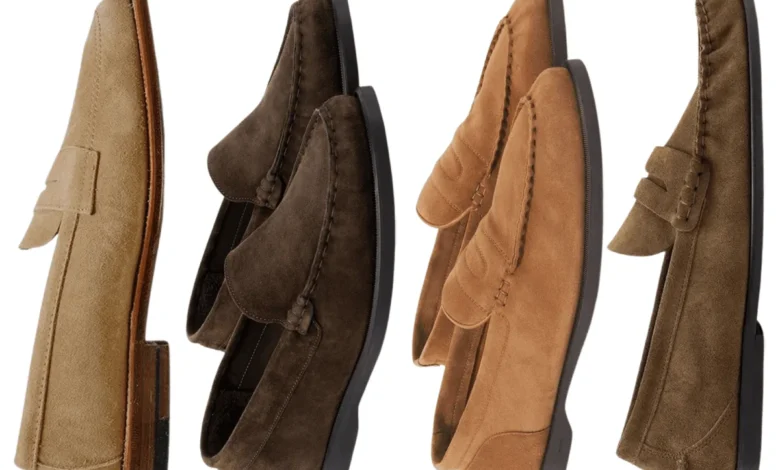
The global menswear landscape has undergone a seismic shift over the past decade, moving away from the era of "high-heat" sneaker culture and toward a more refined, traditional aesthetic often termed the Post-Sneaker World™. For years, the footwear market was dominated by limited-edition drops, complex digital raffles, and the rise of the "ugly sneaker" trend. However, as consumer fatigue sets in regarding the cyclical nature of streetwear, the classic leather loafer has emerged as the primary beneficiary of this transition. While shiny box-calf and corrected-grain leather loafers initially filled the void, the market has recently reached a point of saturation. This overexposure has led to a proliferation of cheaply manufactured pairs adorned with extraneous details, such as high-contrast two-tone palettes and elaborate embroidery, signaling a need for a stylistic pivot toward more understated alternatives.
Industry analysts and style experts now point to suede as the logical evolution for the modern wardrobe. By trading high-shine finishes for the textured, matte appearance of suede, men are finding a footwear solution that bridges the gap between formal tailoring and casual daily wear. This shift is not merely aesthetic; it represents a broader movement toward "soft power" dressing—an approach that prioritizes comfort, versatility, and artisanal quality over overt branding and aggressive silhouettes.

The Historical Context of the Loafer’s Resurgence
The loafer’s journey to the center of the modern man’s closet is rooted in a nearly century-old history of adaptation. Originally inspired by Norwegian farm shoes and popularized by the G.H. Bass "Weejun" in the 1930s, the loafer became the definitive footwear of the American Ivy League in the 1940s and 50s. The "penny" loafer earned its name from the practice of college students inserting a coin into the leather slit on the vamp—a detail that remains a hallmark of the style today.
In the contemporary era, the transition from sneakers to loafers was accelerated by the relaxation of corporate dress codes. As the "business casual" mandate shifted toward a "work-from-anywhere" reality, the rigid structure of traditional Oxford shoes felt increasingly archaic, while sneakers often felt too juvenile for professional settings. The suede loafer offers a middle ground. Its silhouette maintains the professional profile of a dress shoe, but the material—napped leather—softens the overall look, making it compatible with everything from raw denim to unstructured flannel suits.
Technical Analysis: Why Suede is More Durable Than Perceived
One of the primary barriers to suede adoption has historically been a fear of the elements. A common misconception, reinforced by popular culture—including a notable Seinfeld episode where a suede jacket is ruined by a light drizzle—is that suede is inherently fragile. However, footwear experts note that high-quality suede is remarkably resilient. Suede is essentially the underside of the hide, meaning it possesses a natural fibrous structure that can be treated for water resistance more effectively than many smooth leathers.

Modern tanning processes and nanotechnology sprays have further mitigated the risks of water damage. Furthermore, the "lovable, scuffable" nature of suede allows it to develop a patina that smooth leather cannot replicate. While a scratch on a shiny calfskin shoe requires immediate polishing to hide, a bit of wear on suede often enhances its character, aligning with the "laissez-faire" aesthetic currently dominating menswear.
Market Leaders and Categorical Excellence
The current market for suede loafers is diverse, ranging from heritage English makers to modern direct-to-consumer (DTC) brands. The following breakdown categorizes the leading options based on construction, price point, and intended utility.
The Standard-Bearer: Morjas The Ivy
Morjas, a brand founded in Sweden and manufactured in Spain, has positioned itself as a leader in the DTC luxury space. Their flagship model, "The Ivy," utilizes Goodyear-welted construction—a hallmark of high-quality shoemaking that allows the shoe to be resoled multiple times. By eliminating the traditional wholesale markup, Morjas provides a product that competes with heritage brands costing twice as much. The Ivy features a shorter vamp and a rounded toe, echoing the proportions of mid-century American campus styles.

The Heritage Upgrade: Crockett & Jones Harvard 2
For those seeking the pinnacle of English shoemaking, Crockett & Jones remains the gold standard. Founded in Northampton in 1879, the firm holds a Royal Warrant as a supplier to His Majesty King Charles III. The Harvard 2 model is an unlined version of their classic penny loafer, crafted from premium dark brown calf suede. The unlined construction allows the shoe to mold to the wearer’s foot almost immediately, providing a "slipper-like" comfort that is rare in Goodyear-welted footwear.
The Budget-Friendly Classic: Sebago Classic Dan
While G.H. Bass is often the entry point for many, the Sebago Classic Dan is frequently cited by enthusiasts as a superior alternative for those on a budget. Sebago’s construction utilizes a wider, more accommodating last (the foot-shaped form around which the shoe is built), making it a practical choice for a broader range of foot shapes. Its thicker sole and molded rubber heel offer a level of durability that justifies its $260 price point, serving as a gateway into the world of traditional loafers.
Luxury and Leisure: Saman Amel and Rubinacci
At the higher end of the spectrum, brands like Saman Amel and Rubinacci emphasize the "sprezzatura" or effortless elegance of Italian and Neapolitan tailoring. Saman Amel’s "City Loafer" features a sleeker, more refined profile designed to complement soft tailoring. Rubinacci, a legendary name in Neapolitan bespoke clothing, offers a tasselled suede loafer that is almost entirely unstructured, allowing it to flex and bend with the movement of the foot. These models are less about rugged durability and more about a sophisticated, "off-duty" aesthetic.

Supporting Data: The Economic Shift in Men’s Footwear
Market research indicates a steady rise in the "premium footwear" segment, which includes loafers and dress boots, even as the broader footwear market experiences fluctuations. According to recent retail data, luxury menswear consumers are increasingly prioritizing "longevity" and "re-solability" in their purchases. This is a direct response to the "fast fashion" sneaker cycle, where shoes are often discarded after a single season of wear.
A suede loafer, particularly one with a Goodyear welt or a Blake stitch, represents a multi-year investment. The ability to resole a shoe for $50 to $100 rather than purchasing a new $500 pair has resonated with environmentally conscious and financially savvy consumers alike. This shift is reflected in the inventory of major luxury retailers like Mr Porter and Mytheresa, which have expanded their suede loafer offerings by an estimated 20% year-over-year.
Chronology of the Loafer’s Modern Evolution
- 2015–2018: The "Sneakerhead" era peaks, with brands like Yeezy and Off-White dominating the market. Traditional shoes are largely relegated to formal weddings and funerals.
- 2019: The "Post-Sneaker" term begins to circulate in fashion circles. Early adopters begin pairing chunky leather loafers with oversized streetwear.
- 2021: The return to the office post-pandemic sparks a demand for "hybrid" footwear. The leather loafer becomes the default choice for the new business casual.
- 2023–2024: The "Quiet Luxury" movement takes hold. Shiny, branded loafers are replaced by textured, unbranded suede versions.
- Present: Suede is recognized as the most versatile footwear material, equally appropriate for a summer vacation in the Mediterranean or a board meeting in London.
Broader Impact and Future Implications
The pivot to suede loafers is more than a passing trend; it is an indicator of the maturation of the modern male consumer. As the "streetwear mindset"—characterized by hype and scarcity—recedes, it is being replaced by a focus on materiality and craft. This transition supports a more sustainable fashion ecosystem, as it encourages the purchase of fewer, higher-quality items that can be maintained over time.

Furthermore, the rise of brands like Sabah, which draws from traditional Turkish yemeni slipper construction, suggests that the future of the loafer may lie in a global fusion of styles. By combining the silhouette of a Western loafer with the artisanal techniques of different cultures, the footwear industry is creating a more diverse and interesting landscape.
As we move further into the decade, the suede loafer is poised to remain a staple of the masculine wardrobe. Its ability to adapt to changing social norms while maintaining a link to the heritage of shoemaking makes it the ultimate "soft power" play. Whether it is the rugged American proportions of an Alden on the Van last or the hand-woven Spanish craftsmanship of a Hereu loafer, the message is clear: the era of the shiny, over-designed shoe is over, and the age of the lovable, scuffable suede loafer has arrived.