After the Supreme Court killed his first tariffs, Trump turns to a new legal workaround to impose 25% tariffs on Brazil and possibly others | Fortune

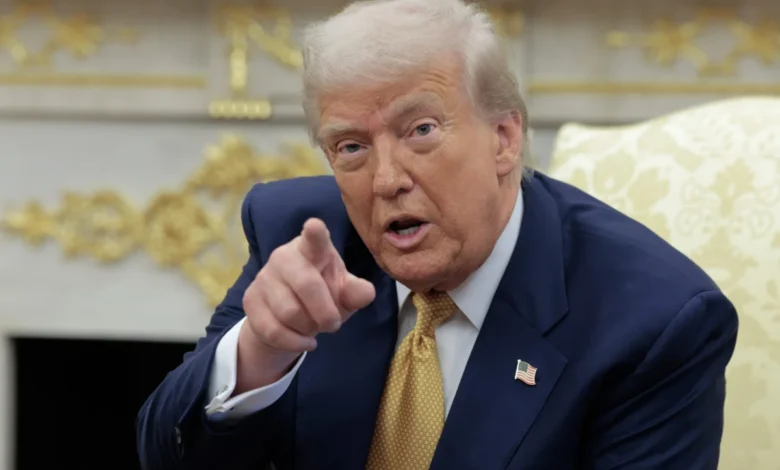
The ambitious strategy, which once promised to bolster government coffers with billions of dollars and reinvigorate American manufacturing, has instead resulted in a colossal financial reversal. Following a landmark Supreme Court ruling that severely curtailed the President’s authority to impose tariffs under the International Emergency Economic Powers Act (IEEPA), the administration is now compelled to reimburse importers for a significant portion of the duties collected. This unprecedented situation has necessitated a pivot, leading the White House to resurrect and strategically deploy Section 301 of the Trade Act of 1974 – a more arduous, yet historically more resilient, legal framework for trade enforcement.
A Costly Reversal: The IEEPA Setback and its Aftermath
The initial vision for President Trump’s sweeping tariffs, first aggressively rolled out during his previous term, was clear: leverage import duties to pressure trading partners, reduce trade deficits, and stimulate domestic industrial growth. The chosen instrument for many of these tariffs, particularly those enacted more recently, was the IEEPA, which grants the President broad powers to regulate international commerce during declared national emergencies. This mechanism allowed for swift imposition of tariffs, circumventing potentially lengthy legislative processes.
However, this executive overreach met a formidable challenge in the judiciary. In a pivotal ruling in February, the Supreme Court determined that the administration had overstepped its authority in utilizing IEEPA for general tariff imposition, deeming such actions beyond the scope of a legitimate national emergency as defined by the statute. This decision delivered a staggering blow to the administration’s trade policy, triggering an immediate and far-reaching financial consequence.
According to the U.S. Treasury’s latest monthly statement, importers have already been issued approximately $71 billion in refunds since the February ruling. The total projected reimbursement is an eye-watering $166 billion, a sum that not only negates any revenue gains from these particular tariffs but transforms them into a substantial fiscal liability. James Knightley, ING’s chief international economist, starkly characterized the situation to Fortune, stating, "The hope was tariffs were going to be a big revenue raiser, and right now it appears that actually tariffs are going to be potentially a loser through the second half of this year." This financial drain, coupled with the tepid 1.1% year-over-year increase in domestic manufacturing output as of June, starkly illustrates the "tariff disappointment" for an administration that had touted these duties as a panacea for economic woes.
Reviving the "America First" Playbook: Section 301’s Resurgence
In the wake of the IEEPA debacle, the administration briefly implemented a temporary 10% global import surcharge under Section 122 of the Trade Act of 1974, a measure slated to expire later this month after its 150-day term. However, this was merely a stopgap. The long-term strategy, now clearly defined, involves a more meticulous, albeit slower, approach: weaponizing Section 301 of the Trade Act of 1974.
The Legal Labyrinth: IEEPA vs. Section 301
The distinction between IEEPA and Section 301 is crucial for understanding the administration’s strategic shift. IEEPA allows for rapid executive action in declared national emergencies, offering speed but proving vulnerable to judicial scrutiny regarding the legitimacy of the emergency declaration for trade purposes. Section 301, conversely, provides a structured legal pathway. It empowers the U.S. Trade Representative (USTR) to investigate foreign trade practices that are deemed unfair or discriminatory and burden or restrict U.S. commerce. If such practices are found, the USTR can recommend various actions, including tariffs, to the President. While this process requires extensive investigation and allows for public comment, it offers a more robust legal foundation against court challenges, as demonstrated by past applications.
A History of Enforcement: China as Precedent
President Trump’s administration is no stranger to Section 301. During his first term, this very provision was famously employed to impose significant tariffs – up to 25% – on approximately $250 billion worth of Chinese imports. These tariffs, levied in response to alleged intellectual property theft, forced technology transfers, and other unfair trade practices, faced intense legal challenges but ultimately withstood judicial review. The success of the China tariffs, which were upheld by the courts, provides a critical precedent and perhaps the primary motivation for the current administration’s renewed focus on Section 301. It represents a legally sounder alternative to the now-discredited IEEPA route.
Brazil: A Test Case for Renewed Tariff Aggression
The latest manifestation of this strategic pivot is the imposition of 25% tariffs on a wide range of imports from Brazil, announced this week and slated to take effect later this month. This move is the culmination of a yearlong investigation by the Office of the U.S. Trade Representative (USTR) under Section 301, which concluded that Brazil had engaged in "unfair trade practices."
Unfair Practices or Political Retaliation?
This aggressive stance revives a contentious trade battle that the Trump administration has waged against Brazil since last year. Prior tariffs, totaling 50% on certain Brazilian imports, were initially imposed following allegations that Brazil’s former president, Jair Bolsonaro, had orchestrated a conspiracy to overturn his 2022 reelection loss. Bolsonaro was subsequently sentenced to 27 years in prison for his role in the alleged plot. While the current Section 301 investigation is framed around "unfair trade practices," the historical context suggests a complex interplay between economic grievances and geopolitical considerations. The specific unfair practices cited by the USTR in this instance would typically include issues such as intellectual property rights violations, forced localization requirements, or discriminatory regulatory barriers that disadvantage American businesses. However, the timing and prior actions imply that the broader political relationship and perceived alignment with U.S. interests continue to influence the application of trade policy.
The Specifics of the Brazil Tariffs
The new 25% tariffs are expected to impact a broad array of Brazilian goods, though specific product categories are typically detailed in the USTR’s official notices. Historically, U.S. imports from Brazil have included agricultural products, manufactured goods like aircraft and machinery, and raw materials. While the initial article mentions an exemption for coffee, other significant export sectors from Brazil could face considerable headwinds. For instance, Brazilian steel and aluminum, already subject to previous tariffs, could see additional pressures if included in the new list, as could certain manufactured components or processed foods. This will undoubtedly lead to increased costs for U.S. importers and potentially higher prices for American consumers.
Economic Disappointment and Expert Analysis
The broader economic outcomes of the Trump administration’s tariff policies have been a source of continuous debate and, increasingly, disappointment. The initial promise of a manufacturing boom has largely failed to materialize in any significant way that can be solely attributed to tariffs. The "measly 1.1% year-over-year" increase in manufacturing output by June of this year underscores this point. While some specific sectors might have seen modest reshoring or increased domestic production, the overall impact on the vast U.S. manufacturing base has been marginal at best, often offset by higher input costs for other industries.
Revenue Shortfall and the Drag on the Economy
Economists like James Knightley of ING have highlighted that the tariffs, far from being revenue generators, are now poised to become a net fiscal drag due to the massive refund obligations. This reversal from anticipated revenue to substantial expenditure underscores the precarious nature of using tariffs as a primary economic tool. Furthermore, tariffs, by increasing the cost of imported goods and components, act as a hidden tax on domestic businesses and consumers. This inflationary pressure can suppress demand, reduce corporate profits, and complicate the Federal Reserve’s efforts to manage interest rates. The current economic environment, marked by persistent inflation, makes any additional upward pressure on prices particularly unwelcome.
The Broader Landscape: A Wave of Investigations?
The action against Brazil may well be the vanguard of a broader shift in the administration’s trade enforcement strategy. The article notes that the administration has already proposed tariffs on dozens of other trading partners, including the European Union, following investigations into their enforcement of bans on goods made with forced labor.
Expanding the Net: Europe and Forced Labor Allegations
The use of Section 301 to address concerns like forced labor practices signifies an expansion of the tool’s application beyond traditional "unfair trade practices" such as subsidies or intellectual property theft. This signals a willingness to use trade policy to enforce broader ethical and human rights standards, even against traditional allies. Should these investigations conclude with findings against the EU or other partners, it could lead to another wave of tariffs, escalating trade tensions on multiple fronts. Melissa Irmen, the director of advocacy for the National Association of Foreign-Trade Zones, highlighted the flexibility of this approach: "If you set the tariff at say 15% and it’s deemed that it needs to be modified, then changing it to 30% isn’t the same involved process." This allows the administration to adjust tariff rates dynamically without initiating entirely new investigations, offering a strategic advantage in prolonged trade disputes.
Business Under Siege: Uncertainty and Compliance Burdens
For American businesses, particularly importers and those reliant on global supply chains, the ongoing shifts in tariff policy are a source of profound frustration and instability. The experience with IEEPA tariffs last year, characterized by rapid implementation and subsequent legal challenges, forced companies into a chaotic scramble to comply. Many paid duties for months or even years, only to face the prospect of seeking refunds after court rulings.
The Peril of Perpetual Uncertainty
"We may have the same situation where tariffs are implemented, tariffs are collected for a period of time, and by the time the court decision happens, if it does go the way IEEPA went, we may have to see another refund process again," warns Irmen. This cyclical uncertainty makes long-term business planning exceedingly difficult. Companies struggle to forecast costs, negotiate contracts, and make investment decisions when the regulatory landscape is constantly shifting. The threat of new Section 301 investigations looming over various countries and product categories creates an environment where businesses are perpetually "wondering what countries or products Trump will target next," as Irmen put it, emphasizing that "uncertainty is just not a good thing in any kind of business planning."
Legal Challenges on the Horizon
While Section 301 has a stronger legal footing than IEEPA, it is by no means immune to legal challenges. Irmen suggests that potential lawsuits could focus on whether the administration adequately proved that a foreign practice genuinely harmed the U.S. economy or whether the proposed tariffs are a suitable remedy for the alleged harm. These legal battles, often protracted and complex, add another layer of uncertainty and cost for affected businesses.
Political Imperatives and Executive Power
Despite the economic drawbacks and the vocal opposition from the business community, President Trump is expected to press ahead with his tariff agenda. This persistence is rooted in a combination of his "America First" ideology and strategic political considerations.
Trade Policy as a Last Resort
The article posits that trade policy could become one of the few remaining powerful tools in the President’s arsenal, particularly if the political landscape shifts. Some polls are predicting that Democrats may gain control of the House and potentially split the Senate following the upcoming midterms. Should Republicans lose control of Congress, President Trump might find himself significantly constrained in his ability to pass new legislation that furthers his agenda. In such a scenario, executive powers, particularly in areas like trade, become paramount. As Knightley explained, "If you can’t do tax and spending, you’re going to be more limited to areas where the president has executive powers. And trade, of course, is one of those." This makes aggressive trade enforcement not just an economic preference but a vital political strategy for maintaining influence and delivering on campaign promises.
The Fed’s Dilemma and Inflationary Pressures
Paradoxically, while the President has consistently called for the Federal Reserve to lower interest rates to stimulate economic growth, his tariff policies could actively undermine this goal. Tariffs, by raising import costs, contribute to inflationary pressures within the domestic economy. This makes the Fed’s job of bringing inflation under control more challenging, potentially compelling them to maintain higher interest rates for longer. This creates a direct tension between the administration’s trade policy and its stated monetary policy preferences, with businesses and consumers ultimately bearing the brunt of the conflicting signals.
In conclusion, President Trump’s administration is navigating a treacherous path in its pursuit of an "America First" trade policy. The Supreme Court’s decisive ruling on IEEPA tariffs has necessitated a costly course correction and a strategic pivot towards the more legally resilient Section 301 of the Trade Act of 1974. The new tariffs on Brazil serve as the inaugural test of this revised strategy, signaling a potential wave of similar actions against other trading partners, including the European Union. While this approach offers the administration a more secure legal footing, it comes at the cost of prolonged uncertainty for businesses, potential inflationary pressures for the economy, and increased friction in international trade relations. As the political landscape evolves, the aggressive deployment of executive trade powers may become an increasingly central feature of the administration’s policy toolkit, with far-reaching implications for global commerce and domestic economic stability.
Related posts: