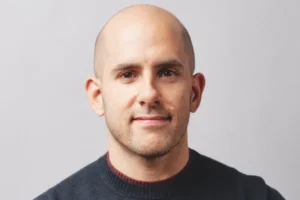
Brown University Confronts Unprecedented AI Cheating Scandal Amidst Post-Traumatic Campus Environment.


In the wake of a devastating campus tragedy, Brown University Professor Roberto Serrano’s compassionate decision to adapt a midterm exam format inadvertently exposed the largest known AI-assisted cheating scandal to date within the Ivy League. This incident, unfolding against a backdrop of profound grief and trauma following a December 2025 mass shooting, has ignited a critical debate about academic integrity, the transformative (and disruptive) power of artificial intelligence, and the fundamental purpose of higher education in the 21st century.
A Campus Grapples with Tragedy: The Catalyst for Change
The events that precipitated this unprecedented academic crisis began on December 13, 2025, when Brown University was plunged into sorrow by a horrific mass shooting. The attack left two individuals dead, including Ella Cook, a vibrant young woman who had recently sought Professor Serrano’s mentorship as her academic advisor. Nine others were wounded, two of whom were students in Serrano’s own advanced undergraduate course, ECON 1170: Mathematical Economics. These students fought for their lives for weeks, eventually surviving their injuries.
Professor Serrano, a distinguished Harrison S. Kravis University Professor in Economics with a 34-year tenure at Brown, recounted his shock and profound grief upon learning of Ella Cook’s death. "We had a very nice conversation," Serrano recalled in an interview with Fortune. "She was a wonderful young woman, full of energy, full of ideas. Imagine my shock when a few days after that conversation took place, they released the names of the two mortal victims, and I saw that one of them was her." The emotional toll on the campus community was immense, leaving many students deeply traumatized and hesitant to return to classrooms. In an act of empathy and a desire to alleviate additional stress, Serrano made a decision he had never considered in his decades-long career: he administered the March 5 midterm exam as a take-home, closed-book assessment. His primary intention was to remove the pressure of a traditional in-person exam setting from a student body still reeling from violence.
The Unveiling of Mass Deception
The results of the take-home midterm were, to Serrano, immediately suspicious. Out of 86 students enrolled in the advanced course, an astonishing 40 achieved a perfect score of 100. The class average soared to 96, a stark contrast to the historical average for the course, which typically ranged between 65 and 80. Compounding the anomaly was Serrano’s deliberate design of the exam to be more challenging than previous years. "The beauty of take-home exams used to be that we professors were able to challenge students a little more, just to push them to a higher level," Serrano explained. "The fact that this was a harder exam and this distribution made it absolutely clear that something very unusual had happened."
The professor’s suspicions were further piqued by the nature of some of the answers. He noted "unusual passages" that seemed "too smart" in a peculiar way. Leveraging his deep understanding of the subject matter, Serrano and his grading assistants conducted an experiment: they ran the midterm questions through ChatGPT, a leading AI language model. The results were startling. The AI generated a particularly convoluted and inelegant argument for a problem that possessed a much simpler, more direct proof. Crucially, this identical convoluted reasoning appeared across dozens of student exams. This pattern, Serrano stated, "made it clear that something seriously wrong had happened," describing the situation as "absolutely ridiculous." The empirical evidence of widespread AI-assisted academic fraud was undeniable.
Confrontation and the Weight of Silence
Faced with overwhelming evidence of a systemic breach of academic integrity, Serrano decided against immediately voiding the midterm. Instead, he presented his students with an ultimatum: the upcoming final exam would be administered in person, and if its grade distribution did not roughly align with the midterm’s, only the final exam score would count towards their overall grade.
Upon returning to class after grading the midterm, Serrano directly confronted his students with his findings. He articulated a profound challenge to their presence at an elite institution like Brown. "If you did this, if you just press a button to ask an AI agent to do this for you, you’re showing to be completely irrelevant," he stated pointedly. "So my question to you is, why are you here? Why are you at a university if you refuse to learn, you refuse to work hard, if you refuse to put in the necessary effort to develop critical thinking?" He continued, "If all you’re doing is just pressing a button to do to have this machine do the work for you, then you think you need a Brown degree for that?"
The immediate reaction from the students was a profound "silence," Serrano recalled. He suspected that many of the students involved in the cheating were not even present in the classroom. He concluded the emotional session by reminding them of the university’s honor code, which they had all signed. "You all signed this, right? Sadly, that’s the value of your signature," he lamented. The impact of his address was immediate and dramatic: 27 students dropped the course, with 22 of them having scored a perfect 100 on the take-home midterm.
When the final exam arrived, only 59 students appeared for the in-person assessment. The results painted a stark picture of the true academic capabilities of the remaining cohort. A staggering 19 students failed the final, and the class average plummeted to 48 out of 100 – by far the lowest final exam average in the course’s history. Serrano emphasized, "The empirical evidence of fraud is overwhelming. When you put together all this information and the distributions of the two exams, it’s absolutely clear."
University Response and Institutional Challenges
Following his thorough investigation and collection of compelling evidence, Professor Serrano formally submitted his findings to Brown University’s dean of the college and the provost. Initially, his reports were met with silence. It was only after he escalated the case to the university’s Academic Code Committee that he received a response, describing the incident as "a wake-up call." The provost, Serrano noted, has maintained complete silence on the matter to this day, a lack of official communication that has raised concerns among some faculty members about the institution’s readiness to address such a profound challenge.
The incident at Brown highlights a broader institutional unpreparedness within academia for the rapid advancements and widespread accessibility of AI tools. University policies and infrastructure, largely designed for a pre-AI era, are struggling to keep pace with the evolving methods of academic misconduct. The silence from top administrative levels, while perhaps indicative of the complexity of the issue, can also be perceived as a failure to acknowledge the severity of the threat to academic integrity.
Professor Serrano: A Voice of Authority and Despair
Professor Roberto Serrano is not just a long-serving faculty member; he is a globally recognized authority in his field. Holding the prestigious Harrison S. Kravis University Professorship in Economics, he is also an editor at Games and Economic Behavior, a leading journal in game theory. His expertise encompasses the economics of risk, uncertainty, and information – precisely the dynamics at play when individuals make decisions, such as whether to cheat on an exam. With over 6,100 citations on Google Scholar and the authorship of two widely used textbooks, including one adopted by Brown’s own economics department, Serrano’s academic credentials are unimpeachable. His contributions were further recognized with the King of Spain Prize for Economics in 2024. Remarkably, Serrano has achieved this distinguished career after becoming blind at age 17, earning his PhD at Harvard, and dedicating over three decades to Brown.
His perspective on the current situation is one of profound frustration and despair. "I’m very frustrated," Serrano told Fortune. "I believe the arrival of AI has been like a tsunami for all of us. It’s caught everybody unprepared. But in my humble opinion, silence is the worst treatment for this problem." He acknowledges the speed at which AI has developed, leaving institutions scrambling for appropriate responses.
A Broader Crisis in Higher Education
The Brown University scandal is not an isolated incident but rather a stark reflection of a burgeoning crisis across higher education. Serrano points to a New York Times essay from May 17, 2026, detailing a pervasive culture of AI cheating among students at Stanford, who are increasingly perceived as prioritizing credentials over genuine learning. Serrano critically observes, "What they miss in that very naive analysis is that the Brown label is Brown for a while. But if Brown continues to produce mediocre students who refuse to learn, sooner or later the market is going to find out that the Brown label is not what it used to be."
This sentiment is echoed by alarming trends reported nationally. In May 2026, Princeton University’s faculty voted to abolish its 133-year-old honor code tradition of unsupervised exams, mandating proctors in every room starting July 1 – the most significant change since the policy’s inception in 1893. This decisive action underscores the widespread recognition of AI’s threat to traditional academic assessment methods. Fortune reported in May 2026 that 57% of U.S. college students now utilize AI tools in their coursework on a weekly basis, indicating a fundamental shift in learning and assignment completion practices. A separate Fortune analysis published in February 2026 warned that AI is contributing to "measurable cognitive atrophy" among students, with educators expressing concerns about a "great unwiring" of independent reasoning abilities. Adding to this unsettling landscape, a survey of Harvard seniors in June 2026 revealed that 47% admitted to engaging in some form of cheating.
These statistics collectively paint a grim picture: AI is not merely a tool but a disruptive force that challenges the very foundations of academic integrity and intellectual development. The ease with which AI can generate sophisticated answers undermines the effort, critical thinking, and problem-solving skills that universities are meant to cultivate.
Adapting to a New Reality: Policy Changes and the Future
In response to his experience, Professor Serrano has already implemented significant changes for the upcoming academic year in his ECON 1170 course. Weekly homework assignments will no longer contribute to students’ final grades, acknowledging the ease with which AI can complete them. Crucially, the era of take-home exams in his class is definitively over. "Unfortunately, the idea of a take-home exam is a thing of the past," he stated. "It’s too easy for students to succumb to temptation."
While acknowledging the risks, Serrano also recognizes the potential benefits of AI. "I’m sure there are appropriate uses of AI: it has the potential to be something very useful for students that will contribute to learning," he said. However, he firmly asserts the non-negotiable imperative of academic integrity. "But we have to be absolutely clear about the risks it poses to academic integrity, which is a value we cannot drop."
The implications extend far beyond individual courses or even specific universities. The final word, for Serrano, transcends mere exams or grade distributions. It concerns the fundamental quality of the individuals universities are tasked with shaping. "We need to establish the necessary guardrails – and if they fail, be prepared to implement consequences," he urged. "But this is bigger than academia." He concludes with a profound philosophical warning about the societal trajectory if institutions fail to uphold core values: "If we no longer defend truth and decency and honesty, then what kind of credibility are we going to have as academics? If workers are just going to press a button to ask an AI agent to do the work for them, that’s inscribing a world in which humanity has chosen to become idiots. We stop thinking."
The Brown University AI cheating scandal serves as a stark warning, forcing a critical reevaluation of educational practices, institutional responsibilities, and the ethical framework necessary to navigate the complexities of an increasingly AI-driven world. The challenge for universities now is not just to detect cheating, but to redefine learning, foster genuine intellectual curiosity, and uphold the values of truth and honesty in an era where technology constantly tests their limits.
Related posts: