Judge Faruqui Rebukes Justice Department Over Unsigned Midnight Filings in Former FBI Officials Case

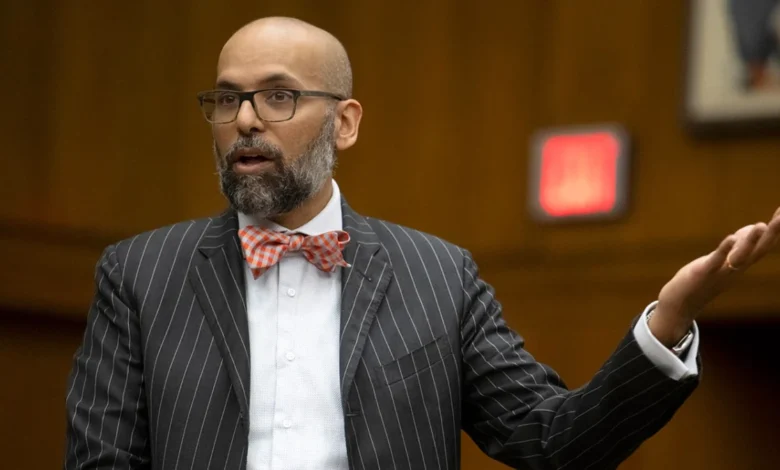
WASHINGTON — In a sharp and public courtroom rebuke, U.S. Magistrate Judge Zia M. Faruqui criticized the Department of Justice on Tuesday for attempting to introduce sudden, late-night criminal charges against two former high-ranking Federal Bureau of Investigation officials without prior judicial authorization. The procedural misstep occurred amidst an already high-stakes legal battle centered on allegations that the former officials misled Congress regarding investigations into Hunter Biden, the son of former President Joe Biden.
The confrontation in the District of Columbia courtroom underscores mounting tensions between federal prosecutors and the judiciary over prosecutorial discretion, procedural transparency, and the handling of politically sensitive public corruption cases. The aborted maneuver by the U.S. Attorney’s Office for the District of Columbia has injected fresh controversy into an inquiry already rife with political scrutiny, defense allegations of media manipulation, and intense public debate.
The Legal Standoff and the Unsigned Midnight Filing
The controversy centers on former FBI officials Nikki Floris and Bradley Benavides, who were arrested following accusations that they misrepresented their level of involvement in federal inquiries connected to Hunter Biden during congressional testimony. As the case proceeded toward a scheduled preliminary hearing—a critical judicial proceeding where prosecutors must demonstrate probable cause to justify moving forward—the legal landscape shifted dramatically in the dark of night.
Hours before government attorneys were due to defend their original allegations in open court, prosecutors filed a superseding criminal complaint. The emergency filing attempted two major tactical shifts: it introduced brand-new felony obstruction charges against Floris and Benavides, and it simultaneously softened the specific language used to describe their historical participation in the Foreign Influence Task Force’s oversight of matters concerning Hunter Biden.
However, the manner of the filing alarmed the bench. Magistrate Judge Faruqui discovered that the document submitted to the court in the middle of the night was both unsigned and unsworn, and it had bypassed the mandatory prerequisite of judicial review.
"I think they should have filed nothing," Judge Faruqui declared from the bench, according to courtroom reports. "They never had complaints filed on their record that are unsigned, waiting for a judge to make a probable cause finding. I think that it is inappropriate and harms the defendant. I’m frustrated that I got it in the middle of the night, but I’m much more concerned that it’s filed on the public record."

Pushing further, the magistrate judge questioned the abrupt departure from standard federal courtroom procedures. "Why today on this one case have you changed the entire history of how you charge cases? What is it? It appears that—it makes it look like the United States is afraid of me trying to find probable cause."
John Borchert, a prosecutor representing the U.S. Attorney’s Office in Washington, D.C., acknowledged during the proceedings that it was the first occasion he had filed new charges against defendants without first seeking judicial review. Consequently, Judge Faruqui formally rejected the superseding complaint, forcing the preliminary hearing to move forward strictly on the merits of the original allegations.
Shifting Narratives: The Altered Language of the Superseding Complaint
The discrepancy between the original charging documents and the rejected superseding complaint has become a cornerstone of the defense strategy. Legal counsel for Nikki Floris seized upon the linguistic revisions as evidence of a shaky factual foundation underpinning the government’s entire case.
In the initial charging papers, prosecutors asserted that Floris and Benavides sat at the "center" of the Foreign Influence Task Force’s work involving Hunter Biden, with Floris specifically alleged to have engaged in "scores of conversations" pertinent to the younger Biden. By contrast, the rejected superseding complaint moderated those assertions considerably. The updated document cast the former officials merely as individuals "involved in" the task force’s broader portfolio, while Floris’s alleged interactions were downgraded from "scores of conversations" to simply participating in "conversations."
Legal analysts note that such semantic shifts can prove critical in criminal litigation, particularly when charges rely heavily on interpretations of statements made during congressional testimony. Defense attorneys argued that these last-minute linguistic gymnastics reflect an evolving narrative born out of expediency rather than rigorous investigative certainty.
Defense Outrage and Allegations of Public Relations Tactics
The legal teams representing the former FBI officials did not mince words in condemning the conduct of the U.S. Attorney’s Office. In a scathing joint statement provided to media outlets, Floris’s defense counsel denounced the government’s maneuver as an unprecedented and desperate procedural shortcut.

"What is going on at the D.C. U.S. Attorney’s Office? In the middle of the night, the government filed an unsigned and unsworn complaint attempting to fix the issues with their original charge against Ms. Floris and adding a new charge just as meritless as the first one," the statement read.
The defense went on to emphasize the extraordinary nature of the midnight filing within federal practice: "In our combined decades of DOJ service, we have never seen or even heard of something like this being filed. That’s because the public lodging of criminal charges must be authorized by the grand jury, a judge, or the defendant herself. Here, the government has taken that power for itself in a desperate attempt to delay our client’s right to challenge the charges in court and litigate this case in the media, rather than the courtroom."
Critics and defense attorneys alike have repeatedly pointed to the broader context surrounding the timing of the arrests and filings. With major electoral milestones, such as midterm elections, looming directly overhead when the charges were first unsealed, suspicions regarding the motivations behind the public announcements have run high. Observers suggest the strategic leaks and timing indicate an effort to influence public perception rather than secure a quiet, methodical judicial resolution.
Broader Context and Scrutiny of Judge Faruqui
The presiding magistrate judge is no stranger to public controversy. Appointed within a judicial district that has frequently found itself at the center of high-profile political litigation, Judge Faruqui has previously drawn criticism from conservative commentators and lawmakers over various rulings, including his stances on pretrial detention, support for diversity, equity, and inclusion (DEI) initiatives, and pointed criticisms directed at Immigration and Customs Enforcement (ICE).
Most notably, Judge Faruqui faced intense national backlash earlier in the year when he openly apologized to Cole Allen, the individual accused of attempting to assassinate President Donald Trump at the 2026 White House Correspondents’ Association Dinner. During those proceedings, Faruqui expressed profound disquiet regarding the government’s physical handling of Allen, specifically condemning the use of five-point physical restraints on a defendant with no prior criminal history.
"To me, it’s extremely disturbing that he was put in five-point restraints, a person with no criminal history," Faruqui remarked during that hearing. "It’s troubling. I never heard of one Jan. 6 defendant who was put in five-point restraints or in a safe cell. If the only way to keep him safe is the most punitive thing, that’s a problem."
This history of vocal judicial oversight has positioned Faruqui as a magistrate unafraid to challenge federal law enforcement agencies over procedural integrity and the protection of defendants’ constitutional rights—a posture fully on display during Tuesday’s explosive court session.
Procedural Shortcuts Under the Microscope
Legal scholars observing the case have raised broader questions regarding the Justice Department’s preference for utilizing criminal complaints rather than traditional grand jury indictments. Charging via complaint is a mechanism generally reserved for situations involving immediate threats to public safety or emergency circumstances requiring the swift apprehension of a suspect.
Applying this expedited framework to complex white-collar or public corruption allegations involving former law enforcement veterans has drawn skepticism from legal purists. By bypassing the grand jury system, prosecutors retain tighter initial control over the narrative and the charging documents, though they ultimately subject themselves to rigorous probable cause scrutiny by a magistrate judge—a hurdle the DOJ attempted to circumvent with its unauthorized midnight filing.
Implications for the Justice Department and Future Proceedings
As the legal proceedings press forward under the parameters of the original complaint, the fallout from the DOJ’s misstep is expected to reverberate through the U.S. Attorney’s Office in Washington. The public reprimand by Judge Faruqui not only halts the government’s attempt to expand the scope of the indictment without judicial sign-off but also hands the defense a powerful rhetorical and legal weapon regarding institutional overreach.
The core question of whether Floris and Benavides intentionally misled congressional investigators regarding the Hunter Biden probes will ultimately be tested in a court of law. However, the pre-trial maneuvers have transformed the case into a broader referendum on prosecutorial ethics, the boundaries of executive power, and the vital checks and balances maintained by the federal judiciary. As both legal teams prepare for subsequent hearings, the spotlight remains firmly fixed on how federal prosecutors will navigate the strict boundaries enforced by a judiciary increasingly skeptical of procedural shortcuts.