Germany Faces Political Upheaval as Regional Election Results Shock Traditional Parties and Redraw the National Landscape

The modern German political landscape is undergoing a profound and unprecedented transformation, leaving traditional parties grappling with a rapidly shifting electorate. In the current electoral cycle, German voters leaning toward the political left find themselves with a crowded field of choices. They can cast their ballots for the slightly left-of-center Social Democratic Party (SPD), the environmentalist Greens, the democratic socialist Left Party (Die Linke), the populist far-left Sahra Wagenknecht Alliance (BSW), or the remnants of the former East German communist apparatus.
However, for the vast spectrum of voters aligned with these red, pink, green, and progressive movements, the outcome of a recent regional state election felt like a monumental political earthquake. This electoral shockwave was not merely a catastrophe for a fractured and divided Left; it was an equally devastating blow to the right-of-center Christian Democratic Union (CDU), historically Germany’s most dominant political force since the turbulent aftermath of World War II, when the nation’s economy relied heavily on basic currencies and Allied rations in the ruins of Berlin.
Background Context of the Regional Shock
To understand the gravity of the recent state-level elections, one must examine the deep structural changes occurring within Germany’s federal republic. Regional elections in Germany have long served as vital bellwethers for national sentiment, often functioning as referendum votes on the incumbent federal government.
In recent years, traditional voter loyalty has experienced a sharp decline. The post-war consensus, which reliably anchored German politics around the two major volksparteien (people’s parties)—the center-right CDU/CSU alliance and the center-left SPD—has progressively eroded. Voters increasingly gravitate toward protest movements, niche ideological groups, and populist alternatives on both extremes of the political spectrum.
The state election in question laid bare the deep-seated frustrations of the electorate, driven by persistent economic anxieties, debates over immigration, the rapid transition to green energy, and a general disillusionment with the established political establishment in Berlin. For decades, the CDU maintained a formidable stronghold across various states, acting as the bedrock of stability. Similarly, the traditional left operated with predictable vote shares. The convergence of losses for both mainstream camps signals a historic fragmentation of the German electorate.
Chronology of Political Fragmentation
The erosion of Germany’s traditional political duopoly did not happen overnight. It is the culmination of a decade-long drift away from mainstream governance.
- 2015–2016: The European migrant crisis introduces deep divisions into German politics, leading to the rapid rise of right-wing populism and the initial fracturing of traditional voter bases.
- 2021: Federal elections result in a complex three-way "traffic light" coalition comprising the SPD, the Greens, and the Free Democratic Party (FDP). This governing arrangement struggles to present a unified front amid compounding global crises.
- 2023–2025: Persistent inflation, economic stagnation, and contentious debates over heating mandates and industrial policy cause approval ratings for the federal coalition to plummet. Meanwhile, new political formations, such as the Sahra Wagenknecht Alliance (BSW), successfully peel away working-class voters from both the far-right and the traditional left.
- September 2026: The pivotal state election delivers an unprecedented rebuke to both the governing left-of-center parties and the mainstream conservative CDU, validating fears of systemic political instability ahead of upcoming national ballots.
Supporting Data and Polling Realities
Quantitative data from recent opinion polls and election returns highlight the depth of the crisis facing Germany’s mainstream parties. Voter turnout in the contested state reached historic highs, driven not by enthusiasm for incumbent leadership, but by acute polarization and a desire for systemic change.
According to post-election demographic analysis, the SPD and the Greens experienced double-digit percentage drops compared to previous legislative cycles. The CDU, while remaining competitive in certain rural districts, failed to secure the decisive majorities required to form stable, traditional coalition governments without reaching across deep ideological divides.
Concurrently, populist and fringe parties on both the left and right captured a significant plurality of the protest vote. The BSW, combining left-wing economic policies with socially conservative stances, successfully mobilized disillusioned voters who felt abandoned by the mainstream social democrats. This multi-directional hemorrhage of votes has left political scientists struggling to model viable governing coalitions at both the state and federal levels.
Official Responses and Political Reactions
The fallout from the regional ballot box has sent shockwaves through party headquarters in Berlin, prompting swift, defensive responses from national leaders.
Spokespersons for the ruling center-left coalition acknowledged the severity of the electoral rebuke, issuing statements emphasizing the need to listen more closely to citizens’ economic concerns. Insiders within the SPD noted that persistent infighting within the federal government has severely damaged public trust, vowing to refocus legislative priorities on cost-of-living measures and infrastructure investment.
Meanwhile, leaders within the Christian Democratic Union faced intense internal scrutiny regarding their campaign strategy. While the CDU managed to outperform the governing parties in raw vote totals, party executives expressed grave concern over their inability to consolidate a clear conservative majority. Analysts within the party warned that the rise of unmanageable multi-party parliaments threatens to paralyze regional governance and complicate future national coalition-building.
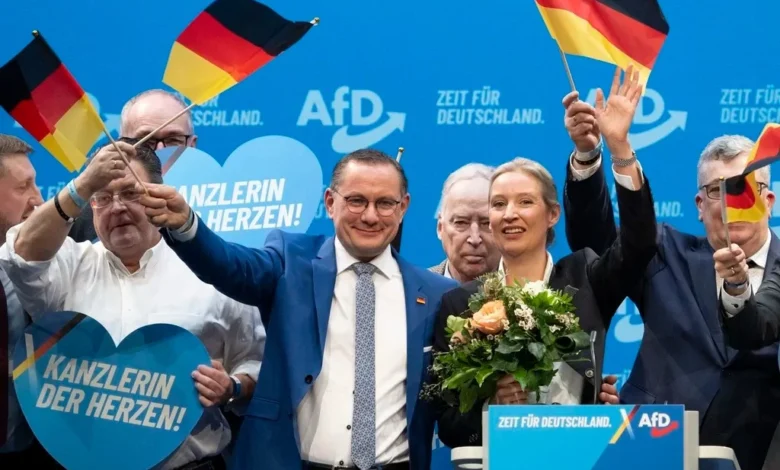
Fringe and populist movements celebrated the results as a vindication of their anti-establishment platforms. Representatives from the BSW and other rising political factions framed the election as a clear mandate to alter the current trajectory of German domestic and foreign policy, particularly concerning economic sanctions, energy independence, and social welfare provisions.
Broader Impact and National Implications
The implications of this regional electoral catastrophe extend far beyond local governance, threatening to destabilize the political foundation of Europe’s largest economy.
First, the fragmentation of the electorate severely complicates the arithmetic for future federal elections. As mainstream parties find themselves locked out of traditional majority combinations, forming stable governments will increasingly require ideologically unnatural coalitions. This "fragmentation trap" risks producing weak, internally divided administrations incapable of executing decisive reforms.
Second, the erosion of the center-left and center-right diminishes Germany’s capacity to provide steady leadership within the European Union. At a time when the EU faces formidable geopolitical challenges, economic sluggishness, and security concerns, a distracted and internally fractured Berlin struggles to project confidence and unity on the continental stage.
Finally, the normalisation of populist alternatives signals a permanent structural shift in German political culture. The post-war taboo against voting for ideological extremes has largely dissipated, replaced by a transactional electorate willing to punish established parties for systemic grievances. As Germany looks toward the remainder of the electoral cycle, the events of this regional contest serve as a stark warning: the era of predictable, consensus-driven German politics has definitively drawn to a close.