Alicia Silverstone Gets Emotional While Detailing Late Mom Didi’s ‘Clueless’ Cameo

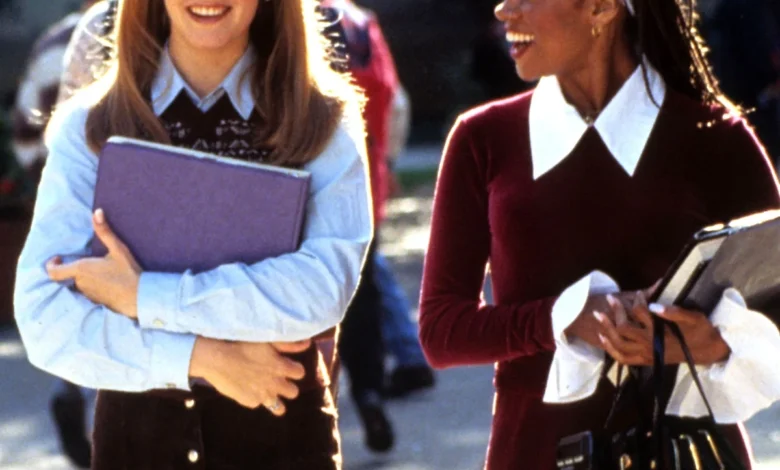
It has been nearly three decades since "Clueless" graced the silver screen, forever etching itself into the annals of pop culture with its distinct vernacular, aspirational fashion, and a coming-of-age narrative that continues to captivate new generations. The film, released in 1995, not only introduced a fresh wave of teen slang but also showcased a stellar ensemble cast, including Alicia Silverstone as the iconic Cher Horowitz and a then-emerging Paul Rudd as her charmingly disheveled love interest, Josh. The enduring appeal of the film, a modern adaptation of Jane Austen’s "Emma," is a testament to its witty dialogue, memorable characters, and the unique vision of writer-director Amy Heckerling.
Alicia Silverstone recently shared a particularly poignant memory from the film’s production, detailing the emotional experience of her late mother, Didi Silverstone, making a cameo appearance. The actress, who has consistently shown affection for her iconic role and the film’s legacy, often recreates scenes on social media, acknowledging the deep connection fans have with Cher and her world. This act of remembrance underscores the profound impact "Clueless" has had on both its audience and those involved in its creation.
The Genesis of a Beverly Hills Phenomenon
Amy Heckerling, already recognized for her work on films like "Fast Times at Ridgemont High" and "Look Who’s Talking," was approached by Fox’s television department with a specific directive: create a story about high school’s "cool kids," an area typically overlooked in favor of narratives centered on "nerds." This prompt sparked Heckerling’s imagination, leading her to draw inspiration from Jane Austen’s "Emma," a novel she had connected with during her college years. The result was a script that introduced Cher Horowitz, a confident and eternally optimistic Beverly Hills teenager, her best friend Dionne Davenport, and their affluent circle of peers. These characters, characterized by their sophisticated vocabulary and trendsetting fashion, painted a vivid picture of privileged adolescence.
The film’s commercial success, grossing $55 million against a modest budget, solidified its status as a sleeper hit. However, those involved recognized its potential from the outset. Sherry Lansing, then-studio head, recalled her immediate reaction to the first screening: "I just loved it. I’m not an easy laugh; you look at a movie and you’re constantly trying to make it better. But every once in a while, you see a movie, and the notepad you have is blank—and you just say, ‘This is genius.’" This sentiment was echoed by many, highlighting the film’s immediate impact and the shared understanding that something special had been created.
Casting Cher: A Perfect Alignment
The casting process for "Clueless" was extensive and involved numerous talented individuals who would later become household names. However, the role of Cher Horowitz was, in many ways, preordained for Alicia Silverstone. Heckerling first noticed Silverstone in a series of Aerosmith music videos, an experience that profoundly influenced her vision for Cher. She even videotaped Silverstone’s performances to present to studio executives, advocating for her casting.
"I saw her in the first one, and videotaped it so when I handed in the script I could show them the girl that I liked," Heckerling recounted to The Telegraph in 2015. Adding to this, Silverstone’s casting director friend, Carrie Frazier, consistently urged Heckerling to consider Silverstone, who had recently appeared in the film "The Crush." The two women discovered they were referring to the same actress.
The final confirmation of Silverstone’s suitability for the role came during a dinner with Heckerling. Associate producer Twink Caplan, who also portrayed Cher’s teacher Miss Geist, observed a telling moment: "When she was sipping her drink through a straw, instead of taking the glass and straw to her face, Alicia leaned over the table to sip the straw from the glass. And Amy thought: ‘Oh my god, this is my girl.’ Alicia was Cher, she is just the sweetest girl, she still is." This anecdote perfectly captures Silverstone’s innate charm and her ability to embody the character’s unique, almost childlike, grace.
Despite Heckerling’s conviction, studio executives insisted on exploring other options. Actresses like Alicia Witt, Tiffani Thiessen, Keri Russell, and Gwyneth Paltrow were considered for the role. Reese Witherspoon also made a strong impression, with many advocating for her potential. However, as Heckerling consistently maintained, "Alicia is Cher."
A Tapestry of Talent: Beyond Cher
The success of "Clueless" was not solely reliant on its lead. The film launched the careers of many, transforming Silverstone, Paul Rudd, Stacey Dash (Dionne), and Brittany Murphy (Tai) into recognized stars. The film’s influence extended to fashion, encouraging a generation to embrace preppy styles and move away from the prevailing grunge aesthetic. Moreover, Cher Horowitz emerged as a feminist icon, demonstrating that one could be flawed, even seemingly superficial, yet possess an underlying strength and resilience.
The casting of other pivotal roles also involved notable near-misses and compelling stories. Ben Affleck and Jeremy Renner were considered for the role of Josh. Lauryn Hill auditioned for Dionne, while Terrence Howard was considered for Murray. Seth Green and Owen Wilson were eyed for the part of Travis, and Sarah Michelle Gellar was offered the role of Amber, though scheduling conflicts with "All My Children" prevented her from accepting.
Paul Rudd’s journey to becoming Josh was particularly arduous, involving multiple auditions. Initially, Rudd expressed interest in playing Murray, a character he misunderstood as a white individual attempting to co-opt Black culture. Upon realizing Murray’s true identity, Rudd re-focused his efforts on Josh, a role for which he underwent extensive testing and impressed casting director Marcia Ross with his undeniable talent.
The search for Christian, Cher’s unrequited crush, proved challenging. New York-based actor Justin Walker ultimately secured the role, impressing the casting team with his innate charisma and ability to embody the character’s retro vibe. Walker’s memory of receiving the news via a payphone outside a bar near Madison Square Garden remains a vivid reminder of his breakthrough moment.
Behind the Scenes: A Creative Melting Pot
The production of "Clueless" was a collaborative and often joyous experience, marked by a sense of camaraderie among the younger cast members. The 40-day winter shoot in 1994 was described by Wallace Shawn, who played Mr. Hall, as akin to attending "an innocent party where one of the games was, ‘Let’s Make a Movie.’" This sentiment was shared by many, including Elisa Donovan (Amber), who described the set as a "dream" where actors her own age worked together amidst "crazy costumes."
Donald Faison, who played Dionne’s boyfriend Murray, and Breckin Meyer, who portrayed Travis, recounted spending considerable time in their shared trailer, fostering a close bond that extended beyond the set. They even bunked together with Paul Rudd after filming concluded, immersing themselves in a world of 1980s teen movies.
However, for Alicia Silverstone, the experience was more demanding. As the central character, she was present in nearly every scene, working extensive hours. "For me it was work," she stated, acknowledging the exhaustion that accompanied her central role. "Everyone else came in and out, so they probably had a ball. But I was in every scene, working crazy hours. I was exhausted."
The film’s iconic fashion was a significant undertaking. Costume designer Mona May and her team spent an entire week fitting the cast, utilizing "racks and racks and racks" of clothing. Stacey Dash cited Dionne’s plaid ensemble with the cake-like hat as her favorite. Silverstone, while a fashion icon in the film, admitted to a more down-to-earth personal style, often opting for comfort over high fashion.
Linguistic Innovation and Enduring Impact
Amy Heckerling’s keen observation of language played a crucial role in shaping the film’s distinctive dialogue. She was an avid collector of slang, incorporating terms that resonated with the cultural zeitgeist of the early 1990s. The phrase "As if!" originated from the gay community and was deemed by Heckerling to be a "multi-useful, multipurpose word" perfect for teenagers. Other terms like "Betty" (inspired by Betty Rubble’s attractiveness) and "Barney" (questioning how someone like Barney Flintstone ended up with her) further enriched the film’s lexicon.
Even unintentional moments contributed to the film’s authenticity. Silverstone’s mispronunciation of "Haitians" during her immigration debate speech was retained because Heckerling found it funnier and more characteristic of Cher’s evolving understanding.
The film’s impact continues to be felt. Fans frequently revisit its memorable lines, such as Tai’s "You’re a virgin who can’t drive," and debate the enduring relationship status of Cher and Josh. Heckerling has envisioned a contemporary Cher as a progressive advocate for social justice, championing causes like equality, climate change, and reform.
A Mother’s Love on Screen
Alicia Silverstone’s recent emotional reflection on her mother’s cameo appearance adds another layer of poignancy to the film’s legacy. While the original article does not specify the exact nature or context of Didi Silverstone’s cameo, the actress’s emotional response highlights the personal significance of this moment. It is not uncommon for actors to involve their family members in their creative endeavors, and for Silverstone, having her mother on set, even for a brief appearance, likely represented a cherished memory.
The enduring power of "Clueless" lies not only in its quotable lines and iconic fashion but also in the heartfelt moments and personal connections forged during its creation. Silverstone’s tribute to her mother serves as a reminder that behind the glitz and glamour of Hollywood, there are profound human stories and familial bonds that contribute to the magic of filmmaking. The film’s ability to evoke such deep emotion, even decades later, solidifies its place as a timeless classic.