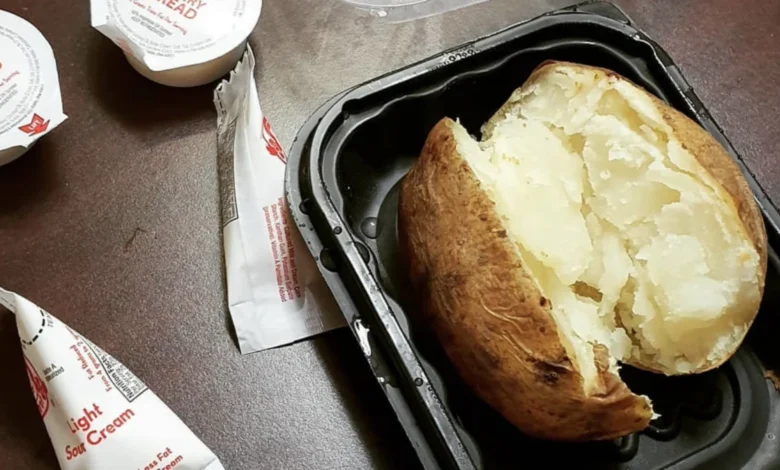
When the average consumer evaluates the sprawling landscape of American fast-food chains, baked potatoes rarely occupy the vanguard of menu innovation. Burgers, French fries, and breaded chicken sandwiches traditionally dominate the fast-food discourse, serving as the primary metrics by which quick-service restaurants are judged. Yet, industry stalwart Wendy’s has long maintained a quiet cult following for its distinct baked potato offerings, a menu category that distinguishes the brand from competitors heavily reliant on deep-fryer infrastructure. Among connoisseurs of fast-food side dishes, Wendy’s loaded baked potatoes have earned high praise for their comforting texture and versatile flavor profiles. However, culinary enthusiasts and adventurous diners are increasingly turning their attention toward an unconventional menu modification: incorporating restaurant-grade dill pickles onto a steaming, buttered potato. This seemingly modest addition bridges the gap between classic comfort food and modern flavor-profile balancing, demonstrating how minor adjustments to standard quick-service components can yield surprisingly sophisticated gastronomic results.
To understand the mechanics of this culinary pairing, one must examine the sensory composition of the ingredients involved. A standard Wendy’s baked potato features a soft, fluffy interior encased in a lightly salted skin, serving as a neutral canvas of carbohydrates and starch. When layered with traditional toppings—such as smooth sour cream, chives, smoked bacon pieces, and melted cheese—the dish leans heavily into rich, savory, and heavy flavor notes. While undeniably satisfying, these heavy components can sometimes overwhelm the palate, leading to flavor fatigue halfway through the meal. The introduction of Wendy’s signature pickles disrupts this monotony. Providing a sharp, vinegar-forward acidity, a salty bite, and a distinct textural crunch, the pickles slice through the dense dairy and animal fats. This acid-fat equilibrium is a foundational principle in professional culinary arts, yet its application within a drive-thru setting highlights an unexpected synergy between disparate menu items.
The historical context of Wendy’s baked potato menu provides valuable background regarding how such innovations arise. Introduced to the national menu in the early 1980s under the leadership of company founder Dave Thomas, the baked potato was conceived as a wholesome, lower-calorie alternative to the ubiquitous French fry. At a time when the fast-food industry was racing to expand deep-fryer production lines, Wendy’s invested in convection ovens capable of baking potatoes in bulk. This strategic divergence allowed the chain to market itself as a destination for diners seeking heartier, less processed-seeming side dishes. Over the decades, the baked potato lineup evolved from simple butter and sour cream variants to heavily loaded iterations featuring chili, cheddar cheese sauce, and bacon. Despite these menu expansions, the core architecture of the product remained largely unchanged, creating an environment ripe for customer-led experimentation and custom modifications.
Logistically, executing this flavor hack requires navigating the operational limitations of contemporary fast-food ordering systems. Because dill pickles are primarily utilized as a standard burger and sandwich component—specifically featured on items like Dave’s Single and the Junior Cheeseburger—they are not officially cataloged as an add-on option for baked potatoes within the Wendy’s mobile application or digital ordering platforms. Consequently, customers wishing to replicate this combination cannot simply tap a digital modification toggle. Instead, patrons must engage directly with staff at the front counter or via the drive-thru speaker, explicitly requesting a side portion of pickles. Depending on the franchise location and local store policies, these pickle slices are occasionally provided free of charge as a minor customization, though some restaurants may assess a nominal fee to account for inventory allocation. For consumers facing strict refusal from local operators, replicating the experience within a domestic kitchen environment remains a viable alternative, utilizing store-bought russet potatoes, commercial cheddar sauce, and crisp deli pickles to mirror the fast-food profile at home.
Beyond the standalone inclusion of pickles, culinary exploration at Wendy’s often extends into combinatorial pairings that involve the brand’s extensive portfolio of specialty sauces and secondary toppings. Industry analysts note that quick-service restaurants increasingly rely on customizable modular menus to drive customer engagement, particularly among younger demographics accustomed to personalized dining experiences. Within this framework, the pickle-topped baked potato opens up several avenues for flavor pairing.
The Sour Cream and Chive Baked Potato, for instance, represents a harmonious baseline for the addition of pickles. The cool, lactic acidity of the sour cream blends seamlessly with the acetic acid of the pickles, while mild dehydrated chives provide an understated allium background that prevents the sharp vinegar notes from dominating the bite. Conversely, the Bacon Cheese Baked Potato offers a more decadent challenge. Here, the heavy salt content of cured bacon and the dense, viscous nature of melted processed cheese demand a strong counterpoint. The aqueous crunch and brine of the pickle function as a palate cleanser, resetting the taste receptors between bites of heavy pork fat and dairy solids.
Another prominent menu item, the Chili and Cheese Baked Potato, presents a complex matrix of textures and spices. Wendy’s signature chili—a product steeped in the company’s heritage, historically created to utilize leftover hamburger patties—features a robust blend of minced beef, kidney beans, tomatoes, onions, and a distinct chili spice blend. Introducing pickles to this robust, stew-like preparation infuses a bright, zesty contrast that cuts through the earthy cumin and chili powder notes while contributing an unexpected mechanical crunch to an otherwise uniform, soft consistency.
In addition to solid toppings, Wendy’s maintains a robust lineup of proprietary dipping sauces that can be repurposed to elevate a customized baked potato. The Creamy Ranch dipping sauce, characterized by its buttermilk base, garlic powder, onion powder, and assorted herbs, creates a rich emulsion when drizzled over a pickle-garnished potato, softening the vinegar bite while maintaining a savory herbal profile. Alternatively, Wendy’s Signature Sauce—known for its complex flavor profile incorporating black pepper, hot sauce, and molasses-derived sweetness—adds both heat and depth that complements the natural tang of the pickles. For consumers favoring a sweeter flavor trajectory, Honey Mustard offers a sharp, honey-infused profile that bridges the gap between the sugary notes of the condiment and the briny crunch of the cucumber slice. Furthermore, adventurous diners occasionally request a side portion of the warm cheddar cheese sauce normally reserved for the brand’s premium side items, such as Baconator Fries, creating an ultra-rich vehicle for the tart pickle slices.
The broader market implications of such consumer-driven menu hacks reflect changing dynamics in how patrons interact with fast-food brands. In an era dominated by social media platforms like TikTok, Instagram, and Reddit, minor menu modifications frequently evolve into viral culinary trends capable of driving foot traffic and generating organic marketing buzz without direct corporate expenditure. While Wendy’s corporate communications department has not officially formalized the pickle-topped baked potato as a permanent menu category, the operational flexibility of quick-service kitchens routinely accommodates these micro-customizations.
From a nutritional and economic perspective, customized side dishes offer consumers a low-risk avenue for culinary experimentation. A baked potato inherently provides complex carbohydrates and dietary fiber, contrasting with the refined starches found in traditional french fries. By layering acidic and fermented elements like pickles onto a starchy base, diners introduce probiotics and acetic acid, which some nutritional studies suggest can assist in moderating the glycemic response associated with high-carbohydrate meals, though fast-food formulations naturally remain high in sodium and overall caloric density regardless of minor additions.
Ultimately, the phenomenon of adding pickles to a Wendy’s loaded baked potato underscores the enduring appeal of customizable fast food. It highlights the ingenuity of everyday consumers who look beyond corporate marketing boundaries to discover novel sensory experiences within legacy menus. As quick-service restaurants continue to refine their digital ordering infrastructures to better accommodate granular customizations, the boundary between standard menu offerings and patron-engineered creations will likely continue to blur. For now, the humble baked potato remains a versatile platform for culinary exploration, proving that even the most traditional fast-food items can be reinvented with a simple request at the drive-thru window and a handful of crisp, salty pickles.