Lucid Group Secures $750 Million in New Capital and Expands Uber Robotaxi Commitment to 35,000 Vehicles

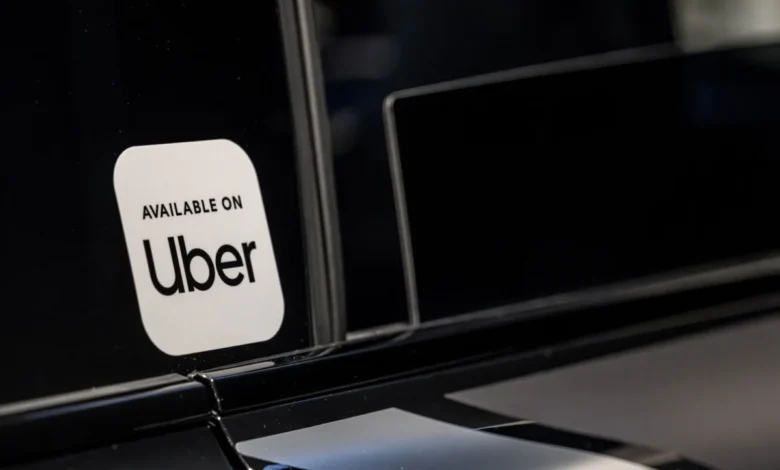
Lucid Group, Inc., a leader in advanced electric vehicle (EV) technology, has announced a significant expansion of its strategic and financial roadmap through a dual-pronged agreement involving its largest shareholder and a primary global mobility partner. The California-based automaker confirmed it has secured US$750 million in new investment commitments while simultaneously scaling its robotaxi vehicle supply agreement with Uber Technologies, Inc. to a minimum of 35,000 units. This development marks a pivotal shift for Lucid as it moves beyond the luxury consumer market into the high-utilization fleet and autonomous driving sectors.
The capital infusion is structured to provide Lucid with the necessary liquidity to bridge the gap toward the commercialization of its upcoming vehicle platforms. Of the total US$750 million, Ayar Third Investment Company—an affiliate of Saudi Arabia’s Public Investment Fund (PIF)—will purchase US$550 million in convertible preferred stock. This transaction reinforces the PIF’s long-standing position as Lucid’s most significant financial backer, ensuring the company remains capitalized as it scales production of the Lucid Gravity SUV and prepares its high-volume "Midsize" platform.
Complementing the PIF investment, Uber has committed an additional US$200 million to Lucid, bringing its total direct investment in the automaker to US$500 million. This financial commitment is tied directly to a massive expansion of the robotaxi partnership first established in 2025. Under the revised terms, Lucid will supply at least 35,000 autonomous-ready vehicles to Uber’s network over the coming years. This fleet will consist of both the Lucid Gravity, the brand’s first luxury electric SUV, and the highly anticipated Midsize platform, which is designed to compete in the mass-market EV segment.
The Strategic Path to Autonomous Commercialization
The expanded vehicle commitment is the latest evolution of a tripartite collaboration involving Lucid, Uber, and Nuro, an autonomous technology firm specializing in sophisticated self-driving systems. This partnership, originally unveiled in July 2025, aimed to combine Lucid’s world-class electric powertrain and vehicle hardware with Nuro’s Level 4 autonomous driving software and Uber’s massive ride-hailing network.
The project has moved rapidly through its development milestones. In December 2025, the partners initiated on-road autonomous testing under the operational lead of Nuro. By February 2026, Lucid had successfully delivered the full initial fleet of test vehicles, allowing for intensive data collection and software refinement in diverse urban environments. The current roadmap targets a full commercial launch of the robotaxi service in the San Francisco Bay Area in late 2026.
Initial commercial operations will utilize the Lucid Gravity. As a premium SUV, the Gravity provides a spacious, high-end experience that aligns with Uber’s premium service tiers. However, the long-term scalability of the program hinges on Lucid’s forthcoming Midsize platform. This new vehicle architecture, expected to carry a starting price of under US$50,000, is being engineered specifically with fleet unit economics in mind. By offering a lower price point and high efficiency, the Midsize platform is positioned as the primary workhorse for Uber’s autonomous fleet ambitions.
Driving Unit Economics through Engineering Efficiency
A critical component of the Lucid-Uber partnership is the focus on "unit economics"—the direct revenue and cost associated with an individual vehicle in a fleet. For autonomous ride-hailing to become a viable alternative to human-driven services, the vehicles must be affordable to operate, durable, and capable of high uptime.
Lucid’s engineering philosophy, which emphasizes "miniaturization" and maximum efficiency, provides a unique advantage in this regard. The company’s proprietary electric drive units are among the most power-dense in the world, allowing Lucid vehicles to achieve greater range with smaller, lighter, and less expensive battery packs than its competitors.
For the Midsize platform, Lucid claims that its vehicles will offer range parity with rival electric vehicles while utilizing significantly smaller batteries. This reduction in battery size not only lowers the initial capital cost of the vehicle but also reduces weight, which further improves energy efficiency and reduces wear on components like tires and brakes. Furthermore, Lucid’s 900V+ electrical architecture enables ultra-fast charging capabilities. In a robotaxi context, the ability to add hundreds of miles of range in less than 20 minutes is essential for minimizing downtime and maximizing the number of trips a vehicle can complete in a 24-hour cycle.
Official Responses and Executive Outlook
Dara Khosrowshahi, Chief Executive Officer of Uber, emphasized the importance of Lucid’s execution in the decision to deepen the partnership. "That strong execution keeps us on track to deepen our investment and increase the number of vehicles we plan to deploy," Khosrowshahi stated. "While the Lucid Gravity will introduce our riders to a new level of autonomous luxury, Lucid’s future Midsize platform creates an even clearer path to stronger unit economics, which is the bedrock of a sustainable autonomous network."
While Lucid’s leadership has focused on the technical milestones, the financial community has noted the importance of the PIF’s continued support. Analysts suggest that the US$550 million from Ayar Third Investment Company serves as a "bridge" to ensure Lucid can complete the retooling of its AMP-1 manufacturing facility in Arizona and its secondary plant in Saudi Arabia (AMP-2). The PIF’s involvement is seen as a strategic move to secure Saudi Arabia’s role in the global EV supply chain, as well as a vote of confidence in Lucid’s ability to transition from a niche luxury player to a high-volume manufacturer.
Contextualizing the Robotaxi Market Landscape
The deal between Lucid and Uber comes at a time of intense competition in the autonomous vehicle (AV) space. Companies like Waymo (owned by Alphabet) and Cruise (backed by General Motors) have already established a presence in cities like San Francisco and Phoenix. Meanwhile, Tesla has signaled a major shift toward its "Cybercab" concept, promising a dedicated robotaxi vehicle with no steering wheel or pedals.
Lucid’s approach differs by leveraging a partnership model rather than attempting to build the entire stack—vehicle, software, and network—in-house. By partnering with Uber, Lucid gains immediate access to a global customer base and sophisticated routing logistics. By partnering with Nuro, Lucid avoids the massive R&D costs associated with developing Level 4 autonomous software from scratch, focusing instead on what it does best: vehicle hardware and powertrain integration.
The choice of the San Francisco Bay Area for the 2026 launch is strategic. The region is not only a hub for autonomous vehicle testing and regulation but also represents one of Uber’s highest-density markets. Successful deployment in this complex urban environment will serve as a blueprint for expansion into other major metropolitan areas across North America and potentially Europe and the Middle East.
Timeline of Key Milestones
- July 2025: Lucid, Uber, and Nuro announce an initial partnership to develop and deploy autonomous vehicles.
- August 2025: Uber makes its first major equity investment in Lucid.
- December 2025: On-road autonomous testing begins in California using modified Lucid Air and Gravity prototypes.
- February 2026: Delivery of the initial test fleet is completed; software integration enters the final validation phase.
- April 2026: Lucid secures US$750 million in new funding; Uber expands its fleet commitment to 35,000 units.
- Late 2026 (Projected): Commercial launch of the Lucid Gravity-based robotaxi service in San Francisco.
- 2027 (Projected): Introduction of the Midsize platform vehicles into the Uber autonomous fleet.
Implications for the Automotive and Tech Industries
The implications of this deal extend beyond the three companies involved. For the broader automotive industry, Lucid’s move into fleet sales signals that even luxury-focused EV startups must find high-volume channels to ensure long-term viability. The "retail-only" model is increasingly seen as risky in an era of fluctuating EV demand and high interest rates.
For the ride-hailing industry, the commitment of 35,000 vehicles is one of the largest of its kind. It demonstrates Uber’s resolve to transition from a platform that connects riders with human drivers to one that manages a massive fleet of autonomous assets. This transition is expected to eventually lower the cost of ride-hailing for consumers, as the removal of the driver’s salary is the single largest potential cost-saving measure in the business model.
Furthermore, the involvement of the Saudi Public Investment Fund highlights the shifting geopolitical landscape of automotive manufacturing. With billions of dollars in capital, the PIF is effectively underwriting the development of a new American automotive titan, with the expectation that the technology and manufacturing expertise will eventually bolster Saudi Arabia’s domestic industrial goals.
As Lucid moves toward its late 2026 commercial target, the industry will be watching closely to see if the company can maintain its production schedule and if the Nuro-powered autonomous system can meet the rigorous safety and performance standards required for driverless operation in dense urban traffic. If successful, the 35,000-vehicle deal could be the first of many as the world moves toward an autonomous, electric future.
Related posts: