Rare Cyclopia Discovery in Ancient Nasca Remains Provides New Insights into Pre-Columbian Medical Conditions

Archaeologists conducting excavations in the arid coastal regions of Peru have unearthed the skeletal remains of an infant afflicted with a profound developmental anomaly known as cyclopia, a rare and typically fatal birth defect characterized by the presence of a single, central eye socket. The discovery, which dates back more than 1,600 years to the height of the Nasca civilization, provides a rare window into the biological challenges faced by ancient Andean populations and the social responses to individuals born with severe physical impairments. The findings, recently published following rigorous DNA analysis, underscore both the medical history of the region and the complexities of funerary practices within the Nasca culture.
The Anatomy of a Rare Condition
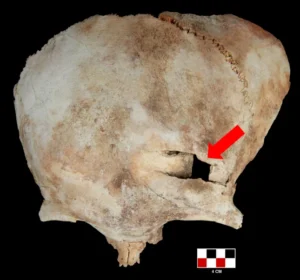
Cyclopia, a form of holoprosencephaly, occurs during the early stages of embryonic development when the prosencephalon—the forebrain—fails to divide properly into the two hemispheres of the brain. This failure often results in the fusion of the orbits, or eye sockets, into a single cavity, alongside significant structural abnormalities in the nose and mid-face. In modern medical practice, this condition is almost universally incompatible with long-term survival, as the underlying brain malformations are severe and typically lead to spontaneous abortion or death shortly after birth.
The discovery in Peru highlights a historical instance of this phenomenon. The skeletal remains, while fragile, were well-preserved due to the hyper-arid climate of the Peruvian desert, which acts as a natural desiccant. Forensic anthropologists and geneticists were able to extract DNA from the remains, confirming that the condition was the result of a significant chromosomal abnormality. While the exact genetic trigger remains a subject of ongoing study, researchers note that the presence of such a specimen in the archaeological record is exceptionally rare, as infants with such severe defects were often not buried in formal contexts, or their remains did not survive the passage of millennia.
Historical Context: The Nasca Civilization
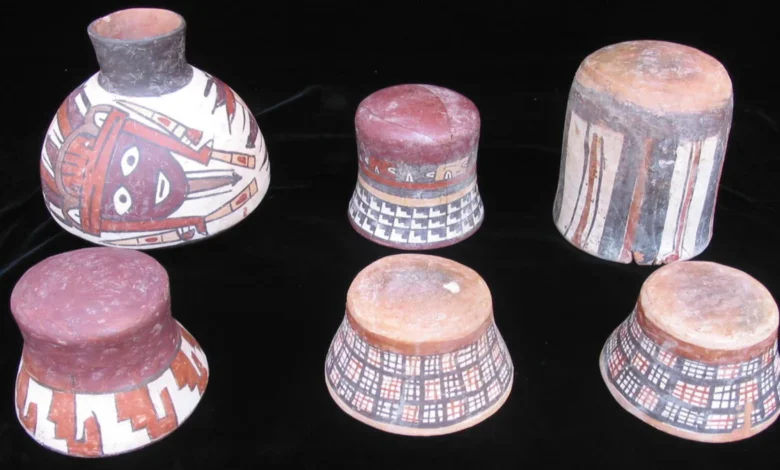
To understand the significance of this discovery, one must look at the culture that produced it. The Nasca civilization, which flourished between 100 BCE and 800 CE, is perhaps best known for the mysterious and expansive geoglyphs—the Nasca Lines—etched into the desert floor. However, the Nasca were also highly sophisticated in their agricultural engineering, textile production, and ceramic artistry. They resided in a challenging environment where water was scarce, necessitating complex irrigation systems and a deep, spiritual reliance on the natural and supernatural worlds.
Archaeologists have long studied the Nasca burial practices to infer their social hierarchy and belief systems. Burials in the region often include elaborate textiles, ceramics, and offerings, suggesting that the society placed significant importance on the transition from life to death. The fact that this infant, despite suffering from a condition that would have been immediately apparent at birth, was interred with the same care and consideration as other children in the community, offers a profound narrative regarding Nasca social values. It implies an inclusive approach to life, where the status of an infant was not necessarily diminished by congenital disability.
Chronology of the Excavation and Analysis
The investigation into the remains followed a structured scientific protocol designed to preserve context and ensure accurate data interpretation:
- Initial Discovery: During a routine excavation of a Nasca-era cemetery, researchers identified a tomb that appeared to be consistent with standard child burials of the period.
- Preliminary Assessment: Upon cleaning the skeletal remains, field anthropologists identified the distinct cranial morphology, specifically the single, central orbital structure, which immediately flagged the specimen as a candidate for further medical and genetic study.
- DNA Extraction and Sequencing: Samples were sent to specialized laboratories, where geneticists utilized advanced sequencing techniques to isolate the infant’s DNA. The analysis confirmed a chromosomal abnormality consistent with cyclopia.
- Peer Review and Publication: The findings underwent a rigorous peer-review process, confirming that the specimen dates back approximately 1,600 years. The results were subsequently released in a formal study, providing the broader academic community with new data on ancient pathology.
Scholarly Perspectives and Ethical Implications
The research team, led by experts including anthropologist Lars Fehren-Schmitz of the University of California, Santa Cruz, has emphasized the importance of treating these remains with the highest ethical standards. "We cannot really say how long this individual survived," Fehren-Schmitz noted in discussions regarding the infant. The uncertainty regarding the duration of survival—whether the infant lived for a few minutes, hours, or days—does not diminish the significance of the find.
The burial context is the most compelling aspect of the discovery for many social scientists. By interring the infant in a manner that mirrored the community’s standard funerary rites, the Nasca demonstrated a level of empathy and social cohesion that is sometimes overlooked in historical analyses of ancient civilizations. There is no evidence of ostracization or "special" burial plots that might indicate the infant was viewed as a pariah or a spiritual anomaly to be cast out. Instead, the infant was integrated into the community’s ancestral landscape.
Broader Impact on Paleopathology
The identification of this case of cyclopia serves as a crucial data point for the field of paleopathology—the study of ancient diseases and medical conditions. By mapping the occurrence of such rare conditions across different historical eras and geographical locations, scientists can better understand the prevalence of genetic mutations and the impact of environmental factors on human health in the past.
Furthermore, this discovery provides a benchmark for analyzing how human societies have historically responded to developmental differences. In many ancient cultures, children who did not survive infancy were treated with distinct rituals, but the uniformity seen in this case suggests that the Nasca had a structured approach to the sanctity of life, regardless of physical viability.
Future Research Directions
As genomic technology continues to advance, researchers hope to revisit other skeletal remains from the Nasca region to determine if there were environmental or hereditary patterns contributing to such birth defects. While cyclopia is generally considered a sporadic mutation rather than an inherited trait, the broader context of ancient infant health remains a high-priority area for Andean archaeologists.
The team plans to continue their work in the region, focusing on the intersection of funerary archaeology and biological anthropology. The goal is to create a more comprehensive database of Nasca health, which will assist in modeling the demographic pressures and evolutionary challenges faced by the population during their 900-year history.
Conclusion
The discovery of the Nasca infant with cyclopia is more than a medical curiosity; it is a testament to the enduring humanity of the ancient world. Through the lens of modern science, we are granted a view of a moment in time 1,600 years ago, where a family and a community faced a profound biological challenge with what appears to be traditional, dignified care. This find enriches our understanding of the Nasca civilization, reminding us that the complexities of human society—including the way we treat our most vulnerable—are as old as history itself. As researchers continue to analyze the data, this infant will undoubtedly serve as a cornerstone for future discussions regarding the history of medicine and the evolution of social ethics in the Andes.