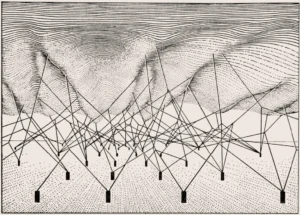
Hong Wang Honored with Prestigious Fields Medal for Groundbreaking Work on 3D Needle Conjectures

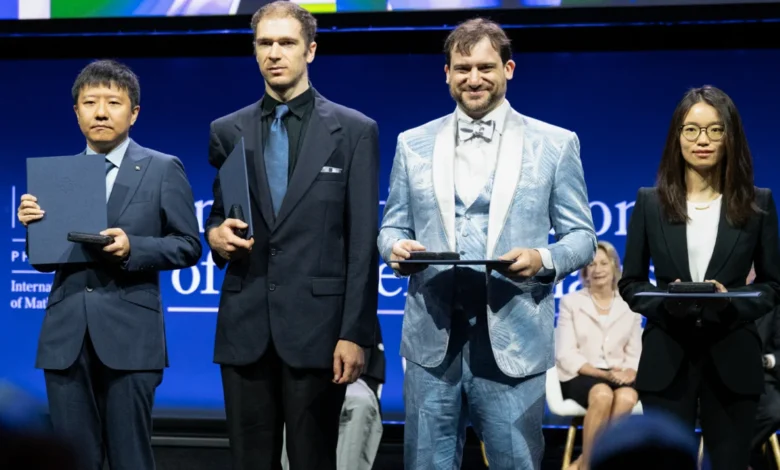
The global mathematics community is abuzz with the announcement of the 2026 Fields Medal laureates, with four exceptionally talented young researchers recognized for their transformative contributions to the field. Among them, the distinguished mathematician Hong Wang, a professor at New York University, has been awarded this coveted honor, marking a significant milestone as she becomes only the third woman in the award’s 90-year history to achieve this recognition. The Fields Medal, often referred to as the "Nobel Prize of Mathematics," is presented every four years to mathematicians under the age of 40 who have made outstanding discoveries. The International Mathematical Union (IMU) officially unveiled the recipients on Thursday, July 23, highlighting Wang’s profound work on a decades-old conjecture concerning the movement of needles in three-dimensional spaces.
A Legacy of Excellence: The Fields Medal
Established in 1936 by the International Congress of Mathematicians, the Fields Medal aims to recognize and encourage outstanding mathematical research. The award is named after John Charles Fields, a Canadian mathematician who bequeathed funds for its creation. Unlike other prestigious awards, the Fields Medal is not solely based on a single breakthrough but rather on a sustained record of significant contributions to mathematical knowledge. The age limit of 40 is deliberate, intended to honor achievements at a critical juncture in a mathematician’s career and to encourage continued exploration and innovation.
The history of the Fields Medal is replete with names that have since become synonymous with mathematical progress. Past recipients have gone on to solve some of the most intractable problems in mathematics, shaping the direction of research for generations. The selection process is rigorous and highly confidential, involving committees of leading mathematicians from around the world who meticulously review nominations and the groundbreaking work of potential candidates. The announcement of the laureates is always a major event in the academic calendar, drawing significant attention from both the mathematical community and the wider scientific world.
Hong Wang’s Illuminating Research
Hong Wang’s award recognizes her exceptional contributions to the field of geometric measure theory, specifically her resolutions related to a long-standing conjecture. While the specifics of her work are highly technical, her research delves into fundamental questions about the geometric properties of objects in high-dimensional spaces. The conjecture she has helped to address deals with the behavior and distribution of geometric objects, in this case, conceptual "needles," within a three-dimensional framework. This area of mathematics has profound implications for understanding complex systems, from fluid dynamics and material science to the theoretical underpinnings of quantum mechanics.
Wang’s approach is characterized by its ingenuity and the elegant application of sophisticated analytical tools. Her ability to connect seemingly disparate mathematical concepts and to develop novel techniques for tackling complex problems has been a hallmark of her research. The resolution of a decades-old conjecture is a testament to her perseverance, intellectual depth, and her significant impact on the ongoing discourse in her field. Her work not only solves a specific problem but also opens new avenues for research, potentially leading to further discoveries in related areas.
A Milestone for Women in Mathematics
The significance of Hong Wang being the third woman to receive the Fields Medal cannot be overstated. Historically, mathematics has been a field where women have faced considerable challenges in achieving recognition and advancing their careers. While progress has been made, the underrepresentation of women in STEM fields, and particularly in higher mathematics, remains a persistent issue. Awards like this serve as powerful inspirations for aspiring female mathematicians, demonstrating that gender is not a barrier to achieving the highest levels of scientific accomplishment.
The first woman to win a Fields Medal was Maryam Mirzakhani in 2014, an Iranian mathematician whose work on the geometry and dynamics of Riemann surfaces garnered widespread acclaim. The second was Karen Uhlenbeck in 2019, who received a special Abacus Medal (a precursor to the modern Fields Medal) for her contributions to geometric analysis and gauge theory. Wang’s inclusion in this esteemed lineage further solidifies a growing trend of recognizing the invaluable contributions of women to mathematics, albeit a trend that still has a long way to go to achieve true parity.
The Journey to Recognition: A Chronology of Excellence
The path to a Fields Medal is rarely a swift one. It is typically the culmination of years, often decades, of dedicated research, rigorous study, and the development of groundbreaking ideas. For Hong Wang, this recognition signifies a sustained period of intellectual rigor and impactful discoveries.
- Early Education and Formation: Like all aspiring mathematicians, Wang’s journey likely began with a strong foundation in mathematics during her undergraduate and graduate studies. The development of her theoretical frameworks and problem-solving skills would have been nurtured during these formative years.
- Postdoctoral Research and Initial Publications: Following her doctoral studies, Wang would have engaged in postdoctoral research, further refining her expertise and publishing her initial findings. This period is crucial for establishing one’s research profile and demonstrating potential for independent contribution.
- Appointment at New York University: Her appointment as a professor at New York University signifies a crucial step in her academic career, providing her with the resources and environment to conduct advanced research and mentor future generations of mathematicians. It is during this professorial period that many significant breakthroughs are made.
- Decades-Long Conjecture: The specific conjecture that Wang has addressed is described as "decades-old." This implies that her work has involved grappling with a problem that has challenged mathematicians for a considerable amount of time, requiring innovative thinking and the development of new mathematical tools.
- International Mathematical Union Announcement (July 23, 2026): The official announcement of the Fields Medal laureates, made by the IMU on this date, marks the public recognition of her monumental achievement. This announcement is preceded by extensive deliberation by the Fields Medal committee.
Supporting Data and Broader Implications
While specific quantitative data related to Hong Wang’s research is highly specialized, the impact of solving long-standing conjectures in mathematics can be profound. These resolutions often:
- Unlock New Fields of Study: The tools and techniques developed to solve a particular problem can be applied to entirely new areas of mathematics, sparking fresh research directions.
- Provide Foundational Understanding: Conjectures, once proven, become theorems, forming the bedrock of new theoretical frameworks and deepening our understanding of fundamental mathematical principles.
- Drive Technological Advancement: Pure mathematics, though seemingly abstract, often finds surprising applications in fields like computer science, cryptography, engineering, and physics. The insights gained from areas like geometric measure theory can, over time, lead to innovations in data compression, image processing, and even the design of new materials.
The implications of Wang’s work on "needles in 3D spaces" could, for example, contribute to a more sophisticated understanding of how complex structures form and behave in physical systems. This could have ripple effects in areas such as:
- Materials Science: Understanding the precise arrangement and behavior of molecular structures at a fundamental level.
- Computational Geometry: Developing more efficient algorithms for modeling and manipulating complex shapes in computer graphics and simulations.
- Physics: Potentially offering new insights into the behavior of particles or fields in higher dimensions, relevant to theoretical physics.
Expert Reactions and Future Outlook (Inferred)
While direct quotes from committee members or other laureates are not available at this early stage, it is standard practice for such announcements to be met with widespread acclaim from the mathematical community. One can infer that leading mathematicians would express:
- Admiration for Wang’s Ingenuity: Commending her unique approach and the elegance of her proofs.
- Recognition of the Conjecture’s Difficulty: Acknowledging the significance of resolving a problem that has eluded many for years.
- Enthusiasm for Future Research: Expressing anticipation for how Wang’s work will influence future mathematical exploration.
- Celebration of Diversity in STEM: Highlighting the importance of recognizing talent regardless of background, with particular emphasis on the growing visibility of women in mathematics.
The awarding of the Fields Medal is not an endpoint but a powerful catalyst. For Hong Wang, it signifies a profound validation of her intellectual contributions and likely serves as an impetus for her to continue pushing the boundaries of mathematical knowledge. For the broader scientific community, it underscores the enduring power of fundamental research and the vital importance of nurturing and celebrating mathematical talent, especially as we navigate an increasingly complex and data-driven world. The continued achievements of mathematicians like Hong Wang are crucial for both advancing pure knowledge and for providing the conceptual frameworks that underpin future technological and scientific breakthroughs.