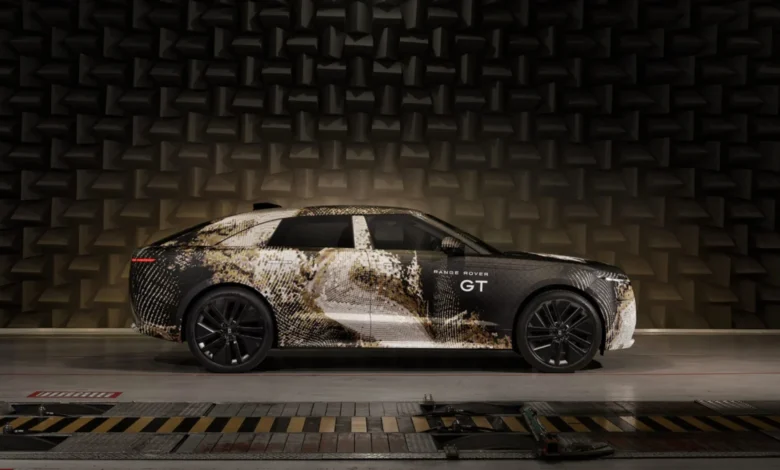
Range Rover, a stalwart of the luxury SUV segment, is charting a bold new course with the introduction of its forthcoming Grand Tourer (GT) model, a vehicle meticulously engineered to reinterpret the brand’s core tenets within a sophisticated, electrified framework. Martin Limpert, managing director of Range Rover, underscored the intensive development behind this innovative venture, stating, "We have spent the last few years working obsessively on the fundamentals of the GT formula, reinterpreted in a sophisticated, uniquely Range Rover way." This new GT is poised to be the most car-like Range Rover ever created, yet it will retain the brand’s unmistakable capability, a feat made possible by its foundation on the advanced Electrified Modular Architecture (EMA). This strategic addition will complement Range Rover’s existing powertrain portfolio, offering a complete spectrum of options tailored to diverse customer needs. Limpert further elaborated on the vehicle’s unique blend, highlighting its "effortless EV performance, first-class long-haul refinement and all-terrain capability" as quintessentially Range Rover, while its "calming interior previews our vision of a modern grand tourer."
JLR’s "Reimagine" Strategy and the Drive Towards Electrification
The introduction of the Range Rover GT is a pivotal manifestation of Jaguar Land Rover’s (JLR) overarching "Reimagine" strategy, announced in February 2021 by CEO Thierry Bolloré. This ambitious plan outlines a profound transformation of the company, focusing on sustainability, electrification, and a refined brand identity. Under "Reimagine," JLR committed to becoming a net-zero carbon business by 2039, with all Jaguar and Land Rover brands offering pure electric power by 2030. The strategy involves significant investment—reportedly £15 billion over five years—into electric vehicles, autonomous technology, connected services, and artificial intelligence. The Range Rover GT, built on the EMA platform, directly embodies this commitment, signaling Range Rover’s expansion beyond its traditional SUV domain into the burgeoning luxury electric grand tourer market. This move is not merely about launching a new model; it represents a strategic realignment to secure JLR’s future relevance and competitiveness in a rapidly evolving automotive landscape dominated by electrification and software-defined vehicles. The EMA platform, alongside the existing Modular Longitudinal Architecture (MLA) and the Jaguar-specific JEA platform, forms the technological backbone of this future-forward vision, enabling distinct product offerings across the JLR brand family while sharing core electrified components.
The Electrified Modular Architecture (EMA): A Foundation for Future Luxury
The EMA platform represents a crucial pillar in JLR’s electrification roadmap. It is the company’s third dedicated electrifiable architecture, designed primarily for smaller to medium-sized electric vehicles, specifically those intended for Range Rover, Defender, and Discovery models. In contrast, the MLA platform currently underpins larger vehicles like the Range Rover and Range Rover Sport, offering flexibility for mild-hybrid, plug-in hybrid, and pure electric powertrains. The JEA platform, meanwhile, is being exclusively developed for Jaguar’s forthcoming generation of electric vehicles, starting with the Type 01. The EMA’s design emphasis is on optimizing packaging for battery-electric powertrains, allowing for greater interior space, improved weight distribution, and enhanced driving dynamics inherent to EVs. While specific technical details regarding the EMA’s battery capacity, motor configurations, and charging speeds for the GT remain under wraps, it is expected to support state-of-the-art battery technology, likely enabling substantial driving ranges exceeding 300 miles (approximately 480 kilometers) and fast-charging capabilities to align with premium EV market expectations. The modularity of EMA allows for scalability in battery size and motor output, providing JLR with the flexibility to develop a range of vehicles with varying performance and range characteristics from a common base. This strategic approach to platform development minimizes engineering costs while maximizing commonality of components, accelerating product development cycles, and enhancing manufacturing efficiency.
Design Philosophy and Interior Innovation: A Modern Grand Tourer Vision
The Range Rover GT’s interior represents a significant departure from the established cabin aesthetics of its SUV counterparts, embracing an "ultraminimalist" design philosophy. This approach aligns with a growing trend in luxury automotive design, where simplicity, clean lines, and integrated technology create a sense of calm and uncluttered space. The focus on a "calming interior" for the GT is particularly pertinent for a grand tourer, where long-distance comfort and a serene environment are paramount. Range Rover’s designers have consciously opted against the inclusion of a third screen for the front passenger, a feature that has gained traction in some luxury rivals. Instead, the GT’s cabin prioritizes driver focus and essential information delivery through two high-resolution OLED screens: one for the main instrument display and another for the central infotainment system. OLED technology offers superior contrast, deeper blacks, and more vibrant colors compared to traditional LCDs, enhancing the visual experience. Furthermore, a head-up display (HUD) will be standard for the GT, projecting critical driving information directly into the driver’s line of sight, minimizing distractions and contributing to a safer, more intuitive driving experience. This selective integration of technology underscores a philosophy of thoughtful innovation, where features are chosen for their functional benefit and ability to enhance the grand touring experience, rather than for sheer quantity.
Regulatory Landscape and the Return of Physical Controls
Despite the minimalist aesthetic, Range Rover’s designers have ensured compliance with increasingly stringent safety regulations that advocate for the retention of physical controls for certain critical functions. This adherence is crucial, particularly in markets governed by organizations like Europe’s Euro NCAP and Australia’s ANCAP. These bodies have recently updated their safety assessment protocols to penalize vehicles that rely solely on touchscreens for functions such as indicators, hazard lights, wipers, and horn. The rationale behind these changes is rooted in driver safety; physical buttons and switches allow drivers to operate essential controls tactilely, without needing to divert their gaze from the road. The haptic feedback and muscle memory associated with physical controls significantly reduce cognitive load and reaction time in critical situations. Range Rover’s commitment to incorporating these physical controls within an otherwise ultraminimalist design demonstrates a pragmatic approach to luxury vehicle development, balancing aesthetic desires with functional safety requirements. This thoughtful integration prevents the GT from falling afoul of safety ratings, which are increasingly influential in consumer purchasing decisions and market competitiveness. The fact that Range Rover explicitly satisfies these regulations underscores a commitment to both innovative design and uncompromising safety standards.
Range Rover’s Brand Evolution and Market Positioning
The Range Rover GT signifies a bold evolution for the brand, historically synonymous with opulent, go-anywhere SUVs. By entering the grand tourer segment, Range Rover is strategically expanding its appeal to a new demographic of luxury buyers who prioritize on-road performance, refinement, and cutting-edge design, alongside the inherent versatility and prestige associated with the Range Rover badge. This move positions Range Rover not just as a creator of ultimate SUVs, but as a broader luxury mobility provider capable of delivering diverse high-end experiences. The GT’s promise of "most car-like" dynamics, combined with "effortless EV performance," suggests a vehicle designed to challenge established luxury electric GTs like the Porsche Taycan, Mercedes-AMG EQS, and Lucid Air. Its unique selling proposition will undoubtedly lean on the Range Rover brand’s reputation for peerless luxury, sophisticated design, and a surprising degree of all-terrain capability – even if the latter is reinterpreted for a grand tourer context. This expansion reflects a broader trend among premium automotive brands to diversify their portfolios to capture new market segments and embrace electrification as a core brand pillar.
The Broader Grand Tourer Segment and Competition
The luxury grand tourer segment, particularly within the electric vehicle landscape, is becoming increasingly competitive. Traditionally dominated by brands like Aston Martin, Bentley, and Ferrari, the segment is now seeing an influx of high-performance electric offerings from mainstream luxury manufacturers and new EV players alike. The Range Rover GT will enter a market where rivals offer blistering acceleration, sophisticated infotainment, and luxurious interiors. However, Range Rover’s unique heritage of fusing luxury with genuine capability, even if subtle in a GT, could provide a compelling differentiator. The "all-terrain capability" mentioned for the GT, while not suggesting extreme off-roading, implies a robustness and versatility perhaps unmatched by its direct competitors, offering peace of mind across diverse driving conditions, from pristine highways to less-than-perfect country roads. This blend of on-road prowess with an underlying layer of Range Rover resilience could carve out a distinctive niche for the GT.
Chronology and Future Outlook for JLR
The development of the Range Rover GT is part of a meticulously planned timeline for JLR’s future product launches. The "Reimagine" strategy initiated in early 2021 laid the groundwork for this accelerated electrification. The MLA platform, already in use for current Range Rover models, demonstrated the company’s ability to integrate diverse powertrains. The EMA platform’s emergence now enables a dedicated electric future for a wider range of models. The parallel development of the JEA platform for Jaguar’s Type 01, also a four-door grand tourer expected to debut later this year, highlights JLR’s strategic intent to launch distinct yet technologically aligned electric luxury vehicles across its brands. More concrete details about the Range Rover GT, including its exterior design (currently shrouded in camouflage), full specifications, and market launch dates, are anticipated to be revealed later this year. This phased disclosure strategy builds anticipation and allows the company to fine-tune its messaging as it approaches the vehicle’s official unveiling. The successful launch of the GT will not only be a testament to JLR’s engineering prowess but also a critical indicator of its ability to adapt and thrive in the rapidly evolving landscape of luxury electric mobility, solidifying its position as a leader in sustainable modern luxury.