Justice Department Backs Paramount in High-Stakes $1.88 Billion Antitrust Bond Battle Over Warner Bros. Discovery Merger

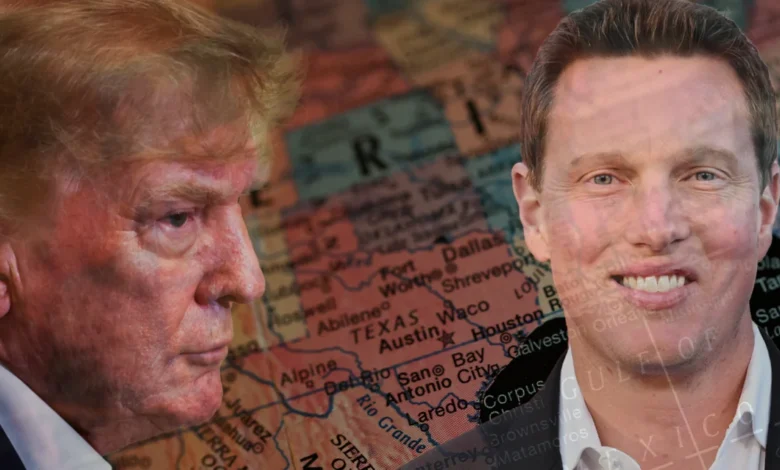
The United States Department of Justice has formally intervened in the high-stakes $1.88 billion bond dispute between David Ellison’s Paramount and a coalition of state attorneys general, lending critical weight to the corporate side of the massive antitrust litigation surrounding the proposed $111 billion merger with Warner Bros. Discovery.
In a 17-page Statement of Interest filed in federal court on Tuesday, the DOJ—now operating under the administration of Attorney General Donald Trump—disputed the legal standing and arguments raised by state leaders, including California Attorney General Rob Bonta and New York Attorney General Letitia James. The federal filing asserts that the multi-billion-dollar bond requirement requested by Paramount is legally justified, designed to ensure that plaintiffs have adequate financial stakes in the litigation while safeguarding defendants from the potentially ruinous financial fallout of improperly issued injunctions.
The intervention marks a pivotal escalation in an already complex legal war. As the litigation marches toward a scheduled trial date on March 2, 2027, the intersection of federal regulatory policy, state-level antitrust enforcement, and astronomical financial penalties has created one of the most contentious corporate battles in modern media history.
Background and the Genesis of the Merger
The underlying controversy stems from the blockbuster merger agreement between Paramount and Warner Bros. Discovery, a historic consolidation valued at an estimated $111 billion. The mega-deal aims to combine two pillars of American entertainment, promising massive library integrations, streaming platform synergies, and enhanced global competitiveness.
However, the transaction immediately triggered fierce opposition from regulatory bodies and labor organizations. A coalition of a dozen blue states, spearheaded by California’s Rob Bonta and New York’s Letitia James, alongside the Writers Guild of America (WGA), filed sweeping antitrust lawsuits to block the merger. The plaintiffs argue that the consolidation would substantially lessen competition in the media and entertainment sectors, ultimately harming consumers through higher subscription costs, fewer production opportunities for creative talent, and widespread industry layoffs.
To maintain the status quo while the litigation proceeds, preliminary injunctions have been sought and partially implemented, bringing corporate integration efforts to a grinding halt. This judicial slowdown, however, has triggered severe financial consequences for Paramount under the terms of its contract with Warner Bros. Discovery.
The Financial Pressure Points: Ticking Fees and Extraordinary Losses
At the center of Paramount’s push for a nearly $2 billion bond is the acute financial bleeding the company claims it is suffering due to court-ordered delays. Under the merger agreement, a "ticking fee" of $7 million per day is scheduled to kick in. This provision means Paramount faces ongoing liabilities exceeding $635 million per quarter while the litigation remains unresolved.
Compounding the financial pressure, Paramount has publicly weighed moving its corporate headquarters out of California, pointing to what leadership describes as an increasingly hostile regulatory and business climate in the state. The Melrose Avenue-based studio contends that the coalition of state attorneys general and labor unions must bear financial responsibility for these mounting losses if their legal challenges ultimately prove meritless.

Paramount’s legal team argues that the extraordinary financial losses accumulating between now and the scheduled March 2027 trial necessitate a robust financial undertaking from the plaintiffs. Without a substantial bond, the studio argues, private parties and state officials can indefinitely stall multi-billion-dollar corporate transactions with relative impunity, leaving defendants defenseless against structural financial harm.
The Department of Justice Weighs In
The DOJ’s intervention provides a formal legal framework supporting Paramount’s demand for the bond. Citing Section 16 of the Clayton Antitrust Act, the federal government argued that the statute explicitly contemplates financial protections for entities targeted by preliminary injunctions.
“The bond requirement forces parties to have skin in the game, and also provides a measure of protection to defendants who were ultimately found to be wrongly enjoined,” the DOJ stated in its filing, drawing upon established legal precedents.
The 17-page brief, submitted to U.S. District Judge Araceli Martínez-Olguín, elaborates on the statutory interpretation of a "proper bond." The feds argue that the plain meaning of the statute requires an amount that is "fit, suitable, adapted, and correct to compensate the defendant for damages for an injunction improvidently granted."
While the federal government acknowledges that Congress established a complementary system of antitrust enforcement divided between federal regulators and private or state-level plaintiffs, it emphasizes that this framework was never intended to be an arena of absolute equals when it comes to financial liability. By stepping into the fray, the DOJ has effectively signaled alignment with the corporate defendants, adding considerable momentum to Paramount’s defense strategy.
Legal Next Steps and the Path to Trial
The immediate battlefield shifts to a federal courtroom in Oakland, where Judge Martínez-Olguín is expected to preside over a crucial hearing regarding the bond debate. Representatives for California Attorney General Rob Bonta’s office have not yet issued public responses to the federal filing, maintaining silence as legal teams prepare oral arguments.
The timeline leading up to the trial is packed with critical legal milestones:
- September 24: A high-stakes court hearing focusing squarely on the legitimacy and magnitude of the requested $1.88 billion bond. State attorneys general and the WGA have previously dismissed Paramount’s bond demands as aggressive corporate posturing.
- October 1: The scheduled activation date for the $7 million-per-day ticking fee outlined in the Warner Bros. Discovery contract, exponentially raising the financial stakes for Paramount.
- Late October: Court-orchestrated settlement talks are scheduled to resume, offering a potential off-ramp for the warring parties, though insiders remain skeptical of a breakthrough given the entrenched positions of the state AGs.
- Pending SCOTUS Intervention: Observers continue to monitor the potential for an appeal or intervention reaching the United States Supreme Court, given the sweeping constitutional and statutory questions surrounding state-level antitrust enforcement of interstate corporate mergers.
- March 2, 2027: The formal commencement date for the federal antitrust trial that will ultimately determine the legal fate of the merger.
Broader Implications for Corporate Mergers
The outcome of this jurisdictional tug-of-war carries profound implications for American corporate law and antitrust enforcement. If federal courts side with Paramount and the DOJ by enforcing multi-billion-dollar bonds on state-level plaintiffs, it could fundamentally alter how state attorneys general approach national corporate mergers. Requiring public entities or allied unions to shoulder billions in potential liability could deter speculative or politically driven litigation, while simultaneously offering robust shields to merging enterprises facing protracted legal delays.
Conversely, a ruling favoring Bonta, James, and the WGA would reaffirm the autonomy of state regulators and labor advocates to challenge corporate consolidation without the immediate threat of crippling financial encumbrances. As Judge Martínez-Olguín prepares to hear arguments, the intersection of executive branch legal philosophy, state regulatory authority, and Hollywood mega-deals remains under intense national scrutiny.