Illinois Powers Up First NEVI-Funded EV Charging Station in Casey as State Expands Charging Infrastructure

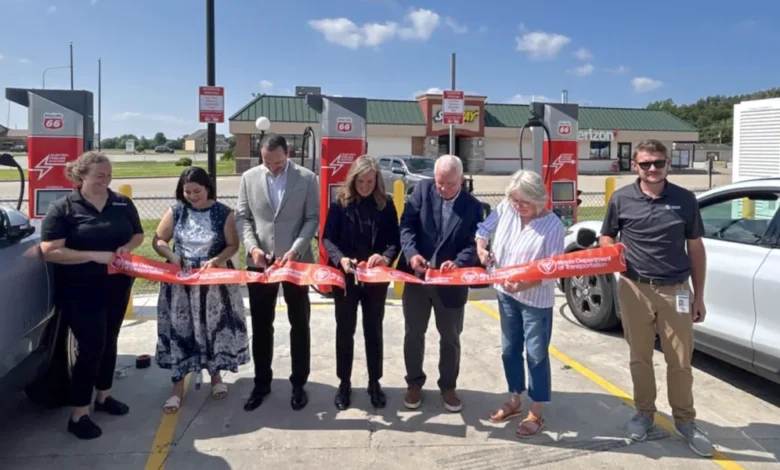
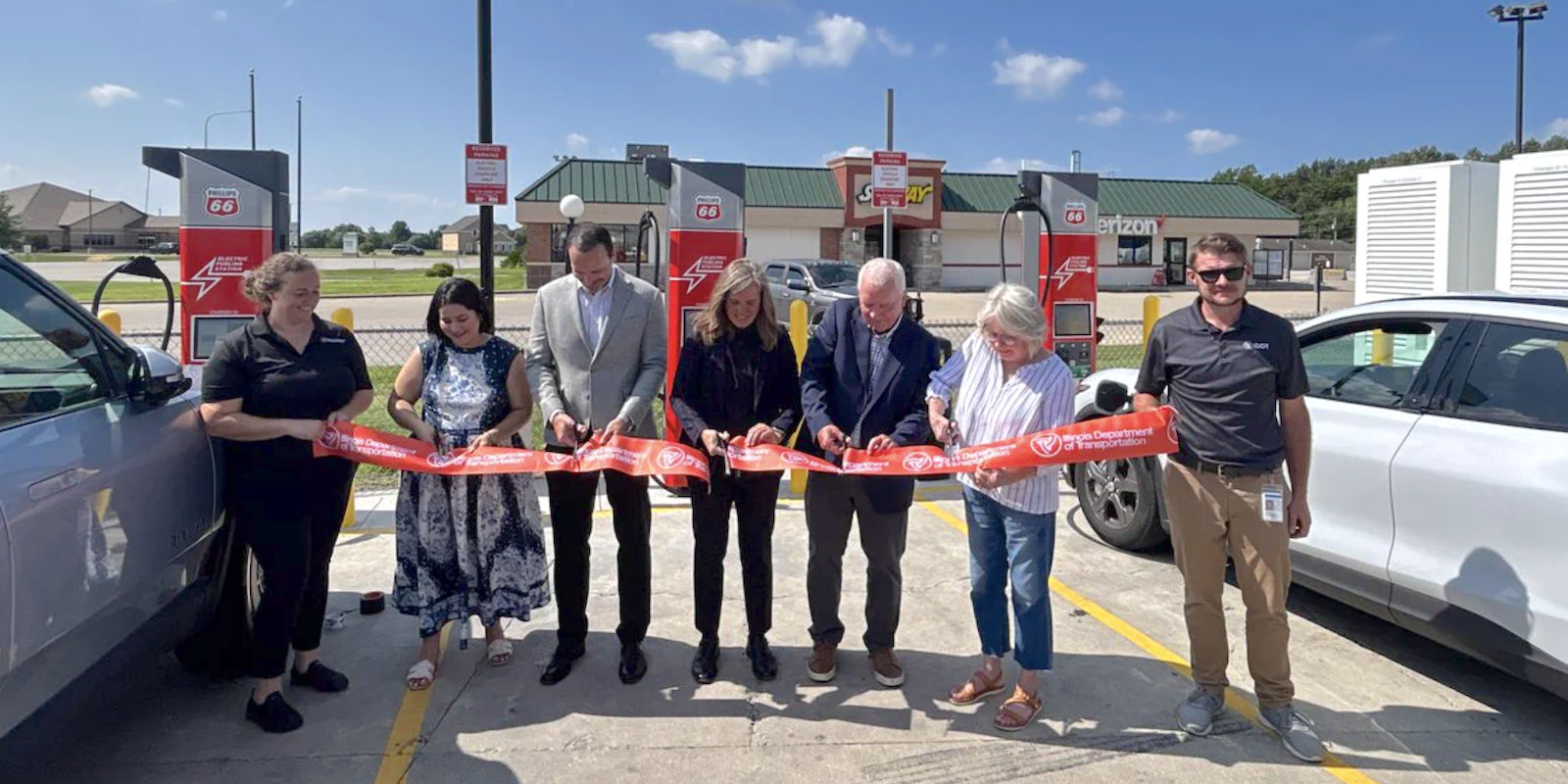
The Illinois Department of Transportation (IDOT) officially ushered in a new era of regional connectivity this week with the ribbon-cutting of the state’s first electric vehicle (EV) charging station funded through the federal National Electric Vehicle Infrastructure (NEVI) program. Located at a Phillips 66 Mach 1 station in Casey, Illinois, the new facility represents the inaugural milestone in a multi-year, federally backed initiative to eliminate range anxiety and fortify the state’s position as a leader in the Midwestern green energy transition.
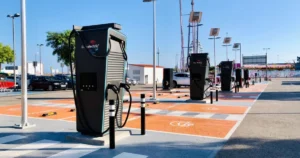
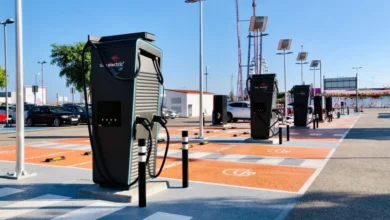
The Casey station, situated strategically on Illinois 49 near the Interstate 70 interchange, features four high-speed direct-current (DC) fast charging ports. These units are integrated into the Electrify America network, currently one of the largest open ultra-fast charging networks in the United States. Each port is capable of delivering up to 350 kW of power, a specification that allows most modern electric vehicles to replenish their batteries from 10% to 80% in approximately 15 to 30 minutes. The deployment of this hardware was made possible through a competitive grant of $854,641 awarded to Phillips 66, marking a significant partnership between traditional energy providers and the burgeoning electric mobility sector.
Strategic Significance of the Casey Installation
The selection of Casey for the state’s first NEVI-funded site is not incidental. Located in Clark County, Casey serves as a vital transit point for travelers moving between St. Louis, Missouri, and Indianapolis, Indiana. By placing ultra-fast chargers at this junction, IDOT is addressing one of the primary hurdles to EV adoption: the "charging desert" often found in rural corridors between major metropolitan hubs.
Transportation Secretary Gia Biagi emphasized that the project is a cornerstone of Governor JB Pritzker’s broader environmental and economic agenda. The administration has set an ambitious goal of seeing one million electric vehicles on Illinois roads by 2030. "These new chargers are an important step forward in making Governor Pritzker’s EV goals a reality, while creating economic opportunity by connecting Illinois communities to a national network of stations," Biagi stated during the ceremony.

The economic implications for rural Illinois are particularly noteworthy. For decades, small towns along interstate highways have relied on "stop-and-shop" economics. As the automotive industry shifts away from internal combustion engines, these communities face the risk of being bypassed if they do not adapt. Secretary Biagi noted that there has been significant interest from rural municipalities that view EV charging stations as a way to capture "dwell time"—the 20 to 30 minutes a traveler spends waiting for a charge—which translates into increased foot traffic for local diners, retail shops, and convenience stores.
The NEVI Program Framework and Illinois’ Allocation
The NEVI program was established by the 2021 Bipartisan Infrastructure Law (BIL), which allocated $5 billion nationally to create a coast-to-coast network of 500,000 electric vehicle chargers. The program’s primary mandate is to ensure that fast-charging stations are available at least every 50 miles along designated Alternative Fuel Corridors and located no more than one mile from a highway exit.
Illinois is slated to receive approximately $149 million over five years from the NEVI program. The rollout is being managed by IDOT in phases, with the initial focus on these primary interstate corridors before expanding to more localized state routes. The Casey station serves as the proof-of-concept for this massive infrastructure overhaul.
The state’s strategy involves a competitive bidding process where private entities—ranging from gas station chains and hotels to municipal governments—apply for grants to cover the majority of the installation and hardware costs. In return, the awardees must ensure the chargers meet strict federal uptime requirements (97% or higher) and remain accessible to the public 24/7.
Expanding the Network: Round 3 Funding and New Awardees
Coinciding with the Casey opening, IDOT announced a fresh infusion of $23.5 million in "Round 3" NEVI funding. This latest tranche of capital is earmarked for the construction of 140 new EV charging ports across 29 different locations. Each of these sites is required to host a minimum of four DC fast-charging ports to ensure that multiple travelers can charge simultaneously without significant wait times.
To date, through three rounds of funding, IDOT has conditionally awarded more than $67 million to support 91 charging stations. When these projects are completed, they will add a total of 489 public EV charging ports to the state’s inventory. The geographic diversity of the latest awardees illustrates a concerted effort to reach every corner of the state, from the densely populated Chicago suburbs to the southern tip of Illinois.
Below is a breakdown of several key awardees from the most recent funding cycle:
- Champaign County: Universal EV was awarded $641,600 to install chargers at the AmericInn by Wyndham in Urbana, serving the University of Illinois area.
- Cook County: Heartland Charging Services received two major grants: $1,152,068 for the Arlington Heights Memorial Library and $1,360,605 for the Village of Oak Park.
- Kane County: The City of Aurora will receive $1,350,295 for a site on North Broadway, managed by Heartland Charging Services.
- Sangamon County: Universal EV will bring fast charging to the state capital region with a $644,418 grant for the Days Inn by Wyndham in Springfield.
- St. Clair County: A $656,320 grant was awarded for a location at a Subway restaurant in Lebanon, providing a critical link in the Metro East area near St. Louis.
- Will County: A commercial site in Mokena received $1,339,515 to bolster infrastructure in the high-traffic southwest suburbs.
Technical Requirements and User Experience
A critical component of the NEVI program is the standardization of the user experience. Historically, EV charging has been fragmented by different plug types and payment systems. The Illinois NEVI sites are designed to be "future-proof." While the Casey station currently utilizes the CCS (Combined Charging System) standard common to many non-Tesla EVs, the program is adaptable to the industry-wide shift toward the North American Charging Standard (NACS).
Furthermore, the 350 kW power rating at the Casey site is significantly higher than the federal minimum requirement of 150 kW per port. By opting for higher power output, Illinois is preparing for the next generation of EV battery technology, which will be capable of even faster charging speeds. This foresight is intended to prevent the infrastructure from becoming obsolete within a few years of installation.
The integration with the Electrify America network also ensures a streamlined payment process. Drivers can use mobile apps, credit card readers at the pedestal, or "Plug & Charge" technology, where the vehicle communicates directly with the charger to handle billing automatically upon connection.

Broader Policy Implications: CEJA and the 2030 Vision
The NEVI rollout is a physical manifestation of the Climate and Equitable Jobs Act (CEJA), signed into law by Governor Pritzker in 2021. CEJA set Illinois on a path toward 100% clean energy by 2050 and included provisions to incentivize EV adoption through $4,000 consumer rebates and significant investments in workforce development.
From a policy perspective, the state is attempting to solve the "chicken or the egg" dilemma of electric mobility. Consumers are often hesitant to purchase EVs without a robust charging network, while private companies are hesitant to build chargers without a large base of EV owners. By utilizing federal NEVI funds to de-risk the initial investment for private partners like Phillips 66 and Universal EV, the state is effectively jump-starting the market.
Analysis of the program suggests that the economic impact extends beyond the immediate construction jobs. The long-term maintenance of these high-tech stations requires a specialized workforce of "EVSE" (Electric Vehicle Supply Equipment) technicians. Illinois community colleges are already beginning to align their vocational programs with these needs, ensuring that the transition to green energy also serves as a driver for high-wage employment.
Chronology of Illinois’ EV Progress
The path to the Casey ribbon-cutting has been a multi-year journey involving federal, state, and private coordination:
- November 2021: The Bipartisan Infrastructure Law is signed, creating the NEVI program.
- September 2022: The Federal Highway Administration (FHWA) approves Illinois’ initial Electric Vehicle Infrastructure Deployment Plan.
- 2023: IDOT opens the first two rounds of competitive bidding, receiving hundreds of applications from across the state.
- Early 2024: Construction begins at the Casey Mach 1 site, involving utility upgrades to handle the high-voltage demands of 350 kW chargers.
- June 2024: The Casey station is energized and undergoes testing on the Electrify America network.
- July 2024: The official ribbon-cutting ceremony takes place, marking the first operational NEVI site in the state.
Conclusion and Future Outlook
The activation of the Casey charging station is merely the beginning of a massive logistical undertaking. As Round 3 projects move into the construction phase, Illinois residents can expect to see a rapid proliferation of high-speed chargers along I-55, I-57, I-80, and I-90.

The success of the program will ultimately be measured by its reliability and its ability to spur private investment. If the Casey station and its successors can maintain high uptime and prove profitable for host sites, the transition to electric transport in the Prairie State will likely accelerate ahead of the 2030 target. For now, the four charging ports in Casey stand as a symbol of a state in transition, bridging the gap between its industrial past and a sustainable, electrified future.