House GOP Leadership Successfully Blocks Rep. Thomas Massie’s Impeachment Resolution Against Secretary of War Pete Hegseth

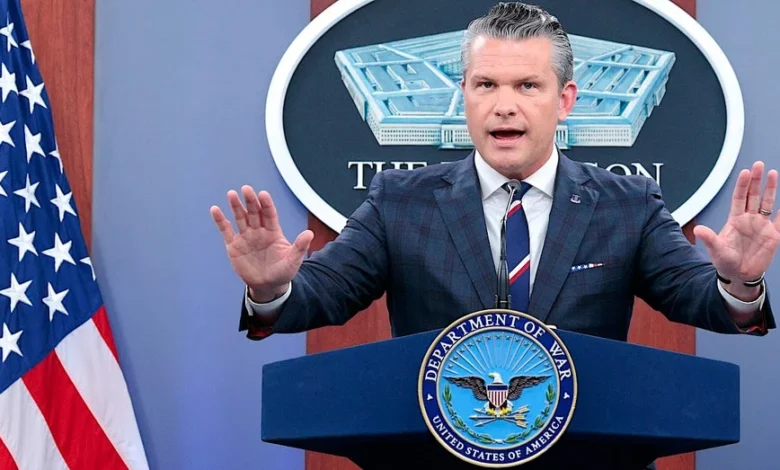
U.S. Secretary of War Pete Hegseth has successfully avoided a high-stakes impeachment vote in the House of Representatives after Republican congressional leadership orchestrated a procedural maneuver to derail a resolution introduced by outgoing Representative Thomas Massie, R-Ky.
The legislative showdown concluded late Tuesday evening when the House voted 211-204 to refer Massie’s sweeping impeachment articles to the House Judiciary Committee. This parliamentary action effectively killed the measure in its tracks, preempting a definitive floor vote that had been widely anticipated for Wednesday. The vote represented a final legislative victory for outgoing House Speaker Mike Johnson, R-La., who navigated a politically sensitive chamber landscape complicated by recent midterm election outcomes and subsequent member absences.
The legislative maneuver highlights deep fractures within the Republican caucus concerning executive branch overreach, constitutional war powers, and the appropriate thresholds for utilizing the extraordinary constitutional remedy of impeachment against a Cabinet official.
Background Context and the Eight Articles of Impeachment
The legislative clash centers on a sprawling, eight-count impeachment resolution filed by Representative Massie. The text accuses Secretary Hegseth of multiple "high crimes and misdemeanors," targeting several controversial actions and policy implementations undertaken by the Department of War during his tenure.
Chief among Massie’s grievances is the administration’s military campaign in Iran, which the Kentucky Republican argues was waged without explicit, constitutional congressional authorization under Article I, Section 8 of the U.S. Constitution. The resolution also takes aim at U.S. military strikes targeting suspected drug-trafficking vessels in the Caribbean Sea, questioning the legal framework and operational protocols utilized by the Department of War in those regional interdictions.
Furthermore, the articles cite Hegseth’s sharp public and institutional retaliation against Senator Mark Kelly, D-Ariz., following a controversial video message released by the lawmaker encouraging active-duty service members to disregard what he characterized as "unlawful orders." Massie and his supporters argued that Hegseth’s response constituted an abuse of executive power and a violation of civil-military norms.
Despite mounting criticisms from various factions within Washington, Massie’s decision to force a privileged resolution—a procedural mechanism allowing a member to bypass standard committee hurdles and compel floor consideration within two legislative days—put Republican leadership on immediate defense.
Chronology of the Legislative Showdown
The events leading up to Tuesday night’s vote unfolded rapidly against the backdrop of a transitioning legislative calendar:
- Monday: Rep. Thomas Massie formally files the privileged resolution containing eight articles of impeachment against Secretary of War Pete Hegseth, setting a ticking clock for mandatory floor action within 48 hours.
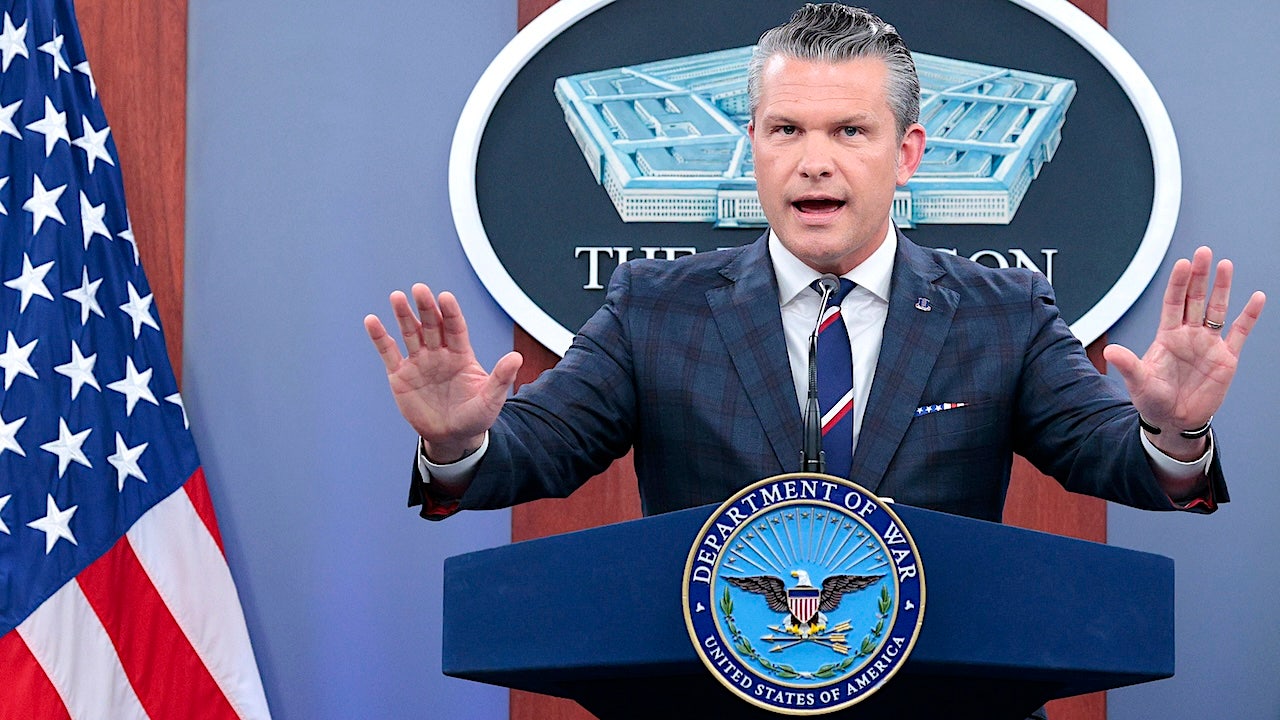
- Tuesday Morning: Secretary Hegseth holds a sharp, highly publicized news conference at the Pentagon, aggressively pushing back against the impeachment effort and personally criticizing Representative Massie.
- Tuesday Afternoon: House Republican leadership scrambles to assess attendance numbers amid concerns that post-midterm absences could leave the majority vulnerable, risking an accidental floor victory for the impeachment proponents. Caucus meetings at the Capitol Hill Club and behind closed doors focus on solidifying party discipline.
- Tuesday Evening: The House convenes for the crucial procedural vote. The motion to refer Massie’s resolution to the House Judiciary Committee passes by a narrow 211-204 margin, securing the defeat of the measure. All participating Democrats vote to advance the impeachment push, while the Republican caucus—with the sole exception of Massie—unites to defeat it.
The Battle Over Floor Attendance and Caucus Concerns
Heading into Tuesday’s vote, leadership anxiety was palpable. Following a grueling midterm election cycle the previous week, numerous lawmakers had returned to their home districts or experienced travel delays, leading to fears of low attendance among the GOP majority.
Privately, several Republican lawmakers had warned that if Democratic attendance remained robust while the GOP benches were thinly populated, the mathematical reality on the floor could permit Massie’s resolution to advance past the initial procedural hurdles, potentially triggering a historic impeachment vote.
However, Speaker Johnson and senior whip teams successfully coordinated a unified block of votes. "I’m going to vote no," Representative Jake Ellzey, R-Texas, told Fox News Digital ahead of the roll call. Expressing frustration over the timing and substance of the effort, Ellzey added, "I don’t know if any Republicans other than Massie will be in support of his articles of impeachment, but I don’t even know how many Republicans will be here by the time of the vote. The real question is how short are we. Numerically, if they’re all here and we’re not, what happens then?" Ellzey ultimately characterized the entire initiative as a "ridiculous waste of time."
Secretary Hegseth’s Defense and Public Condemnation

Addressing reporters directly at the Pentagon on Tuesday morning, Secretary Hegseth did not mince words regarding the impeachment push, framing it as a personal vendetta rather than a legitimate constitutional check.
"What one disgruntled and defeated congressman is attempting is not oversight, and it’s not accountability," Hegseth declared. "It’s a political spectacle, a personal manifesto driven by ego and resentment."
Hegseth’s defense centered on the argument that the grievances outlined by Massie represented routine policy disagreements and executive branch decision-making standard to modern presidential administrations, rather than the constitutionally mandated threshold of "high crimes and misdemeanors."
Divisions Within the Republican Party
Even among congressional Republicans who harbor deep reservations regarding the Trump administration’s foreign policy decisions and military engagements, Massie’s resolution failed to garner traction. Many members drew a sharp distinction between ideological opposition to executive policies and the weaponization of the impeachment power.
Representative Warren Davidson, R-Ohio, who has frequently expressed skepticism regarding White House military actions in the Middle East, voiced opposition to the impeachment push while acknowledging broader constitutional debates over war powers.
"I think it’s an effort to scapegoat Pete Hegseth for Congress shirking their own duty and, frankly, the president taking action that, in my view, is unconstitutional, but it’s also not unprecedented," Davidson said.
Davidson argued that holding a Cabinet secretary individually liable for overarching policy decisions dictated by the commander-in-chief sets a dangerous and legally untenable precedent. "What would be unprecedented is to hold the secretary of defense accountable for a decision the president makes. Or, frankly, it would have been unprecedented for the secretary of defense to kind of break ranks on something that is clearly not unprecedented in terms of what has become the standard operating procedure for administrations going back to the Korean War," he added.

Similarly, Representative Don Bacon, R-Neb., a prominent internal critic of Hegseth’s leadership style and administrative appointments, distanced himself from the legislative effort. "I’m personally not a fan of the secretary. I don’t think he was the right guy in the job," Bacon told reporters. "But, also, when you read Massie’s impeachment, I don’t agree with it."
Broader Impact and Political Implications
The failed impeachment effort illuminates the delicate and often volatile dynamic between Capitol Hill and the executive branch, particularly regarding the enforcement of the War Powers Resolution and legislative oversight. While the resolution was decisively blocked, the episode underscores persistent legislative friction surrounding executive military operations initiated without direct congressional declarations of war.
For Secretary Hegseth, the defeat of the resolution provides immediate political insulation, allowing the Pentagon to maintain focus on ongoing defense priorities without the direct distraction of a protracted congressional inquiry. However, the unified support from House Democrats signals that oversight committees will likely continue aggressive investigations into Department of War operations as the new congressional term approaches.
As Speaker Johnson prepares to hand over leadership responsibilities following the midterm turnover, securing the defeat of the resolution marks one of the final procedural battles of his tenure—underscoring the persistent difficulty of maintaining party discipline in a closely divided legislative chamber.