May El-Toukhy Claims Venice Golden Lion for Woman Unknown as Festival Concludes with Historic Wins, Political Discourse, and Tributes to Cinema Icons

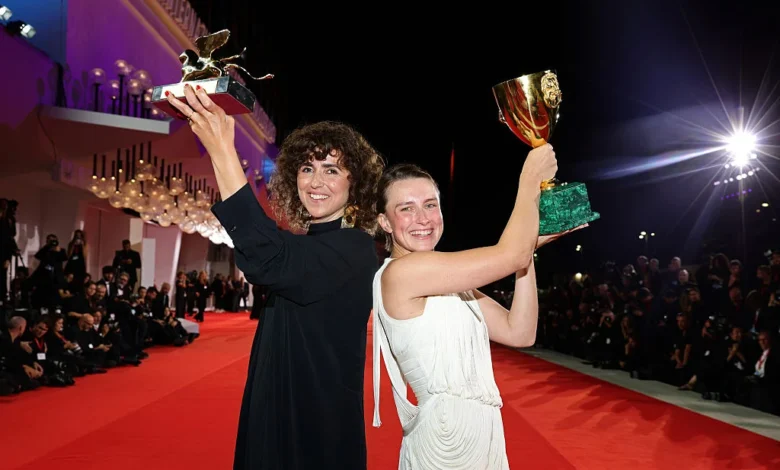
The 83rd Venice International Film Festival concluded its prestigious run with a dramatic awards ceremony that blended artistic triumphs with urgent geopolitical discussions and poignant industry reckonings. Danish filmmaker May El-Toukhy captured the festival’s highest honor, the Golden Lion, for her historical drama-thriller Woman Unknown. However, her victory was immediately overshadowed by discussions surrounding the persistent systemic barriers facing female directors in the global film industry.
Judged by a panel led by acclaimed actor and director Maggie Gyllenhaal, this year’s competition showcased a diverse slate of international cinema, balancing postwar psychological thrillers with contemporary political landscapes and deeply personal portraits of resilience. While the Lido celebrated cinematic excellence, the red carpet and press rooms also served as platforms for impassioned commentary on international conflicts, censorship, and the loss of foundational figures within independent cinema.
A Historic Golden Lion and a Candid Industry Critique
May El-Toukhy’s victory with Woman Unknown—a tense, atmospheric exploration of sexual shame and political paranoia set in postwar Denmark—marked a career milestone for the director. Yet, addressing the press following her win, El-Toukhy admitted that she was far from surprised by pundits who labeled her victory an upset.
"It doesn’t surprise me that some people would say, ‘Oh, did she get it?’ Because that’s part of everyday life as a woman in this industry," El-Toukhy stated plainly.
The director revealed that prior to the festival’s lineup announcement and throughout the early prognostications, Woman Unknown was routinely placed at the very bottom of prediction lists. Out of dozens of titles tracking for top honors, her film was consistently ranked 39th or 40th by industry forecasters.
El-Toukhy pointed to what she views as a deeply entrenched systemic issue within film criticism and festival curation. Rather than competing broadly across the entire slate of filmmakers, she felt relegated to a tokenized sub-category where women compete exclusively against a handful of other women for visibility.
"When I look to those lists, we would be four women, and I would feel that I had to compete with those four women and not my male peers," she explained. "That’s a systemic issue, and that’s something that all of us need to think about, including journalists, the media, my male peers. How can we make it easier for women to be part of this industry? I don’t have the feeling that my male colleagues aren’t interested in having women in the industry, but still, there are structures in place that we haven’t found a way to solve."
Despite the pre-festival skepticism, Woman Unknown thoroughly captivated the Venice jury. Jury President Maggie Gyllenhaal lauded the feature during the closing remarks, describing it as "a brilliantly made movie that felt like a laser beam."
Adding to the film’s triumph, Danish actress Mathilde Arcel secured the Volpi Cup for Best Actress for her gripping performance as a woman hiding dark secrets while desperately attempting to evade the volatile threat of mob justice. It is a rare occurrence in Venice Film Festival history for a single film to claim both the Golden Lion and an individual acting prize. Gyllenhaal clarified that the rare double-win was made possible by a unanimous jury vote for Arcel’s leading turn, cementing the film’s undeniable artistic impact on the competition.
Geopolitical Tensions and Cinema: The Case of Naza
Beyond historical drama, the 2026 Venice lineup leaned heavily into contemporary geopolitical realities, sparking intense debates both on and off the screen. Among the most talked-about winners of the evening was Naza, which captured the Special Jury Prize. The hard-hitting feature investigates the Israel Defense Forces’ (IDF) military actions and killings of civilians in Gaza.
Directors Yuval Abraham and his collaborators used their time in the spotlight to address the film’s heavy subject matter and the official pushback it has already received from military authorities. Speaking to reporters after accepting the award, Abraham emphasized the vital importance of screening the project domestically within Israel.
"It’s definitely important to show it to Israelis in as wide a way as possible. I hope we will be able to," Abraham said. "It’s important as Israelis that we recognize what our government has done in Gaza."
Addressing criticisms leveled against the production by the IDF, Abraham defended the rigorous journalistic standards underpinning the film, noting that the project was developed in partnership with The Guardian. He characterized the military’s defensive statements as a deliberate avoidance of facts on the ground.
"To me, it seems like an attempt to not face reality," Abraham continued. "In just these 10 days of the festival, Israel, our country, has killed multiple Palestinian children in Gaza. This is the reality described by Palestinian journalists from the very start. And I think it’s important we talk about it."
The inclusion and recognition of Naza underscored the festival’s historical willingness to platform challenging, politically volatile cinema that directly confronts state power and humanitarian crises, amplifying voices from regions marked by active conflict.
Orizzonti Section Honors and a Tearful Tribute to Jeremy Thomas
In the Orizzonti sidebar competition—which highlights cutting-edge aesthetic and expressive trends in international cinema—Italian actor Riccardo Scamarcio took home the Best Actor prize for his compelling work in The House of the Monkey. However, Scamarcio’s press appearance was dominated by deep grief following the passing of legendary British independent producer Jeremy Thomas, who died the night before the ceremony.
Visibly emotional and fighting back tears, Scamarcio dedicated his thoughts to the late producer, with whom he had previously collaborated. Thomas, a towering figure in global cinema known for championing auteur-driven projects and taking massive artistic risks, left an indelible mark on the filmmakers he worked with.
"He was a pirate. He was a free man, a great man of cinema," Scamarcio said of Thomas. "He made movies that are part of the history of cinema, and he behaved like an independent producer, like the father of the movie he produces, protecting directors and creators. But he did so protecting the freedom of the artists to express themselves. When I heard the news this morning, I was glad to come to Venice to get my award, but I cried for Jeremy."
Meanwhile, the Orizzonti Best Actress award was presented to Iranian actress Laleh Marzban for her powerful performance in Falling House. Marzban’s role has been widely praised for its uncompromising critique of government oppression and entrenched patriarchal structures within Iran.
When pressed by international journalists during the press conference regarding how the film might navigate strict domestic censorship and be received in her homeland, Marzban offered a measured, courageous perspective on artistic resistance.
"This question is very important for me as an actress, and as all other women in Iran, whether they be doctors, artists, whatever profession women can perform, we can only make one step at a time, one step towards our objective," Marzban reflected. "If we give our small contribution, maybe we will reach our objective. I have made my small part. I have given my contribution. I really hope many other people can make small steps towards our common objective."
Broader Impact and Industry Implications
The conclusion of the 83rd Venice International Film Festival leaves behind a complex legacy. By awarding its highest honor to May El-Toukhy’s Woman Unknown, the festival has pivoted toward rewarding meticulously crafted historical narratives that resonate with modern sociopolitical anxieties. Yet, El-Toukhy’s candid remarks regarding the marginalization of female directors in predictive metrics and critical circles serve as an uncomfortable reminder that gender parity remains an elusive goal across the festival circuit.
Furthermore, the prominent recognition afforded to politically charged works like Naza and Falling House demonstrates that international film festivals remain crucial global town squares. In an era marked by geopolitical polarization, censorship, and systemic inequality, Venice has once again proven that cinema is not merely a vehicle for escapism, but a vital arena where uncomfortable truths are debated, memorialized, and brought into the light.