Elon Musk abruptly ends legal battle against Apple while doubling down on antitrust claims against OpenAI

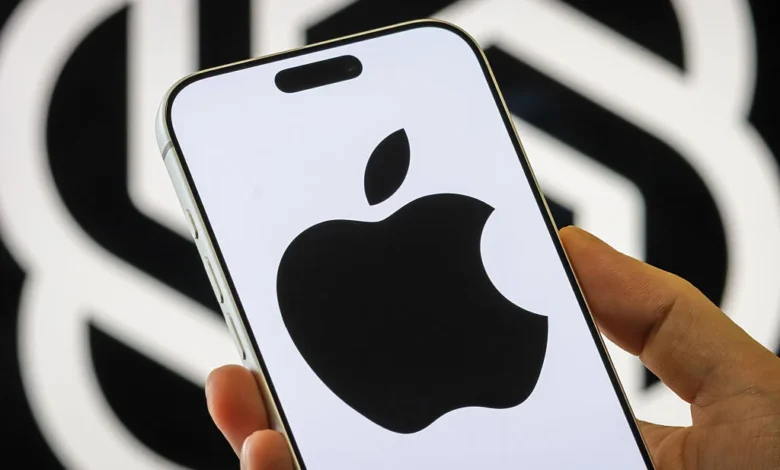
The high-stakes legal confrontation between Elon Musk and Apple has reached an unexpected conclusion, as court filings submitted this past Monday reveal that Musk has voluntarily dismissed his litigation against the Cupertino-based tech giant. This move marks a significant pivot in a long-standing dispute that began when Apple first announced the integration of OpenAI’s ChatGPT into the iOS ecosystem. While the legal ceasefire with Apple is now official, Musk’s aggressive pursuit of OpenAI remains active, signaling that the broader war over artificial intelligence dominance and market access is far from over.
The resolution of the case, documented in a formal court filing, specifies that Musk has agreed to permanently drop all claims against Apple. Notably, the dismissal comes without public disclosure of any financial settlement or private arrangement between the parties. By choosing to dismiss the case with prejudice, Musk has effectively barred himself from refiling these specific antitrust allegations against Apple in the future. However, the legal pressure remains squarely on OpenAI, as Musk continues to pursue his claims that the partnership between the iPhone maker and the AI developer constituted an illegal monopolization of the chatbot market.
A Chronology of Conflict: From Spyware Claims to Courtrooms
The tension between the billionaire entrepreneur and the tech industry’s largest players has been simmering for years, characterized by a series of public denunciations and retaliatory legal actions. The conflict can be traced back to June 2024, during Apple’s Worldwide Developers Conference (WWDC). When Apple unveiled its “Apple Intelligence” suite, featuring a deep-level integration with ChatGPT, Musk immediately took to his social media platform, X (formerly Twitter), to voice his profound disapproval.
Musk’s initial rhetoric was incendiary, characterizing the partnership as a security risk, labeling ChatGPT as “creepy spyware” that would be granted unprecedented access to user data at the kernel level of the iOS operating system. At the time, Musk threatened to ban all Apple devices from his companies, including Tesla and SpaceX, citing concerns over corporate surveillance and the erosion of user privacy.
The dispute escalated significantly in August 2025, when Musk moved from public criticism to formal litigation. In a lawsuit filed in a California federal court, Musk alleged that the Apple-OpenAI partnership created an anticompetitive monopoly. The core of his argument rested on the assertion that by bundling ChatGPT into the iPhone—which serves as the primary gateway to the internet for hundreds of millions of users—Apple was effectively locking out competitors, such as his own AI venture, Grok.
The situation grew increasingly volatile in late 2025, when Musk accused Apple of manipulating the App Store algorithm. He claimed that Apple was artificially suppressing Grok’s visibility to ensure that OpenAI remained the undisputed leader in the chatbot market. Musk famously declared that “Apple is behaving in a manner that makes it impossible for any AI company besides OpenAI to reach #1 in the App Store, which is an unequivocal antitrust violation.” This allegation of algorithmic bias served as the catalyst for his most aggressive phase of the litigation, which lasted until the sudden dismissal this week.
The Economic Stakes: Market Dominance and Antitrust Theory
At the heart of the litigation was a fundamental disagreement over the definition of the “AI market.” For Musk’s legal team, the smartphone market and the chatbot market are inextricably linked. By leveraging its massive installed base of over two billion active devices, Apple, according to the lawsuit, was exerting an unfair advantage by choosing a singular partner for its generative AI features.
Supporting data cited in the court proceedings focused on the dominance of the App Store as a distribution channel. Statistics provided by industry analysts suggest that the top-tier apps in the “Utilities” and “Productivity” categories on the App Store receive an exponential increase in daily active users compared to those that fall outside the top ten. Musk’s argument posited that by providing OpenAI with preferential treatment—such as native integration into Siri and the system-wide text-processing layer—Apple was effectively cannibalizing the potential market share for any competing AI firm, including Musk’s SpaceXAI.
Conversely, legal experts and industry observers have noted the inherent difficulty in proving antitrust violations in the software integration space. Apple has consistently maintained that its integration of third-party AI is not exclusive. The company pointed to its support for other models, including Google’s Gemini and Anthropic’s Claude, as evidence that it was not creating a closed loop. OpenAI, in its defense, characterized Musk’s legal maneuverings as a calculated distraction, arguing that Musk was attempting to use the court system to hinder a competitor because his own AI projects were struggling to achieve similar market penetration.
OpenAI’s Defense and the "Back-of-the-Envelope" Math Controversy
The legal sparring between Musk and OpenAI reached a nadir last fall when OpenAI’s legal team issued a scathing rebuttal to the antitrust claims. In their filings, OpenAI representatives mocked the metrics used by Musk’s team to quantify the alleged damages.
A key point of contention was Musk’s estimation of the chatbot market share foreclosed by the Apple deal. Musk’s filings suggested that the deal could have foreclosed anywhere from 0 to 55 percent of the market, a wide and imprecise range that drew sharp criticism from OpenAI. The AI firm argued that Musk failed to provide empirical evidence for these figures, relying instead on what they termed “back-of-the-envelope math.”
OpenAI’s filings stated: “Musk is unable to provide a coherent theory of harm because there is no harm to competition; there is only a rival who is frustrated by his own company’s inability to capture market share.” This sentiment has been echoed by several analysts who view the lawsuit as a strategic attempt by Musk to shift the narrative around SpaceXAI’s development, positioning himself as a victim of "Big Tech" collusion rather than a competitor falling behind in the generative AI race.
Broader Implications for the Tech Industry
The dismissal of the Apple suit, while leaving the OpenAI case intact, carries several implications for the future of AI development and the regulation of digital ecosystems.
First, it highlights the increasing scrutiny surrounding "platform gatekeepers." As AI becomes a core component of mobile operating systems, the question of whether a platform provider must remain neutral or if they have the right to curate their own AI experiences will remain a central legal debate. Even without the Apple suit, regulators in the European Union and the United States continue to monitor how companies like Apple, Google, and Microsoft integrate AI into their products.
Second, the case underscores the evolving relationship between Musk and the broader AI ecosystem. By focusing his legal firepower solely on OpenAI, Musk is narrowing his battlefield to a conflict that is deeply personal and historical, given his co-founding role at OpenAI and his subsequent public break with the company’s leadership. The ongoing litigation against OpenAI is likely to delve further into the company’s transition from a non-profit entity to a for-profit structure, a subject that has remained a point of contention for Musk since 2018.
Finally, for the average consumer, this resolution means that the integration of ChatGPT into iOS will proceed without the cloud of pending litigation against Apple. The technical roadmap for Apple’s integration, which includes enhanced privacy protocols and on-device processing for smaller tasks, remains on track.
As the legal focus shifts exclusively to OpenAI, the industry will be watching closely to see if Musk can move beyond the initial rhetoric and provide the substantive evidence required to sustain a complex antitrust case. For now, the "chatbot war" has lost one of its primary fronts, but the underlying battle over the future of artificial intelligence—and who controls the pathways to it—is only entering its next, and potentially more critical, chapter. Whether this move is a strategic retreat to consolidate resources or a recognition of the weaknesses in the case against Apple remains a subject of intense speculation, but the legal reality is clear: the path to the courthouse for these grievances is now restricted to the offices of OpenAI.