CN Rail Under Fire as Train Crew Escapes Northern Ontario Wildfire Amid Safety Concerns and Regional Devastation

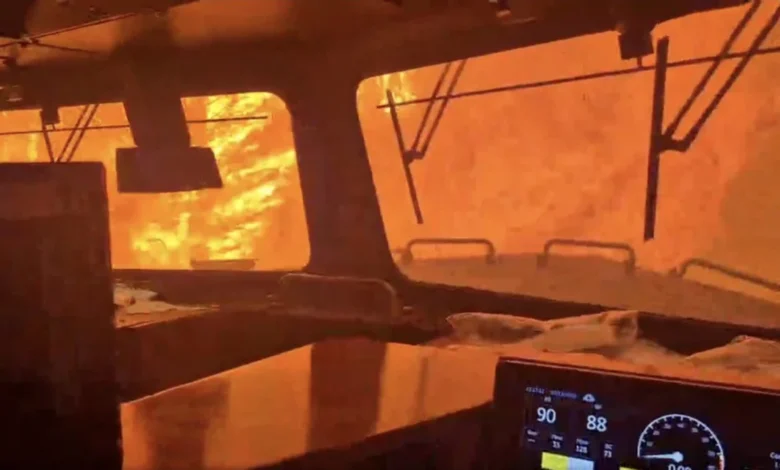
The harrowing reality of the 2024 wildfire season in Northern Ontario was captured in a series of dramatic video clips this week, showing a Canadian National (CN) Rail crew trapped inside a locomotive cab as a fast-moving wildfire surrounded their train. The incident, which occurred near the town of Armstrong, has sparked a national conversation regarding railway safety protocols, the protection of workers in extreme environmental conditions, and the increasing volatility of the Canadian wilderness. As at least 134 wildfires continue to rage across the province’s northwest, the narrow escape of these rail employees serves as a stark reminder of the escalating dangers faced by those maintaining critical infrastructure in the path of climate-driven disasters.
The footage, which began circulating on social media and was later corroborated by major news outlets including CBC and Global News, depicts a scene that many have described as "apocalyptic." The train appears to have been stationary on a siding, a standard procedure intended to allow an oncoming train to pass on the main track. However, as the crew waited, the surrounding forest ignited into a wall of flame. The video captures the moment the fire jumps toward the tracks, with thick orange smoke and embers licking the sides of the locomotive.
"This could potentially overtake us here. This has gotten a little scary," a crew member is heard saying in the recording. As the situation deteriorated, the urgency in the crew’s communication became palpable. In a radio dispatch to dispatchers and nearby rail traffic, the worker stated, "OK, y’all need to hurry up here, like, seriously. We’re encased in flames now." Despite the intensity of the heat and the proximity of the fire, the crew remained inside the cab. Experts note that the structural integrity of the locomotive and its internal air filtration and conditioning systems likely played a decisive role in preventing smoke inhalation and heat-related injuries. Shortly after an oncoming train passed the position, the crew was able to move their locomotive out of the immediate danger zone.
Immediate Corporate and Governmental Response
In the wake of the incident, CN Rail issued a formal statement addressing the safety of its personnel and the status of its operations in the affected corridor. A spokesperson for the company confirmed that a temporary suspension of rail operations near Armstrong had been implemented as a precaution. This decision followed the overnight evacuation of all CN employees in the area on Monday, as well as the evacuation of residents from the Town of Armstrong itself.
"CN remains in close contact with the Ministry of Natural Resources and local authorities as the situation continues to evolve," the spokesperson stated. "The safety of our employees, the community, and emergency responders remains our top priority."
While the company maintains that it acted in accordance with safety protocols, the timing of the evacuation has come under scrutiny. Critics point out that the fire in the Armstrong region had been active for several weeks prior to the incident, raising questions about why freight traffic was still being routed through a high-risk zone during peak fire activity. The Ministry of Natural Resources and Forestry (MNRF) has categorized the fire situation in the Northwest Region as "extreme," with several "Fires of Note" causing significant logistical challenges for both ground and air suppression teams.
The Teamsters’ Critique of Operational Safety
The Teamsters Canada Rail Conference (TCRC), which represents thousands of rail workers across the country, has been vocal in its condemnation of the circumstances that led to the crew being trapped. Paul Boucher, President of the TCRC, praised the composure of the workers while lambasting the corporate decision-making that placed them in harm’s way.
"We commend the courage and professionalism of our members, who kept their composure in a terrifying situation. We are relieved that nobody was hurt," Boucher said in a public statement. "But make no mistake, this incident should never have happened. CN should never have sent a train down those lines. The company knows exactly how bad the situation is in that region. That fire has been raging for five weeks."
The union’s stance highlights a growing tension between the necessity of maintaining national supply chains and the moral obligation to protect workers from environmental hazards. The TCRC is calling for a thorough investigation into why the "slow-order" or "stop-movement" protocols were not enacted earlier, given the well-documented progression of the blaze.
Hazardous Materials and the Threat to Collins First Nation
The incident near Armstrong was not an isolated event. Approximately 20 miles to the west, near the Namaygoosisagagun First Nation (also known as Collins), three other trains found themselves stranded due to the rapid advancement of wildfires. According to the Ontario Provincial Police (OPP), these trains were carrying combustible and flammable materials, significantly heightening the risk of a secondary disaster.
The proximity of volatile cargo to active crown fires creates the potential for a Boiling Liquid Expanding Vapor Explosion (BLEVE), a catastrophic event that could level surrounding areas and release toxic chemicals into the atmosphere. Fortunately, no such explosion occurred, but the threat forced emergency responders to prioritize the stabilization of the rail corridor even as the surrounding community faced total destruction.
The human cost in Collins has been devastating. Reports indicate that the entire community was virtually burned to the ground as the fire swept through with unprecedented speed. Residents were forced to abandon their homes with only the clothes on their backs, fleeing by boat across Collins Lake to escape the encroaching flames. The loss of the Namaygoosisagagun First Nation’s infrastructure represents a profound blow to the region’s indigenous heritage and the safety of its people, many of whom are now displaced and relying on provincial support.
Environmental Data and the Global Air Quality Crisis
The wildfires in Northern Ontario are part of a broader, more systemic environmental crisis. As of mid-July, the province has seen a significant increase in the number of fires compared to the ten-year average. Dry conditions, coupled with lightning strikes and high winds, have created a "perfect storm" for fire ignition and spread.
The impact of these fires is being felt thousands of miles away. Smoke plumes from the Ontario interior have drifted south, blanketing major metropolitan areas in a thick, hazardous haze. On Wednesday, Toronto recorded the worst air quality of any major city in the world, surpassing traditionally high-pollution centers in Asia and the Middle East. The Air Quality Health Index (AQHI) reached "High Risk" levels, prompting health officials to advise residents—particularly children, the elderly, and those with respiratory issues—to remain indoors.
The reach of the smoke extended well into the United States, with yellow and orange skies reported across the north-central and northeast regions, including states like Minnesota, Wisconsin, and New York. This transboundary pollution emphasizes the global nature of wildfire impacts; carbon emissions from these fires contribute to a feedback loop that further accelerates climate change, leading to even hotter and drier seasons in the future.
Logistical and Economic Implications
The suspension of CN Rail operations through Northern Ontario has significant implications for the Canadian economy. This specific rail corridor serves as a primary artery for the movement of goods between Western and Eastern Canada. Grain, minerals, timber, and consumer goods all rely on the stability of these tracks.
When a major line is severed by wildfire, the ripple effects are felt throughout the supply chain. Port congestion increases on the West Coast, delivery times for essential goods are extended, and the cost of shipping rises as companies seek alternative, often more expensive, routes. Industry analysts suggest that if the fire season continues at this intensity, the cumulative economic impact could reach hundreds of millions of dollars in lost productivity and infrastructure repair costs.
Furthermore, the physical damage to the rail infrastructure itself—such as the warping of steel tracks due to extreme heat or the destruction of wooden trestle bridges—requires extensive and dangerous repair work once the fires are extinguished. CN Rail has deployed specialized "Fire Train" units, which are equipped with water cannons and large reservoirs to douse tracks and surrounding vegetation, but even these advanced tools are sometimes insufficient against the sheer scale of modern mega-fires.
Analysis of Future Risk and Policy Needs
The Armstrong incident serves as a catalyst for a broader discussion on how industrial operations must adapt to a warming planet. The fact that a train was "encased in flames" suggests that current predictive modeling for fire behavior may be failing to account for the speed and intensity of contemporary wildfires.
Policy experts are suggesting several key areas for reform:
- Enhanced Communication Channels: Improving real-time data sharing between the Ministry of Natural Resources, weather services, and rail dispatchers to ensure that trains are not sent into zones where "flash-overs" are possible.
- Infrastructure Resilience: Investing in fire-resistant materials for rail signaling and bridges, and expanding the buffer zones (the cleared areas on either side of the tracks) to reduce the fuel load near the rails.
- Worker Protection Standards: Establishing federal mandates that prohibit the operation of manned equipment in areas where fire activity exceeds a specific threshold, regardless of the economic priority of the cargo.
As the fires in Northern Ontario continue to burn, the focus remains on containment and the safety of the thousands of people displaced by the flames. The crew of the CN train near Armstrong may have escaped with their lives, but the incident remains a harrowing testament to a new era of environmental volatility where the lines between industrial routine and life-threatening emergency are increasingly blurred. For the residents of Namaygoosisagagun First Nation and the workers on the front lines of the rail industry, the 2024 season is not just a statistical anomaly—it is a transformative crisis that demands a fundamental shift in how Canada manages its vast and vulnerable wilderness.
Related posts: