Consumer Reports’ Favorite Store-Brand Vanilla Ice Cream Isn’t From Costco Or Sam’s Club


The landscape of American grocery shopping has undergone a significant transformation over the last decade, with private-label products—often referred to as "store brands"—moving from the bottom shelf to the center of the consumer consciousness. Among the most fiercely debated categories in this sector is frozen desserts, specifically vanilla ice cream. While warehouse giants like Costco and Sam’s Club have long dominated the conversation with their bulk-sized, high-quality offerings, a recent comprehensive study by Consumer Reports has upended the traditional hierarchy. In a blind taste test that pitted national heavyweights against budget-friendly alternatives, the top honors did not go to the cult-favorite Kirkland Signature or the widely available Member’s Mark. Instead, the accolade for the best regular store-brand vanilla ice cream was awarded to BJ’s Wholesale Club’s Wellsley Farms, while Aldi’s Specially Selected took the crown for the premium category.
This shift in the rankings comes at a time when consumer loyalty is being tested by inflationary pressures, leading many to reconsider their allegiance to name brands like Häagen-Dazs and Breyers. The Consumer Reports evaluation provided a rigorous look at the sensory profiles, ingredient lists, and price points of various offerings, including those from Walmart, Trader Joe’s, and Aldi. The results suggest that the "biggest" players in the warehouse space are not necessarily the best when it comes to the specific chemistry and flavor profile of vanilla ice cream.
The Methodology of the Modern Taste Test
To determine these rankings, Consumer Reports employed a panel of sensory experts to conduct blind taste tests. This methodology is designed to strip away the influence of branding, packaging, and preconceived notions of quality. Testers evaluated each product based on flavor, texture, and "mouthfeel." The inclusion of both store brands and national brands allowed for a direct comparison of value.
The testing pool was diverse, featuring "regular" ice creams, which typically have more air whipped into them (a process known in the industry as "overrun"), and "premium" or "super-premium" varieties, which boast higher butterfat content and less air. By including a spectrum that ranged from the budget-friendly Great Value brand at Walmart to the high-end Specially Selected line at Aldi, the study provided a comprehensive map of the current frozen dessert market.
The Surprising Dominance of BJ’s Wholesale Club
For years, Costco’s Kirkland Signature Super Premium Vanilla Ice Cream has been the gold standard for warehouse shoppers. Manufactured by the California-based Humboldt Creamery, the product has earned a dedicated following for its dense, rich texture and high fat content. However, the Consumer Reports findings highlighted a different winner in the "regular" ice cream category: Wellsley Farms Premium Vanilla Ice Cream from BJ’s Wholesale Club.
Despite the "premium" label on the BJ’s packaging, testers categorized it as a regular ice cream due to its notably airy texture. In the world of ice cream production, air is not necessarily a negative attribute; it contributes to a lighter, fluffier consistency that many consumers prefer for daily snacking or as a topping for warm desserts. The Wellsley Farms brand was lauded for this balanced, airy texture, which testers found superior to other store-brand competitors.
Beyond the sensory experience, the economic data favoring BJ’s was compelling. The study found that Wellsley Farms was approximately 20 cents less per serving than Breyers, a leading national brand. Even more striking was the comparison to Häagen-Dazs, where BJ’s offered a savings of nearly 42 cents per serving. For a family-sized tub, these marginal savings translate into significant long-term reductions in grocery expenditures without a perceived loss in quality.
Aldi’s "Specially Selected" and the Premium Standard
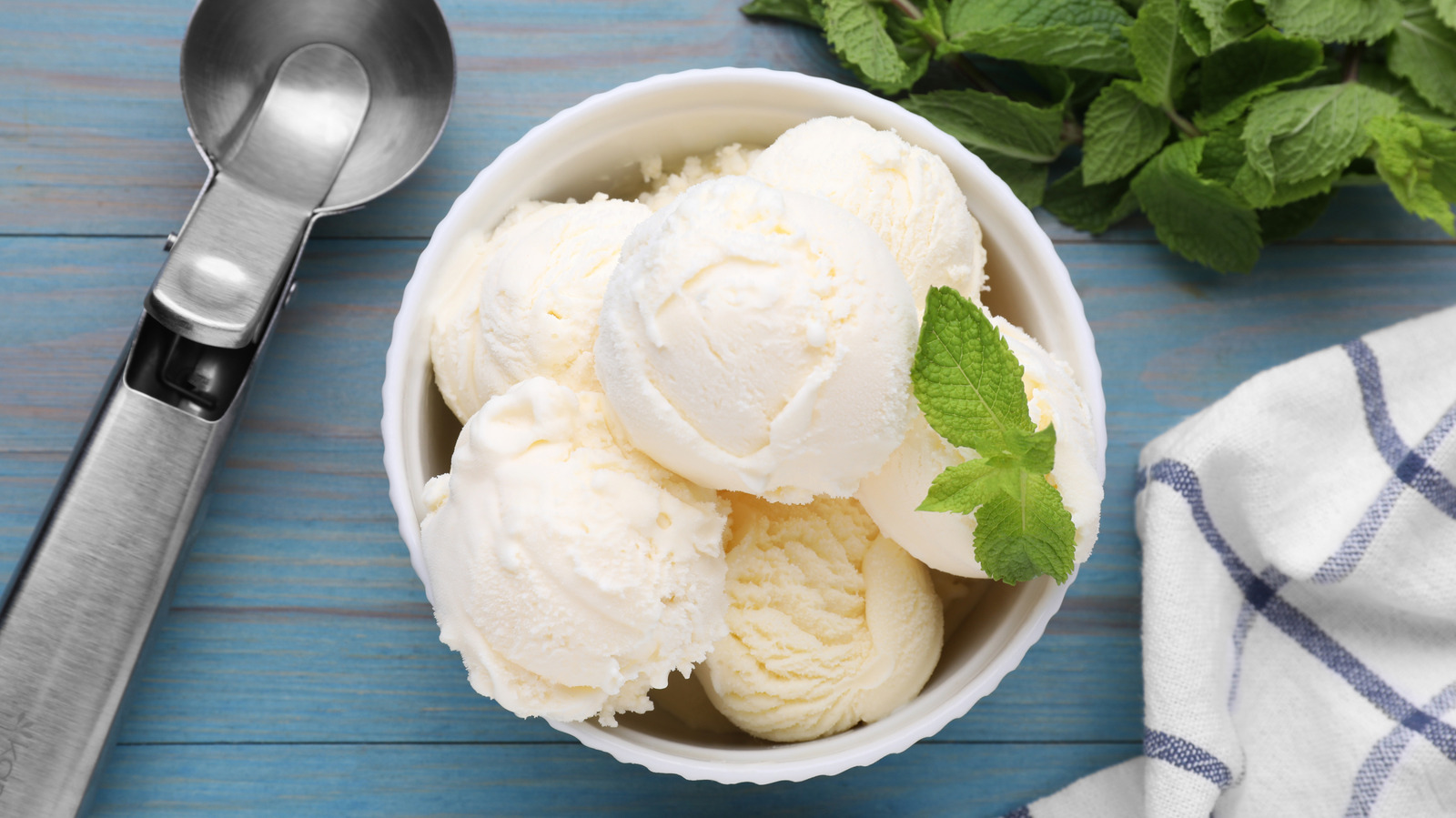
While BJ’s took the lead in the regular category, the "premium" segment saw another underdog rise to the top. Aldi’s Specially Selected Premium Vanilla Ice Cream was named the best in its class, even outperforming several established name brands. The "premium" designation in the ice cream industry is generally reserved for products with lower overrun and higher butterfat, resulting in a heavier, creamier product.
The Consumer Reports testers noted that Aldi’s offering was slightly sweeter than Häagen-Dazs, but it shared a critical characteristic with the high-end brand: a lack of artificial additives. Many mid-tier and budget ice creams rely on vegetable gums—such as guar gum, carob bean gum, or tara gum—to maintain structural integrity and prevent the formation of ice crystals during shipping and storage. Aldi’s Specially Selected, however, maintains a clean label, which has become an increasingly important factor for health-conscious consumers and culinary enthusiasts alike.
The Science of Ice Cream: Overrun and Butterfat
To understand why these rankings matter, one must look at the technical standards that define ice cream categories. The United States Department of Agriculture (USDA) and the Food and Drug Administration (FDA) have specific requirements for what can legally be labeled "ice cream." It must contain at least 10% dairy milkfat and weigh no less than 4.5 pounds per gallon.
- Regular Ice Cream: Typically contains 10% to 12% butterfat and has a high overrun (up to 100%, meaning the volume is doubled by air). This results in a product that is easy to scoop and melts quickly on the tongue.
- Premium Ice Cream: Usually contains 12% to 15% butterfat and has lower overrun (around 60% to 90%). This is the category where BJ’s Wellsley Farms and Aldi’s Specially Selected compete.
- Super Premium Ice Cream: Contains more than 14% butterfat and very low overrun (often as low as 20%). This category includes Costco’s Kirkland Signature and Häagen-Dazs. These ice creams are very dense and calorie-heavy.
The Consumer Reports findings suggest that the "Super Premium" density of Costco’s Kirkland brand may actually be a deterrent for some testers who prefer the lighter, more traditional "regular" profile of BJ’s. This highlights a subjective divide in the consumer market: the battle between richness and "scoopability."
The Additive Issue: A Critique of Trader Joe’s
One of the more surprising revelations in the report concerned Trader Joe’s. Often lauded for its high-quality private-label goods, Trader Joe’s French Vanilla Ice Cream is labeled as "Super Premium." However, the Consumer Reports analysis pointed out that despite this high-end branding, the product contains vegetable gums as stabilizers.
While these additives are safe for consumption and common in the industry, their presence in a "super premium" product can be seen as a cost-cutting measure that affects the purity of the flavor. In contrast, the top-ranked Aldi brand’s lack of such additives reinforces the idea that price is not always a reliable indicator of ingredient quality. This has led to a broader discussion among food analysts regarding the transparency of "premium" labeling in the grocery aisle.
Economic Implications and Market Trends
The success of BJ’s and Aldi in this study reflects a broader trend in the American retail economy. According to data from the Private Label Manufacturers Association (PLMA), store-brand sales reached a record $247 billion in 2023, an increase of 4.7% over the previous year. Consumers are no longer viewing store brands as "generic" or "inferior" alternatives; in many cases, as evidenced by the Consumer Reports ice cream test, they are viewed as superior.
For warehouse clubs, the stakes are particularly high. Membership-based models like those of Costco, Sam’s Club, and BJ’s rely on the perceived value of their private labels to drive renewals. When a third-party authority like Consumer Reports identifies a BJ’s product as superior to Costco’s, it provides BJ’s with a significant marketing lever in the highly competitive Northeast and Mid-Atlantic markets where they primarily operate.
Implications for the "Old-Fashioned" Experience
The report also touched upon the practical applications of these ice creams. For consumers looking to recreate the "old-fashioned homemade vanilla milkshake" experience, the texture of the ice cream is paramount. While the lighter, airier Wellsley Farms is excellent for direct consumption, the study suggests that the denser, premium options like Aldi’s are better suited for shakes, where the ice cream must stand up to being blended with milk without becoming overly thin.
Furthermore, the rise of home ice cream makers has changed how aficionados view store-bought options. With affordable machines becoming a staple in many kitchens, store brands are now competing not just with each other, but with the "ultra-premium" quality of small-batch, home-churned desserts. By offering a product that mimics the "clean label" of homemade ice cream, Aldi and BJ’s are positioning themselves as the convenient alternative to the DIY movement.
Conclusion: A New Hierarchy in the Freezer Aisle
The Consumer Reports findings serve as a reminder that brand prestige and bulk-buy popularity do not always equate to sensory superiority. While Costco’s Kirkland Signature remains a formidable player in the super-premium market, the rise of BJ’s Wellsley Farms and Aldi’s Specially Selected signals a diversification of the "best" options available to the public.
For the average shopper, the takeaway is clear: the label "premium" is often a marketing tool, and the ingredient list is a more accurate map of quality than the price tag. As the "ice cream wars" continue, the real winners are the consumers, who now have access to award-winning flavors and textures at a fraction of the cost of traditional luxury brands. Whether one prefers the airy lightness of a BJ’s scoop or the dense, additive-free richness of Aldi’s premium line, the freezer aisle has become a surprisingly democratic space where quality is being redefined.