China sees the yuan vs. dollar rivalry like Pepsi vs. Coke, expert says — ‘never the market leader, but serviceable in a pinch’ | Fortune

The Myth of Monetary Supremacy
The global dominance of the U.S. dollar is underpinned by the depth, transparency, and openness of American capital markets—attributes that remain fundamentally incompatible with Beijing’s current governance model. To truly internationalize the yuan to the level of the dollar, China would be required to dismantle its stringent capital controls, allow the free flow of currency, and cede control over domestic credit allocation. For the current leadership in Beijing, such a move would be an existential risk.
Domestic elites in China have long utilized offshore dollar-denominated assets as a form of financial insurance, a hedge against the unpredictability of internal political shifts. If the yuan were to become the world’s primary reserve currency, it would necessitate a level of market liberalization that would erode the state’s ability to manage its domestic financial system. Consequently, China views the dollar not as an enemy to be destroyed, but as an incumbent that provides a functional, albeit occasionally hostile, environment for global trade.
The Strategy of Financial Deflection
The primary driver behind China’s promotion of the yuan abroad is the mitigation of risk, specifically the fear of the "weaponization" of the dollar-based financial system. The 2022 decision by the United States and its allies to freeze Russian central bank assets following the invasion of Ukraine served as a watershed moment for Beijing. It transformed a theoretical risk into a tangible reality: if the U.S. can unilaterally cut off a major power from the SWIFT system and dollar liquidity, China’s own financial security is precarious.
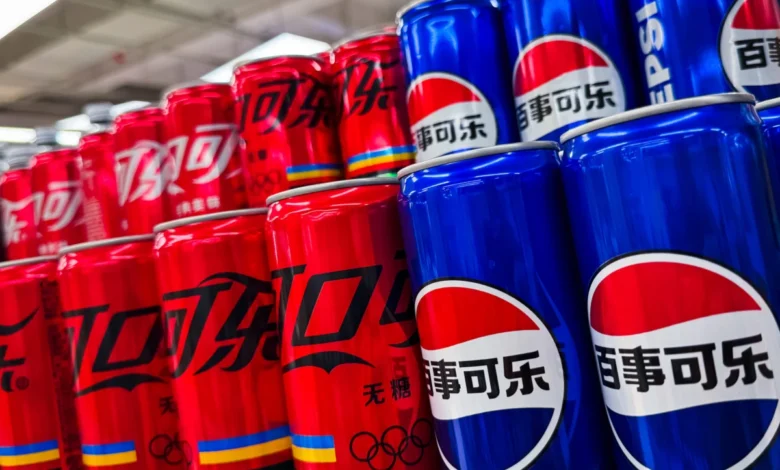
By building a parallel network—a "respectable second" or a "consequential third"—China aims to create a fallback option. The goal is to establish the renminbi as the "Pepsi to the dollar’s Coca-Cola." It does not need to be the market leader to be effective; it merely needs to be available as a service for international trade that exists outside the direct jurisdiction of U.S. regulators. This strategy effectively limits the reach of unilateral U.S. sanctions, forcing Washington to consider the broader systemic costs before deploying financial weaponry against Beijing.
Chronology of Yuan Internationalization
The journey toward the internationalization of the yuan has been a multi-decade project marked by incremental shifts:
- 2009: The People’s Bank of China (PBOC) launches the Cross-Border Trade RMB Settlement Pilot Project, allowing firms in selected cities to settle trade in yuan.
- 2015: The IMF includes the yuan in the Special Drawing Rights (SDR) basket, a significant symbolic milestone for its status as a global reserve currency.
- 2015-2016: A period of significant capital outflow prompts China to tighten capital controls, temporarily stalling the pace of internationalization.
- 2022: Following the imposition of sanctions on Russia, China accelerates the expansion of the Cross-Border Interbank Payment System (CIPS).
- 2023-2026: A sharp increase in yuan lending to overseas borrowers is observed, with Chinese banks doubling their international exposure in this period.
- March 2026: Regional conflicts in the Middle East heighten interest in the "petroyuan," as nations reconsider their reliance on dollar-denominated oil markets.
The Mechanics of the CIPS Network
As of June 2026, the Cross-Border Interbank Payment System (CIPS) has matured into a significant financial infrastructure, boasting 1,829 participants capable of facilitating payments to over 5,200 financial institutions across 191 countries. While these numbers are substantial, they remain a small fraction of the volume processed by the U.S.-dominated CHIPS and SWIFT systems.
However, the breadth of participation is not the only metric for success. Beijing is focusing on the "financing" and "pricing" legs of the currency stool. By encouraging Chinese exporters to invoice in yuan and promoting "China prices"—yuan-denominated benchmarks on domestic commodity exchanges—Beijing is creating a self-contained ecosystem. The success of these benchmarks in the lithium market serves as a blueprint for how China intends to exert influence over critical supply chains.
The Reinvestment Hurdle
Despite these advancements, the renminbi faces a significant structural obstacle: the lack of a deep, liquid, and open market for yuan-denominated assets. A true reserve currency requires that trade partners hold their surpluses in that currency and reinvest them into the issuing nation’s markets.
Currently, foreign investors hold only 1.6% of the Chinese bond market, a stark contrast to the 27% foreign participation in the U.S. bond market. Without a larger pool of renminbi-denominated assets that can be freely bought and sold without the interference of unpredictable capital controls, the yuan cannot serve as a reliable store of value for global central banks. Beijing faces a dilemma: to achieve reserve status, it must open its capital account, but doing so would surrender the state’s primary tool for economic control.
The Rise of the Green Yuan
Liu suggests that rather than competing directly with the dollar for global dominance, China is pivoting toward a "Green Yuan" strategy. As China cements its supremacy across the green supply chain—including critical minerals, clean energy equipment, and electrical infrastructure—it gains unique leverage.
By using its scale and cost advantages to set the standards for green technology, China is positioned to demand that these essential, hard-to-substitute exports be priced in renminbi. If successful, this would establish the foundation for a commodity-backed currency network that mirrors the historical role of the petrodollar, but for the energy transition of the 21st century.
The Petrodollar and Geopolitical Shifting
The potential erosion of the petrodollar is tied directly to the evolving security landscape in the Middle East. The 1974 agreement, which saw Saudi Arabia price oil in dollars in exchange for U.S. security guarantees, was the cornerstone of dollar hegemony for half a century. However, the recent conflict in the Middle East has cast doubt on the durability of these arrangements.
As U.S. air-defense systems have struggled to fully protect Gulf allies’ energy infrastructure from sophisticated missile and drone swarms, regional powers are re-evaluating their strategic dependencies. Reports suggest that in some instances, access to the Strait of Hormuz is being discussed in the context of payments made in yuan. While these developments are currently localized, financial institutions such as Deutsche Bank have warned that the ongoing conflict could act as a catalyst for a structural shift in how global energy is priced and settled.
Implications and Future Outlook
The objective for Beijing is not the crown of global reserve status, but rather the freedom of movement. By establishing the renminbi as a viable alternative for trade and settlement, China is building a firewall against future financial pressure. The U.S. dollar will likely remain the world’s dominant currency for the foreseeable future, protected by the structural advantages of American capital markets and the rule of law.
However, the international financial landscape is moving toward a multi-polar system where "financial sovereignty" becomes a priority for emerging markets. For the United States, the challenge lies in ensuring that the dollar remains an attractive, rather than a forced, choice. For China, the challenge is maintaining its domestic political order while simultaneously building an international financial architecture that is robust enough to bypass the reach of the U.S. Treasury, without triggering the very instability that global reserve status brings. As the "green transition" accelerates, the battle for the next global pricing standard will likely be fought in the markets for rare earths and clean energy, rather than on the traditional floors of the New York Stock Exchange.
Related posts: